Best Small Pellet Stoves for Basement Heating
Finding a compact pellet stove that fits a basement space without sacrificing performance can be challenging. The following selections are among the best small-to-mid-sized options designed to deliver steady heat in lower-level rooms, basements, or compact living areas. This guide compares efficiency, hopper capacity, ease of use, and installation considerations to help you choose the right model for your basement heat needs.
| Product | Brand | Heats Up To | Hopper | Key Benefit |
|---|---|---|---|---|
| Castle 41278 Serenity | Castle Pellet Stoves | ~1500 sq ft | 40 lb | Smart controller with eco modes |
| Comfortbilt HP50S | Comfortbilt | Up to 2200 sq ft | 47 lb | Compact footprint with high output |
| Cleveland Iron Works Medium Pellet Stove | Cleveland Iron Works | 1500–2200 sq ft | 60 lb | Built-in WiFi and EPA-compliant |
| PelPro PP150 | PelPro | Up to 2500 sq ft | 150 lb | Large hopper for long burn time |
| Canyon Lodge Bayfront Pellet Stove | Canyon Lodge | 1800–2500 sq ft | — | Built-in WiFi and tax-credit eligible |
Castle 41278 Serenity Pellet Stove
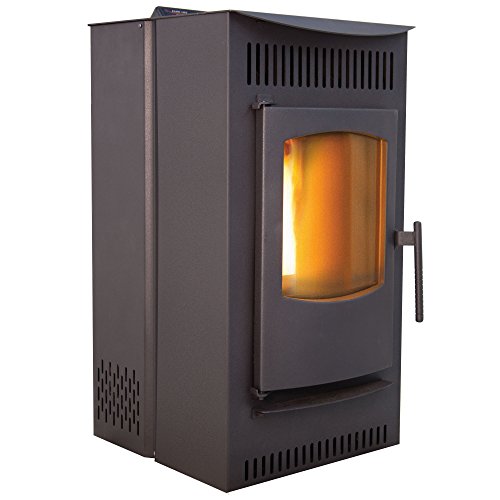
The Castle 41278 Serenity is designed for basements and small-to-mid-sized living spaces. It features a 1,500 square foot heating capacity and a 40-pound hopper, enabling frequent refueling flexibility without constant attention. The control options include Manual, Thermostat, Weekly, and Eco modes. The Eco mode allows the unit to toggle between on and off to maintain a comfortable temperature efficiently. A key design element is its simple, easy-to-clean construction, with fewer tubes and hidden chambers for straightforward maintenance.
Comfortbilt HP50S Small Wood Pellet Stove

The HP50S from Comfortbilt is a compact yet capable option, suitable for basements needing efficient space heating. It heats up to about 2,200 square feet and uses a 47-pound hopper. Aesthetically, the Arctic White finish complements many basement décors. Compliance with EPA and CSA standards helps ensure emissions are within federal guidelines. Its heat exchanger design and robust room blower maximize heat output from pellets, delivering reliable warmth even in cooler basements.
Cleveland Iron Works Medium Pellet Stove

This Cleveland Iron Works model offers a balanced option for basement heating with a heat range of 1,500 to 2,200 square feet. It includes built-in WiFi for smart-home integration and is EPA-certified for emissions compliance. A built-in heat exchanger and efficient blower help maximize heat distribution in a basement layout, reducing the time needed to reach comfortable temperatures. The medium hopper size contributes to longer burn times between refills.
PelPro PP150 Pellet Stove

The PelPro PP150 is a high-output option designed for larger basement spaces, heating up to 2,500 square feet. Its 150-pound hopper provides long run-times between fills, which can be advantageous for basements where frequent refueling is impractical. The stove offers easy temperature control with a built-in thermostat and auto-ignition, plus a powerful 265 CFM blower for quick heat distribution. It emphasizes fuel efficiency and robust performance in colder basements.
Canyon Lodge Bayfront Pellet Stove

The Canyon Lodge Bayfront model is another basement-friendly choice, with heating capabilities ranging from 1,800 to 2,500 square feet. It includes built-in WiFi for smart control and is positioned as an energy-conscious option that aligns with tax credits available for biomass stoves. This stove aims to balance compact design with substantial output, making it suitable for basements that require consistent heat without occupying excessive floor space.
Buying Guide
- Room size and heat output: Match stove capacity to the basement square footage. Units in the 1,500–2,500 sq ft range are common for basements, but verify the stove’s stated output and heat distribution pattern for your space.
- Hopper capacity and burn time: Larger hoppers (e.g., 60–150 lb) reduce refueling frequency, which is helpful in basements that are difficult to access. Consider your routine and whether you prefer longer burn times or quick reloads.
- Ventilation and emissions: Ensure the model is EPA-certified or CSA-compliant if available. A proper venting plan and clearances are essential for basement installations to maintain indoor air quality and safety.
- Controls and smart features: Thermostats, weekly scheduling, and WiFi connectivity can simplify operation, especially if you’re coordinating heat with occupancy patterns in a basement living area or workspace.
- Maintenance and cleaning: Look for models labeled as easy to clean with minimal internal tubing or complicated chambers. Simpler designs can reduce maintenance time and keep efficiency high over time.
- Installation considerations: Basement ceilings, clearance from combustibles, and proper venting are critical. Some stoves offer compact footprints that fit tight spaces, but professional installation is often recommended to ensure safe venting and code compliance.
- Energy efficiency and operating costs: Compare efficiency ratings and blower performance. Higher efficiency helps maximize heat with less pellet consumption, which is especially valuable in basements where outdoor temperature fluctuations can be substantial.
- Tax credits and incentives: Some models and installations qualify for biomass stove tax credits or utility rebates. Check local and federal programs to understand potential savings and eligibility.
- Warranty and support: Consider brand reliability and the availability of parts and service in your area. A solid warranty and responsive customer support can reduce long-term ownership concerns.
In choosing the best small pellet stove for a basement, weigh heat needs against space, maintenance willingness, and energy savings over time. The options highlighted above balance compact design with solid heating capability, making them suitable candidates for basements seeking steady warmth without overwhelming footprint or complexity.