Best Washing Machine Rubber Hoses for Leak-Free Water Supply
Choosing the right washing machine hose is essential for preventing leaks and maintaining a smooth laundry day. The following picks offer durable materials, reliable fittings, and clear hot/cold labeling. This guide highlights five top-rated rubber hoses designed for standard 3/4″ connections, with options featuring burst-proof construction, reinforced cores, and convenient color-coding. Whether you’re replacing a worn hose or budget-watching, these selections cover a range of lengths and configurations to fit most machines and laundry rooms.
| Product | Length | Material | Special Feature |
|---|---|---|---|
| 2 Pack Rubber 6FT Hoses by Fetechmate | 6 ft | Rubber | Red/blue coded, burst-resistant, 10-year warranty |
| Eastman Rubber Washing Machine Hose | 6 ft | Black rubber | 3/4″ FHT x FHT brass nuts, kink/crimp resistant |
| Cenipar 4FT Rubber Hoses With Elbows | 4 ft | PVC core + rubber | 90-degree elbows, flame-resistant, explosion-proof up to 1500psi |
| Cenipar 4FT Burst-Proof Hoses | 4 ft | PVC core + rubber | 2-pack, hot/cold color-coded, 3/4″ NPT |
| Cenipar 10FT Rubber Hoses | 10 ft | PVC core + rubber | Burst-proof, dual color-coded, 3/4″ NPT |
Below are five recommended products, each with a link to Amazon and a quick snapshot of why they’re a solid choice for standard washing machine setups in American homes.
Fetechmate 2 Pack 6FT Rubber Hoses

- 6 ft length fits most standard installations and minimizes slack.
- 3/4″ female ends with brass nuts for a tight, secure connection.
- Red and blue color coding helps distinguish hot vs cold supply.
- Durable rubber construction resists leaks and kinks; designed for high water pressure.
- 10-year warranty offers long-term coverage and peace of mind.
Eastman Rubber Washing Machine Hose, 6 Ft

- Standard 6 ft flexible supply line with 3/4″ FHT x 3/4″ FHT.
- Corrosion-resistant black rubber designed to withstand high pressure.
- Brass nuts enable quick, solder-free installation; minimizes kinking and crimping.
- Universal fit for most domestic washing machines and valves.
Cenipar 4FT With 90 Degree Elbows

- 4 ft length with 90-degree elbows for tight laundry spaces.
- Blue cold and red hot color coding for easy identification.
- Three-layer protection against leaks, kinks, and corrosion.
- 3/4″ NPT connectors ensure broad compatibility with standard washers.
Cenipar 4FT Burst-Proof Hoses (2 Pack)

- Two-pack provides a spare or replacement option for hot and cold lines.
- Explosion-proof components and thick gaskets minimize leakage at connections.
- 3/4″ NPT at both ends; suitable for all standard washing machines.
Cenipar 10FT Rubber Hoses
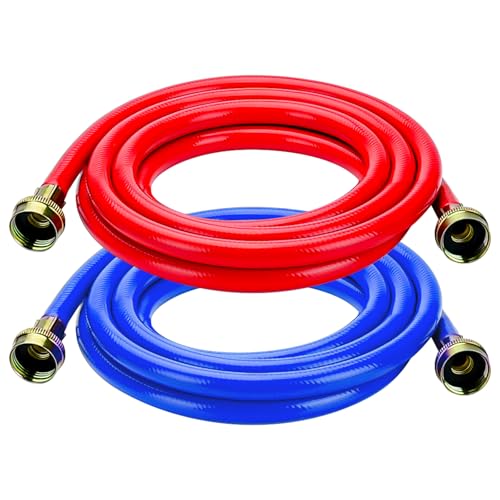
- 10 ft length provides extra reach for more flexible installations.
- Dual color-coding for hot and cold water identification.
- PVC core plus rubber construction designed to resist aging and corrosion.
- 3/4″ NPT connections fit most washers and faucets.
Buying Guide: Key Purchase Considerations
Material and build quality matter most for long-term reliability. Rubber hoses with brass fittings are generally durable and easier to install than plastic fittings. Look for hoses with corrosion-resistant brasses and thick internal gaskets to prevent leaks at the connector.
Length and fit are also important. Choose a length that minimizes slack without creating tension. In tight laundry spaces, models with 90-degree elbows or shorter lengths can prevent kinks and bending, while longer hoses provide flexibility in room layouts.
Color coding makes hot and cold identification straightforward, reducing misconnection and potential scalding or ineffective washing results. Burst-proof or reinforced designs add an extra safety margin for higher water pressures.
Warranty and brand support can influence total ownership costs. A long warranty—such as 10 years—often reflects a manufacturer’s confidence in the product’s durability and helps offset replacement costs if issues arise.
Installation considerations include whether the hose is compatible with standard 3/4″ NPT or FHT fittings, whether the ends require soldering or crimping (ideally none), and whether the hose is rated for cla- or high-temperature operation in your region.
Maintenance tips: regularly inspect hoses for cracks or bulges, replace every 5–7 years as a precaution, and avoid twisting or bending hoses beyond the recommended radius. If a leak or rupture occurs, shut off the water supply immediately and replace with a compatible hose to restore a safe operation.