Best 50-Gallon Gas Water Heaters for Commercial Use
Choosing a reliable gas water heater for commercial spaces requires evaluating capacity, delivery rate, energy efficiency, and installation flexibility. The following selections cover gas-powered options ranging from tankless units to practical solutions for multi-point hot water needs. Each product profile includes core specs and notable features to help facility managers compare options quickly.
| Product | Brand | Type | Key Benefit |
|---|---|---|---|
| GASLAND Gasmart E | GASLAND | Unlimited on-demand hot water for whole-home or small commercial spaces | |
| Westinghouse APOLO Performance | Westinghouse | High capacity up to 8.1 GPM with remote control | |
| Ranein Indoor Tankless | Ranein | Multiple modes and 4-season adjustments for flexible use | |
| Westinghouse Indoor Tankless (7.9 GPM) | Westinghouse | Smart temp control and app-enabled monitoring | |
| Eastman Water Heater Stand | Eastman | Supports 30–60 gallon units, elevates for code compliance |
GASLAND Gasmart E Tankless Gas Heater
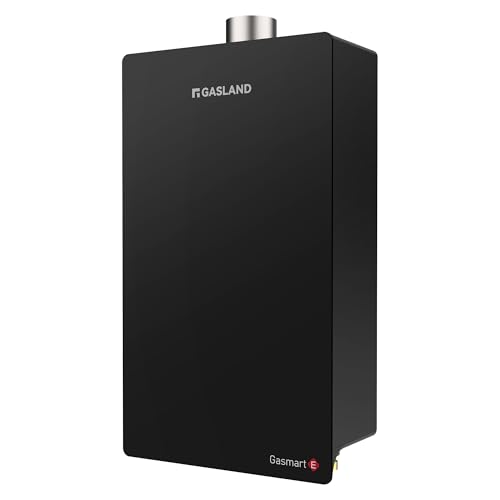
The GASLAND Gasmart E 199000 BTU tankless gas water heater provides on-demand hot water up to 7.6 GPM, suitable for whole-house or light commercial installations. Its tankless design eliminates standby energy losses and supports continuous hot water for showers, laundry, and dishwashing without a hot-water wait. The unit emphasizes energy efficiency with a UEF around 0.8, making it a notable option for facilities seeking lower operating costs and reduced NOx emissions compared with traditional 50-gallon gas tanks.
Key features include space-saving form, easy wall-mount installation, and a compact footprint that frees up floor space in utility rooms. The device is designed for indoor use and aims to deliver consistent water temperature under varying flow demands. For facilities evaluating upgrades from tank storage to on-demand systems, this model offers scalable performance with a straightforward installation path.
Considerations for facility use include ensuring a compatible venting system and electrical provisions for startup controls. While tankless heaters excel at efficiency, ongoing maintenance and proper sizing for peak demand are important to prevent temperature fluctuations during simultaneous draws. This GASLAND model provides a balanced option for moderate commercial loads seeking continuous hot water with reasonable upfront cost.
Westinghouse APOLO Performance Tankless Gas Heater

The Westinghouse APOLO tankless water heater delivers up to 8.1 GPM from a compact outdoor or indoor installation. With a 180,000 BTU input, this unit is designed to serve larger homes or light commercial spaces that require rapid hot-water recovery for multiple fixtures simultaneously. Its self-modulating design helps maintain consistent water temperature, helping reduce temperature swings during peak use.
Smart features include a remote LED panel and status indicators to simplify troubleshooting and monitoring. The model’s high-output capability suits multi-point applications, including multiple showers and sinks, though installation requires proper venting and gas supply considerations. For facilities prioritizing continuous hot water and streamlined control, APOLO offers a compelling balance of power and manageability.
Operational considerations include ensuring adequate venting, gas line sizing, and annual service to keep efficiency high. As with any tankless unit, the initial cost may be higher than a 50-gallon tank, but ongoing energy savings can be meaningful for busy commercial environments.
Ranein Indoor Tankless Gas Heater

The Ranein Natural Gas Tankless Water Heater operates at up to 3.6 GPM with 80,000 BTU, suitable for compact commercial setups or busy bathrooms, kitchens, and bar areas. It provides on-demand hot water without a storage tank, avoiding standby energy loss and enabling continuous supply for several fixtures at once. This model highlights energy efficiency and a compact footprint that fits inside utility closets or small mechanical rooms.
Notable features include multiple modes that tailor output for specific scenarios, including dish, fruit, elderly, and infant presets. While 3.6 GPM is modest for larger facilities, it can be ideal for spaces with lower concurrent demand or as a supplementary unit alongside a primary water heater. Required considerations include venting, gas supply, and routine maintenance to ensure stable performance across seasons.
Ranein Indoor Tankless Gas Heater with Vent Pipe

The 100,000 BTU Ranein model delivers up to 4.3 GPM, designed for 2–3 concurrent hot-water points. Advanced features include Four Seasons Function, automatically adjusting temperature with seasonal variations, a kitchen preset at 100°F, and a bathtub mode with adjustable output. This flexibility supports diverse commercial use cases—from restaurants to small offices with high hot-water variability.
As with other gas tankless units, key considerations include ventilation requirements, vent pipe routing, and periodic maintenance. The four-season and kitchen/bathroom presets offer practical advantages for properties with mixed-use demands, enabling operators to optimize comfort and energy use across different periods.
Westinghouse Indoor Tankless Gas Heater (7.9 GPM)

This Westinghouse model emphasizes on-demand efficiency with a 7.9 GPM output and 180,000 BTU input. Its smart features include an LED display for temperature, status, and error codes, plus smartphone compatibility for remote monitoring. Designed for indoor installation, it can support multiple fixtures simultaneously in small to medium commercial settings while maintaining stable temperatures across usage patterns.
Pros for facilities include scalable hot-water delivery, remote management, and a compact footprint. Potential drawbacks include the need for precise system sizing to prevent shortfalls during peak demand and ensuring the venting and gas supply are optimized for a commercial installation. Overall, the unit offers strong performance for businesses needing reliable, on-demand hot water with advanced control options.
Buying Guide: Key Purchase Considerations
When evaluating gas water heaters for commercial use, consider capacity, flow rate, installation space, and total cost of ownership. Tankless options shine where storage is impractical or where continuous hot water is essential, but they require proper venting, gas line sizing, and regular service to maintain efficiency. Tank-style units with higher gallon capacities can be more straightforward to install in spaces with existing storage infrastructure and may offer predictable peak-hour performance for larger facilities.
Important factors to evaluate include:
- Hot-water demand: Assess peak concurrent usage across showers, sinks, and appliances to determine whether a tankless unit’s GPM (gallons per minute) rating or a 50-gallon tank’s recovery rate better fits the building’s needs.
- Energy efficiency: Look for units with high UEF (or equivalent efficiency metrics) to minimize operating costs over time. Tankless models often outperform storage tanks in energy efficiency, but real-world savings depend on usage patterns.
- Ventilation and installation: Gas models require proper venting and safe clearance. Consider space constraints, access for service, and compatibility with existing gas lines.
- Maintenance and service: Tankless heaters may need more frequent filter cleaning and periodic descaling in hard-water areas. Ensure access to qualified technicians for routine service.
- Total cost of ownership: While tankless systems may have higher upfront costs, they can reduce energy bills and free up space. Compare installation costs, venting requirements, and potential subsidies or warranties.
- Durability and warranty: Commercial environments benefit from robust warranties and service networks. Review product warranties and the availability of replacement parts.
In summary, for facilities aiming to replace a 50-gallon tank with a gas solution or to add on-demand capacity, tankless options offer scalability and efficiency, whereas a large-capacity tank unit can deliver straightforward, predictable performance with simpler installation. Each option carries trade-offs in upfront cost, maintenance, and compatibility with existing systems.