Best Short 40-Gallon Electric Water Heaters for Efficient Home Use
If you’re shopping for a compact electric water heater, a 40-gallon model can offer a balanced mix of hot water capacity and space efficiency for many households. This guide highlights five well-matched options, with practical considerations for installation, energy use, and longevity. Each entry includes key features drawn from customer-relevant specifications to help you compare performance, space needs, and maintenance considerations. The focus remains on compact, efficient electric units that fit typical American homes without sacrificing reliability or hot-water availability.
| Product | Brand | Capacity | Key Benefit |
|---|---|---|---|
| Rheem 72-40-2 | Rheem | 40 Gallon | Glas-Lined, strong insulation, corrosion protection |
| GE 30 Gallon Electric | GE | 30 Gallon | Real capacity with efficient first-hour performance |
| Rheem PROE50 M2 | Rheem | 50 Gallon | Compact footprint, reliable hot water for larger households |
| GE 18 Gallon Plug & Play | GE | 18 Gallon | Easy installation for limited spaces |
| Rheem 18kW Tankless | Rheem | Tankless | On-demand hot water with compact form factor |
Rheem 72-40-2 40 Gallon Electric Water Heater

The Rheem 72-40-2 is a 40-gallon electric water heater built around a Glas-Lined tank and R-Foam insulation to minimize heat loss. An Anode Rod helps to prevent corrosion, extending the unit’s lifespan in typical residential installations. This model targets modest to mid-range hot-water demand, suitable for households with several daily showers or laundry cycles. Its compact footprint also makes it easier to retrofit into spaces where larger tanks don’t fit, while still delivering dependable hot water on demand.
GE Appliances 30 Gallon Electric Water Heater with Adjustable Thermostat

GE’s 30-gallon electric heater emphasizes real usable capacity and efficiency. It maintains a true 30-gallon capacity per DOE ratings and promises strong first-hour performance with a robust output. The adjustable thermostat adds flexibility for households with varied hot-water needs, reducing energy waste while preserving comfort. Ideal for small families or apartments, this model fits tighter spaces and provides reliable hot water without needing a large footprint.
Rheem PROE50 M2 50-Gallon Professional Classic

The Rheem PROE50 M2 offers a larger 50-gallon capacity while maintaining a compact footprint. It includes enhanced-flow drain valve and an automatic thermostat for steady performance, making it a practical choice for households with 3–5 people or more than two bathrooms. Its reliability and brand legacy in water heating provide a clear option when upgrading from an older unit, especially for spaces where a longer run of hot water is needed for mornings and evenings.
GE Appliances 18 Gallon Versatile Plug and Play Electric

GE’s 18-gallon plug-and-play unit is designed for easy installation in limited spaces, with adjustable thermostat and 120-volt compatibility. It’s well-suited for single hookups or small homes, condos, or apartments where a full-sized tank is impractical. Its compact design allows flexible placement in kitchens, baths, or utility rooms, offering dependable hot water without committing to a larger tank in tight spaces.
Rheem 18kW 240V Tankless Electric Water Heater
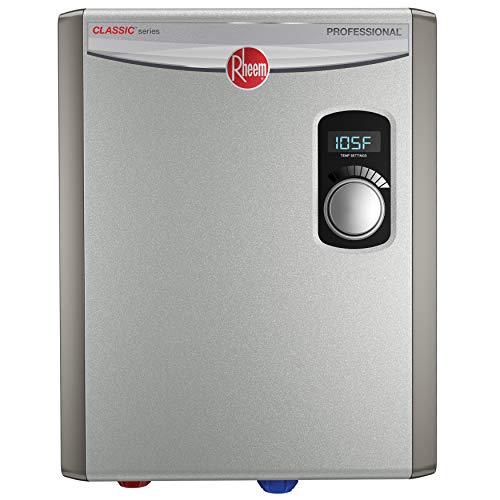
Rheem’s tankless electric option provides on-demand hot water with a compact form factor. With external digital thermostatic control and self-modulating technology, it adjusts power to meet demand while maintaining efficiency. A copper immersion element supports durability, and the system can deliver steady flow up to around 4.4 GPM depending on inlet water temperature. Ideal for homes seeking continuous hot water in a compact footprint, especially where space is at a premium or where only a small, predictable output is needed.
Buying Guide: Key Considerations For Choosing A Short 40-Gallon Electric Heater
When choosing a compact electric water heater, consider these factors to match a unit to your home and usage patterns:
- Hot-water Demand: Evaluate daily showers, laundry cycles, and dishwasher use. A 40-gallon model suits many families, but households with high simultaneous demand may benefit from a 50-gallon unit or a tankless option for on-demand needs.
- Space And Installation: Measure closet, basement, or utility alcoves to ensure clearance around the heater for venting, plumbing, and electrical connections. Some 40-gallon units offer compact footprints, simplifying retrofits in smaller homes.
- Energy Efficiency: Insulation quality and tank design influence standby heat loss. Higher energy efficiency reduces operating cost over time, especially in colder climates or homes with longer periods between uses.
- Electrical Requirements: Most electric heaters require dedicated circuits and proper sizing for the service panel. Tankless or higher-capacity models may demand 220–240V supply with sufficient amperage.
- Durability Features: Anode rods, corrosion protection, and quality tank linings extend service life. Look for units with accessible maintenance components for easier upkeep.
- First-Hour Rating (FHR) and Recovery: For larger families, FHR indicates hot-water availability in the first hour of use. A higher FHR typically means better performance during peak demand.
- Cost Of Ownership: Initial cost is only part of the picture. Consider installation costs, replacement parts, and energy consumption over time to gauge total ownership costs.
- Warranty And Support: A longer warranty or a reputable brand can reduce long-term risk. Check what’s covered and the availability of service networks in your area.
Installation And Maintenance Tips
- Consult a licensed electrician to confirm electrical capacity and circuit requirements for the chosen model.
- Follow manufacturer instructions for drain valve use and regular anode rod inspection to prevent corrosion.
- Schedule routine maintenance every 1–2 years to check pressure relief valves and test temperature settings.
- Assess venting and water lines for compatibility with the new unit to minimize heat loss and ensure efficient operation.