Best 80-Gallon Electric Water Heaters for Large Homes
Choosing an 80-gallon electric water heater helps ensure abundant hot water for big households, high-demand kitchens, and busy bathrooms. This guide highlights top options, including energy-efficient heat-pump models and reliable conventional electric heaters, with a focus on efficiency, first-hour delivery, and ease of installation. Explore five strong contenders that balance performance and long-term savings while meeting common residential needs.
| Product | Brand | Capacity | Key Benefit |
|---|---|---|---|
| Rinnai REHP80 Electric Heat Pump Water Heater | Rinnai | 80 Gallon | Energy Star certified; high first-hour delivery; Demand-Response enabled |
| Rinnai REHP65 Electric Heat Pump Water Heater | Rinnai | 65 Gallon | Efficient energy use; strong first-hour delivery; Demand-Response enabled |
| Rheem 50 Gal Smart High Efficiency Hybrid | Rheem | 50 Gallon | Hybrid heat pump technology; high efficiency; requires dedicated circuit |
| Rheem PROE50 M2 RH95 50-Gallon Traditional Electric | Rheem | 50 Gallon | Reliable performance; compact footprint; accessible components |
| GE 18 Gallon Versatile Plug-and-Play Electric | GE | 18 Gallon | Flexible installation; plug-and-play; compact for limited spaces |
Rinnai 80-Gallon Heat Pump Electric Water Heater

Rinnai REHP80 delivers up to 91 gallons in the first hour, supporting households with high hot-water demand. Its energy-efficient heat-pump design extracts heat from ambient air, offering zero emissions and a UEF of 4.00. The unit supports Demand-Response with utility programs to reduce energy consumption during peak hours, helping lower overall energy costs over time.
Rinnai 65-Gallon Electric Heat Pump Water Heater

The 65-gallon model offers efficient operation with a 3.90 UEF and Energy Star certification. It provides robust first-hour delivery—up to 80 gallons—making it suitable for mid-to-large households with concurrent hot-water needs. Also features Demand-Response capabilities to save energy during peak periods.
Rheem 50 Gal Smart High Efficiency Hybrid
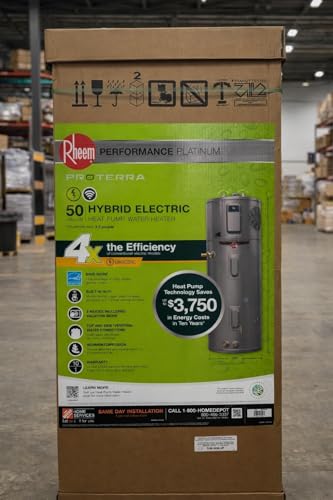
This model combines traditional electric heating with heat-pump efficiency, designed for homes seeking reduced energy usage. It typically requires a dedicated electrical circuit similar to large electric appliances. The high-efficiency technology yields ongoing energy savings while delivering reliable hot water for households with multiple bathrooms or higher demand.
Rheem PROE50 M2 50-Gallon Electric

Designed for reliability and space efficiency, this 50-gallon model suits medium households or homes replacing older heaters. Features include an automatic thermostat and anode rod for corrosion protection, helping extend the unit’s life while providing steady hot water with minimal footprint.
Rheem 72-40-2 40-Gallon Electric Water Heater

Although smaller, this model offers a sturdy Rheemglas-lined tank with R-Foam insulation and an anode rod for corrosion resistance. It’s suitable for apartments, basements, or homes with limited space that still require dependable hot water for modest demand.
Buying Guide: Key Purchase Considerations
- Capacity and demand: For large homes, focus on units with high first-hour delivery and large capacity (65–80 gallons) to meet peak usage without running out of hot water.
- Efficiency and operating costs: Heat-pump electric models offer the best long-term savings, especially in moderate climates. Look for Energy Star certification and high UEF values.
- Electrical requirements: Many high-capacity or hybrid units require dedicated 240V circuits and sometimes electrical upgrades. Verify panel capacity and wiring before purchasing.
- Installation considerations: Space, venting is not needed for electric heaters, but accessibility for maintenance, drain valves, and service access matters. Some models are more compact than others.
- Smart features and demand response: Units with Demand-Response enablement can communicate with utilities to reduce usage during peak hours, lowering energy costs.
- Durability and warranty: Look for corrosion protection, standard anode rods, and warranties that cover kilowatt-hour capacity and tank integrity for durable performance.
- Maintenance needs: Periodic flushing and anode rod replacement extend life and efficiency. Consider models with accessible components for easier service.
- Budget and total cost of ownership: While upfront costs vary, consider energy savings, installation costs, and potential utility rebates when evaluating options.
- Compatibility with home updates: If planning upgrades (solar hot water, insulation improvements, or smart thermostats), choose models that integrate with your system and future plans.