Best Restaurant Reach-in Refrigerators for Commercial Kitchens in 2026
Answering the needs of busy foodservice operations, these restaurant reach-in refrigerators offer reliable cold storage, durable construction, and practical layouts. Choose based on capacity, door configuration, and mobility to fit your kitchen workflow. This guide highlights five top options, suitable for medium to large kitchens, catering setups, and bar areas. Each product section explains who it’s best for, why it’s a strong fit, and any notable caveats to consider.
Summary of chosen products
| Product | Estimated Capacity | Doors | Best For |
|---|---|---|---|
| CHUMART 54″ W Commercial Refrigerator | 49 cu ft | 2 doors | High-capacity prep and line storage |
| Kratos Commercial 2 Door Solid Reach-in | 47 cu ft | 2 doors | Heavy-use kitchens needing durable build |
| Elite Kitchen Supply Commercial Upright Reach-in | 49 cu ft | 2 doors | Affordability with NSF/ETL options |
| ORIKOOL 27″ W Reach-In Upright | 23 cu ft | 1 door | Compact footprints with strong energy efficiency |
| InnerCalm 27″ W Reach-In Refrigerator | 23.6 cu ft | 1 door | Restaurant, bar, and cafe spaces needing flexible storage |
CHUMART 54″ W Commercial Refrigerator

Best for: High-volume kitchens that require substantial interior space. The 54″ width and 49 cu ft capacity accommodate large batches of prep items, ingredients, and staged products. The two-door design helps separate zones and improves organization. It includes six adjustable shelves for flexible layout and a precise Dixell digital thermostat for temperatures from 33°F to 41°F, ensuring consistent cooling.
Why chosen: Durable construction and modern refrigeration with fan-forced cooling support even temperature distribution. The R290 refrigerant offers environmental benefits, and the auto-defrost feature minimizes maintenance in busy shifts. Caution: Larger footprint may require more floor space and strong anchoring in compact kitchens.
Kratos Commercial 2 Door Solid Reach-in Refrigerator
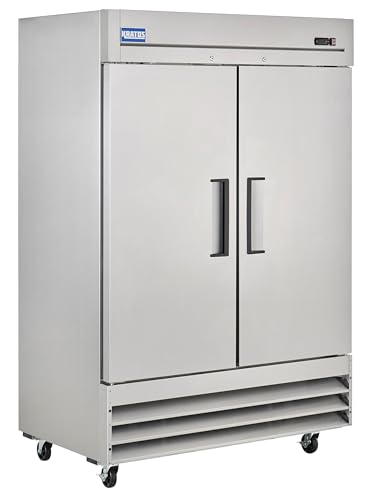
Best for: High-traffic kitchens needing durable stainless steel construction and a broad capacity. With 54″ width and 47 cu ft of interior space, this unit supports heavy use, easy cleaning, and a robust stainless interior/exterior. It comes with a two-year parts and labor warranty plus a five-year compressor warranty, designed to withstand daily restaurant tasks.
Why chosen: Heavy-duty design and mobility features, including casters for cleaning and maintenance. It’s a solid pick for restaurants where long-term reliability matters. Caution: Warranty conditions exclude residential use; ensure proper installation and electrical requirements align with your space.
ORIKOOL 27″ W Reach-In Upright Refrigerator

Best for: Smaller kitchens or spaces needing energy-efficient yet capable single-door reach-ins. It features CAREL digital thermostat control and a Cubigel compressor, claiming significant energy savings and a quieter operation. The unit supports 33°F–40°F cooling with automatic defrost every 6 hours and has LED lighting for visibility.
Why chosen: Strong emphasis on energy efficiency and maintainable temperature control. Lockable doors and movable shelves add flexibility in compact settings. Caution: While space-saving, capacity is lower than dual-door models, so plan storage accordingly.
Elite Kitchen Supply Commercial Upright Reach-in Refrigerator

Best for: Budget-conscious kitchens that still require dependable NSF/ETL-certified integrity and roomy storage. This unit emphasizes an all-stainless build and bottom-mounted compressor for efficient cooling. It provides a 33°F–41°F range, with digital temperature control to preserve perishables and a durable interior finish suitable for busy bars and cafes.
Why chosen: Combines durability, certification alignment, and warranty options suitable for commercial compliance. Caution: Ensure the space allows for adequate air circulation around the condenser for consistent performance.
Buying Guide
Key factors to consider when selecting a restaurant reach-in refrigerator:
- Capacity vs. footprint: Match interior cubic feet to daily volume and batch sizes, while ensuring the unit fits your kitchen layout.
- Door configuration: Two-door models maximize storage and airflow but require more floor space; single-door units save space but offer less capacity.
- Temperature control: Digital thermostats enable precise control (typical range 33°F–41°F). Look for fan-assisted cooling and auto-defrost for even cooling and reduced manual maintenance.
- Construction and durability: Stainless steel interiors and exteriors withstand busy environments and simplify cleaning. Look for heavy-duty casters if you need moveable setups.
- Energy efficiency: Energy-saving compressors and refrigerant choices reduce operating costs. Consider units with efficient insulation and low ambient noise.
- certifications: ETL/NSF certification helps meet sanitation standards. Check local regulations for required certifications in your area.
- Maintenance and service: Check warranty terms and the availability of service in your region. Auto-defrost and accessible condenser components simplify upkeep.
FAQ
- What size reach-in refrigerator do I need for a busy kitchen?
Calculate daily usage and bulk prep needs, then choose a unit with enough cubic feet to avoid overpacking. Consider the number of doors and the footprint to fit your workflow.
- Are ETL or NSF certifications required for restaurant refrigeration?
Certifications help meet safety and sanitation standards. Some jurisdictions require specific certifications, so verify local code requirements before purchase.
- Is a two-door reach-in better than a single-door model?
Two-door models typically offer more space and better airflow, beneficial for high-volume kitchens. Single-door units save space but may limit storage and organization options.
- What maintenance helps extend a reach-in refrigerator’s life?
Regular defrosting (if not auto), clean condenser coils, ensure door gaskets seal properly, and schedule periodic professional servicing per warranty guidelines.
- How important is energy efficiency in a commercial refrigerator?
Energy-efficient models lower operating costs over time and reduce heat load on the kitchen, contributing to a more comfortable work environment.