Best Slab Rollers for Clay: 5 Top Picks for Pottery Projects
Answering the question most buyers have: these slab rollers for clay help you create uniform slabs efficiently, with manual options offering reliable control for artists and students. This guide highlights five well-suited picks, focusing on control, portability, and cost-effectiveness. Ideal buyers include hobbyists seeking affordable, reliable tools; classroom instructors needing lightweight, adjustable options; and beginners requiring easy, foldable setups. Below, a quick buyer’s table summarizes key details to compare at a glance.
| Product | Best For | Why It Stands Out | Limitations |
|---|---|---|---|
| JIAYOFWCHI Hand Cranked Ceramic Slab Machine | Beginner to Intermediate | Manual operation, folding design, precise scales | Manual crank may be slower than electric rollers |
| Tofcbye Hand Cranked Clay Roller | Busy studios, small spaces | Adjustable thickness, foldable stand, smooth hand crank | Manual, requires muscular effort |
| Lupnkl 12-Pack Tools Kit (Includes Slab Roller) | Teachers and classrooms | Comprehensive kit with rolling pin and guides | More than just slabs; bulk accessories |
| AHIER 12 Pcs Pottery Tools Set | Starter kits & basic projects | Multiple thickness guides, linen tablecloth | Wooden components may wear with heavy use |
| Wolwefa Clay Rolling Pin Guides (10 Pcs) | Detail-oriented projects | Clear size options and durable wood | Basic set; best with additional slab roller |
Hand Cranked Ceramic Slab Machine, Slab Roller for Clay Pottery

The JIAYOFWCHI manual slab machine emphasizes high-quality construction and a folding design that helps keep workspaces compact. Best for hobbyists and beginners who prefer a non-electric option with straightforward operation. The device aims to produce evenly rolled slabs with precise scales to ensure consistent thickness. A potential limitation is slower throughput compared to electric models, but the control it offers is ideal for delicate slab work and teaching environments.
Hand Cranked Clay Roller Machine, Adjustable Slab Roller

This model focuses on adjustable slab thickness, offering a range from 0.2 to 2.2 inches. Its smooth crank and ergonomic handle reduce hand fatigue and improve rolling control, making it well-suited for creators working with both porcelain and stoneware. The foldable stand design saves workspace, which is beneficial for busy studios or classrooms. Choose this if you want tighter thickness control and a space-saving setup; avoid if you need high-volume throughput without manual effort.
Lupnkl 12-Pack Ceramic & Pottery Tools Kit

This 12-piece kit extends beyond slabs to include a professional beechwood rolling pin and several guides, along with a linen work surface. It’s best for classrooms and teaching scenarios where students need reliable, kid-friendly tools and consistent thickness control. The included thickness guides help quantify results, though the emphasis is on teaching and project variety rather than single-purpose slab rolling.
12 Pcs Pottery Tools Set With Slab Roller
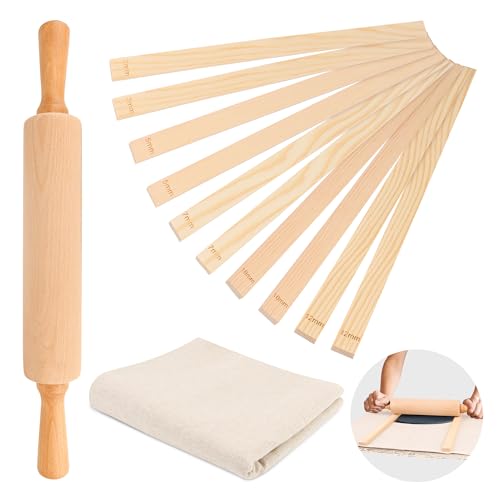
This set blends rolling pin guides, a wooden rolling pin, and a linen tablecloth to create a complete rolling station. The five thickness options help painters and students practice consistent slab thickness. Best for entry-level potters or classroom settings where multiple learners share tools. A potential limitation is that wooden components may require extra care to prevent warping over time.
Griiyakii Pottery Foam Table Runner

While not a slab roller, this foam table runner supports consistent mold shaping and glaze work by providing a cushioned, non-slip surface. It’s best used alongside slab-rolling tools to protect tabletops and improve handling of leather-hard slabs during shaping. This item is suitable for studios needing a versatile working surface rather than a dedicated rolling device. Use in combination for best results; avoid relying on it as a primary slab-rolling solution.
Newtay 12 Pcs Pottery Tools Kit
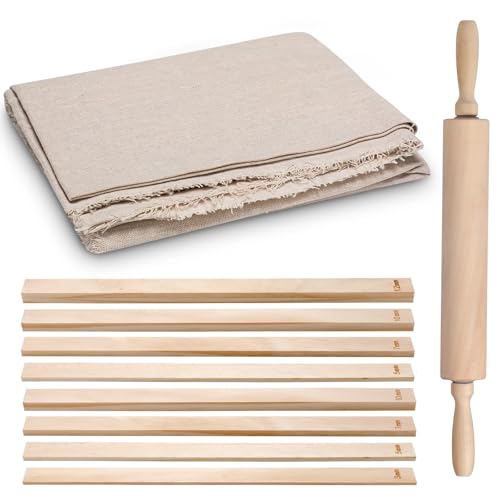
This 12-piece kit includes a wooden rolling pin and a linen tablecloth, plus 10 rolling pin guides in five sizes. It’s well-suited for beginners and classrooms where a complete starter set is desired. The kit’s material quality and compact design support easy storage and repeated use. Consider this kit if you want a broad set of tools in one purchase; if you need higher-precision slab control, pair with a dedicated slab roller for finer thickness control.
Clay Rolling Pin Guides, 10Pcs

This set of 10 wooden guides covers five thickness sizes and includes clearly marked pairs, making it useful for beginners and students learning even thickness. It pairs best with a separate slab roller or rolling pin for consistent results across multiple projects. Use this set to supplement a primary slab roller; avoid treating it as the sole rolling solution for larger-scale production.
Buying Guide: Key Considerations For Slab Rollers And Clay Tools
What should you consider when choosing a slab roller?
Purpose and space: Determine whether you need a portable, manual unit or a larger, electric option. For small studios or classrooms, folding stands and compact designs save space.
Which thickness range matters most?
Most slab rollers offer adjustable thickness controls. Choose a model that covers your typical clay body, from soft porcelain to stoneware, to avoid cracking or warping during firing.
How important is ease of use?
Look for ergonomic handles, clear thickness scales, and simple folding mechanisms. A user-friendly device reduces fatigue and speeds up repetitive tasks in teaching environments.
What compatibility should you expect?
Thin slabs require precise guides for even results. If you rely on a kit, ensure it includes sufficient thickness options and quality rolling guides to avoid inconsistent slabs.
Durability and care
Wooden elements can warp if exposed to moisture; select tools with protective finishes and store them dry. Regular cleaning after use extends tool life and maintains accuracy.
Frequently Asked Questions
- What is the difference between a slab roller and a rolling pin?
Slab rollers provide uniform thickness over larger areas, while rolling pins are manual and rely on user control for thickness. - Can manual slab rollers replace electric ones?
They can for many projects, especially in teaching or hobby contexts, but electric rollers may offer faster throughput for large batches. - Which thickness options are most versatile for beginners?
Five to six distinct thickness settings typically cover common clay body needs and teaching demonstrations. - Are wooden guides reliable for precision?
Yes, when clearly marked and well-maintained, they provide consistent results for classroom use. - Should I buy a complete tools kit or individual pieces?
Complete kits are great for beginners and classrooms, while experienced potters may prefer selecting specific tools to match their workflow. - What maintenance is required for slab rollers?
Keep components dry, wipe away clay residue after use, and inspect thickness guides periodically for wear.