Best Dough Dividers and Rounders: Top Picks for Bakery and Kitchen Teams
Finding the right dough divider and rounder can dramatically improve portion consistency, speed, and workflow in commercial kitchens or home bakeries. This guide highlights five reliable options, suitable for varying volumes and budgets. Each pick is described with ideal buyers in mind, plus practical pros and limitations to help you choose confidently. Whether you need a manual device for small batches or a semi-automatic unit for high throughput, there’s a fit here.
Summary of selected products
| Product | Best For | Key Benefit | Notes |
|---|---|---|---|
| VEVOR Dough Divider, 40Pcs | Medium- to large-batch bakeries | 40 equal portions, robust stainless steel | Manual, portable with dual trays |
| INTBUYING 36Pcs Manual Dough Divider | Small- to mid-size shops | 36 equal portions, simple operation | Manual, durable stainless steel |
| EQCOTWEA Semi-Automatic HM-36 | High-volume bakeries | 5–10 seconds per batch, uniform pieces | Semi-automatic, efficient |
| EQCOTWEA Commercial Semi-Automatic 36 | Pizza shops and restaurants | 36 uniform pieces quickly | High throughput, food-grade |
| BEILOCKERY Semi-Automatic 36 PCS | Mid- to high-volume kitchens | 36 uniform pieces, copper motor | Powerful and efficient |
VEVOR Dough Divider, 40Pcs Manual

This manual divider splits dough into 40 equal portions, each ranging from 30 to 140 grams. It uses 304 stainless steel blades and pressing plates for clean cuts and easy cleaning. The dual tray design (12.2 x 2.8 inches each) supports alternating use, improving throughput. Best for small- to mid-size bakeries that need consistent portioning without electricity.
- Best for: Operators seeking high-precision manual division with large batch capacity
- Why selected: 40 equal portions reduce variation and improve yield
- Caution: Manual operation requires attention for consistent results
INTBUYING 36Pcs Manual Dough Divider

This 36-piece manual device divides dough into evenly weighted portions from 30 g to 160 g. No electricity is required, making it versatile for any workspace. The stainless steel cutting blade and plate ensure durability and straightforward cleaning. Best for shops needing reliable manual tooling with predictable results.
- Best for: Lightweight, portable setups without power access
- Why selected: Simple, dependable operation with clear equalization
- Caution: Manual effort can limit throughput in very busy environments
EQCOTWEA Semi-Automatic HM-36
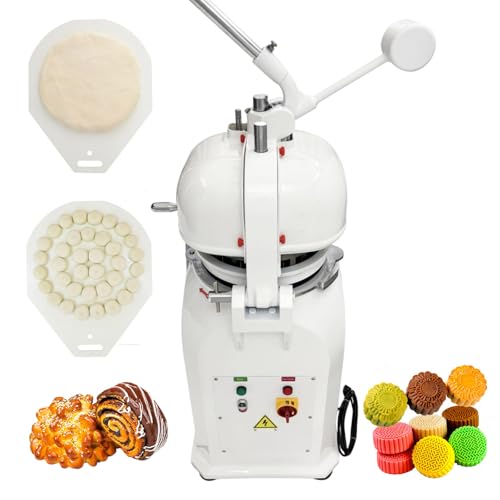
This HM-36 semi-automatic unit divides and rounds dough into 36 uniform pieces in about 5–10 seconds. Weighs range from 20 g to 70 g, making it ideal for consistent dough balls in a high-volume setting. Removable cutter head simplifies cleaning, and a painted shell aids maintenance. Best for bakeries that value time-saving and consistent shape.
- Best for: High-capacity environments needing quick, uniform dough balls
- Why selected: Combines division and rounding in one efficient cycle
- Caution: Semi-automatic design still requires operator control
EQCOTWEA Commercial Semi-Automatic 36

This 36-piece semi-automatic unit divides and rounds dough into uniform portions (0.7 oz to 2.5 oz). It emphasizes high throughput with a food-grade design and easily cleaned components. A strong choice for pizza shops and full-service kitchens seeking consistent dough balls at scale.
- Best for: Fast-paced kitchens that need reliable portioning and shaping
- Why selected: Efficient, dual-operation cycle supports steady output
- Caution: Ensure adequate clearance for quick cycling and maintenance
BEILOCKERY Semi-Automatic 36 PCS

This 36-piece semi-automatic unit uses a 750W copper core motor to deliver strong, stable performance. It divides and rounds dough into uniform portions in about 5–10 seconds, helping mid- to high-volume operations improve efficiency. Best for facilities prioritizing motor strength and durable, long-term use.
- Best for: Kitchens needing robust power and consistent results
- Why selected: Copper-core motor provides high torque with lower noise
- Caution: Higher power draw may require appropriate electrical setup
Buying Guide: Key Considerations For Dough Dividers And Rounders
What capacity do you need? Choose a unit with the right number of portions per batch (18–40+). For high-volume shops, semi-automatic models offer faster cycle times, while manual devices suit smaller operations or mobile setups.
Should you prioritize speed or portability? Semi-automatic machines excel in speed, often forming and shaping in seconds. Manual dividers are typically lighter, cheaper, and easier to relocate within a kitchen.
What materials matter? Look for food-grade stainless steel contact parts for durability and easy cleaning. A robust frame and a smooth exterior reduce hygiene risks and simplify maintenance.
How important is ease of cleaning? Removable cutter heads or accessible trays streamline sanitation and daily cleaning, especially in busy facilities.
What about power and installation? Electric models require a reliable power source and proper electrical setup. Manual devices have no power needs but require physical effort and consistent technique.
Frequently Asked Questions
- What is a dough divider and rounder? A dough divider portionizes dough into equal weights, while a rounder shapes each piece into a uniform ball for consistent baking results.
- Are manual or electric models better for beginners? Manual models are simpler and cheaper, while electric/semi-automatic units offer higher throughput and consistency for larger operations.
- Can these machines handle different dough types? Most models are designed for standard bakery dough, but check the weight range and dough texture compatibility for each unit.
- How important is the weight range? A wider weight range accommodates diverse products (bread, pizza, buns). Choose a model whose range matches your typical outputs.
- What maintenance is required? Regular cleaning of blades, removing residues, and inspecting moving parts help maintain performance and longevity.
- Do these machines require special sanitation procedures? Use food-grade cleaning solutions and ensure parts contacting dough are dried thoroughly to prevent corrosion or bacterial growth.