Best CO2 Line Options for Your Kegerator and Home Beer System
Looking for the right CO2 line for a kegerator? This guide highlights practical, food-grade lines ideal for home draft systems, multi-keg setups, and portable bars. Each product is selected for reliability, ease of installation, and clean gas delivery. Best for hobby brewers, small home bars, and outdoor gatherings who want smooth pours and minimal foam.
Overview table of chosen products:
| Product | Chain Link | Length | Best For |
|---|---|---|---|
| 5FT Beer CO2 Gas Line with Barb Fitting Connector (WELLBOM) | Red 5/16″ ID | 5 ft | Single-keg setups, flexible layout |
| 5ft Kegerator CO2 Gas Line and Beer Lines (WELLBOM) | Red 5/16″ ID / 3/16″ ID beer line | 5 ft | Versatile for CO2 and beer lines, multi-connection |
| 25Ft Beer Co2 Gas Line (WELLBOM) | Blue 5/16″ ID | 25 ft | Long runs, multi-tap setups |
| 10FT Kegerator Beer CO2 Dual Lines (WELLBOM) | 5/16″ CO2 line, 3/16″ beer line | 10 ft | Two-line kits for CO2 and beer in one package |
| Hgkeke 10ft CO2 Line Kit | Red CO2 line | 10 ft | Durable, odorless CO2 line with clamps |
5FT Beer CO2 Gas Line with Barb Fitting Connector

Best for flexible, short-run setups. This 5-foot CO2 line is food-grade PVC, thick-walled, and designed to minimize leakage and foam. Includes 5 feet ID 5/16″ red line, barb fittings, silicone gaskets, and hose clamps for secure connections. Best for a Sankey keg or D keg with straightforward routing. Limitation: shorter length may require additional segmentation for multi-tap layouts.
5ft Kegerator CO2 Gas Line and Beer Lines (WELLBOM)

Better for systems needing both CO2 supply and beer lines. This kit provides ID 5/16″ CO2 line compatible with quick-disconnects, manifolds, and regulators, plus ID 3/16″ beer line with a thick 3mm wall for smooth flow. Includes six clamps for a secure fit. Choose this if you run multiple connections and want reliable gas delivery. Caution: ensure compatibility with your specific keg connectors and fittings to avoid cross-threading or leaks.
25Ft Beer Co2 Gas Line (WELLBOM)

Best for longer runs and multi-tap installations. The 25-foot blue CO2 line is food-grade PVC, designed for durability and easy bending in installations. Comes with six clamps and a leak-proof design to prevent gas loss and foam. Best for hobby setups that require flexible routing. Limitation: longer length may require careful storage and handling to prevent kinking at sharp bends.
10FT Kegerator Dual Lines Kit
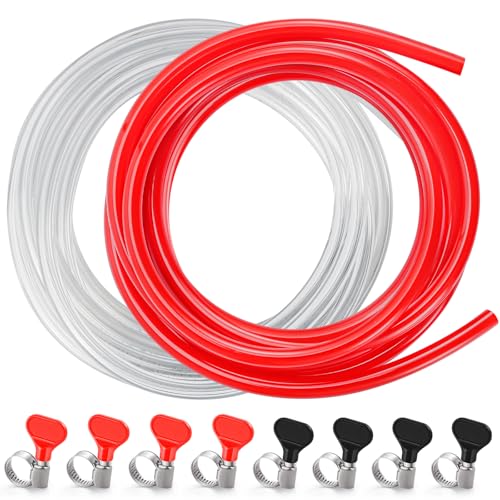
This dual-line kit is ideal for setups needing separate CO2 and beer lines without cross-contamination. Features both 5/16″ CO2 line and 3/16″ beer line with a 6-piece clamp set for secure connections. Best for multi-keg operations and back-to-back pours. Avoid this if your system requires a single-line approach or if your keg fittings differ from standard barbed sizes.
Hgkeke 10ft CO2 Line Kit
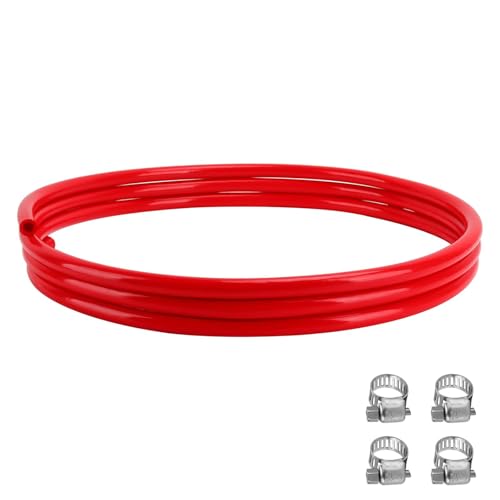
Best for odorless, bendable CO2 lines with a stainless clamp setup. The 10-foot red CO2 line is odorless, flexible, and designed to resist kinking, with 304 stainless steel hose clamps that resist corrosion. Includes a reusable storage bag for easy transport. Choose this if you value odorless tubing and long-term storage convenience. Limitation: ensure clamp fit matches your line diameter to prevent leaks at connections.
25 Feet Hgkeke Beer CO2 Line Kit

Best for expansive home breweries and multi-tap draft setups. This 25-foot line kit uses 5/16″ CO2 tubing with robust clamps, designed to minimize odors and kinking. It provides extra length for flexible installation while maintaining a stable gas flow. Limitation: manage storage and avoid excessive slack that could snag on equipment during setup.
5ft PVC CO2 Gas Hose for Kegerator

Best for standard kegerator setups requiring a clean, food-safe line. The 5/16″ ID x 9/16″ OD hose is NSF-certified and BPA-free, designed for high-temperature tolerance and compatibility with common regulators and taps. Best for single-tap or smaller kegerators. Caution: verify your regulator compatibility to ensure a proper seal with the hose barb fittings.
Buying Guide: Key Considerations For Choosing A CO2 Line
- Length and routing: Choose length based on your keg setup, bar layout, and whether you need extra length for future expansion. Longer lines require careful storage and less risk of kinking with good clamps.
- Diameter and compatibility: Standard CO2 lines use 5/16″ ID; beer lines are often 3/16″ ID. Ensure the hose ID matches your fittings, regulators, and keg connectors to prevent leaks and foaming.
- Material and food safety: Look for food-grade PVC or equivalent, odorless and tasteless, to keep beverage flavor true and avoid plastic smells creeping into the pour.
- Leak prevention: Prefer lines with clamp kits and leak-proof designs. A good sealing structure reduces gas loss and foam, improving pour quality.
- Temperature resistance: Lines should withstand typical kegerator temperatures and possible ambient heat without hardening or cracking.
- Durability and storage: Stainless clamps, robust fittings, and storage bags help extend line life and ease transport for portable setups.
Frequently Asked Questions
- What size CO2 line is standard for most kegerators? Answer: Most kegerator systems use a 5/16″ ID CO2 line paired with 5/16″ barb fittings for reliable gas delivery.
- Can I use the same line for CO2 and beer? Answer: Some dual-line kits are designed for both, but it’s best to use dedicated CO2 and beer lines to prevent cross-contamination and optimize flow.
- Are odorless lines necessary? Answer: Odorless lines help preserve flavor and prevent plastic tastes in beverages, especially for longer pours.
- How do I prevent leaks at connections? Answer: Use the included clamps, tighten adequately, and ensure gaskets sit flush at every connection point.
- Is longer tubing better for multi-keg setups? Answer: Longer tubing offers layout flexibility but may introduce more potential leaks and foam if not managed properly. Balance length with proper clamps and routing.
- What maintenance is required for CO2 lines? Answer: Regularly inspect for cracks or wear, clean lines if possible, and replace hoses that show signs of wear or hardening.