Best Food Dehydrator for Mushrooms: Top Picks for Flavorful, Dried Goods
Looking for a food dehydrator that handles mushrooms well? This guide identifies five popular models ideal for drying mushrooms and other produce. A good option depends on batch size, temperature control, and tray design. The following picks are suited for home cooks who want reliable, even drying and clear monitoring. Whether you’re a casual mushroom hunter or a dedicated jerky maker, these dehydrators offer features to match your needs.
| Product | Best For |
|---|---|
| Elite Gourmet EFD319 | Low-effort, even drying with adjustable temps for delicate mushrooms |
| Magic Mill 5-Tray | Small-to-medium batches with sturdy stainless steel trays |
| Cercker 8-Tray | High-capacity drying with powerful air circulation |
| Small 5-Tray 704M | Compact spaces and beginner-friendly operation |
| Cosori 6-Tray | Faster drying with larger space and quiet operation |
Elite Gourmet EFD319 Food Dehydrator
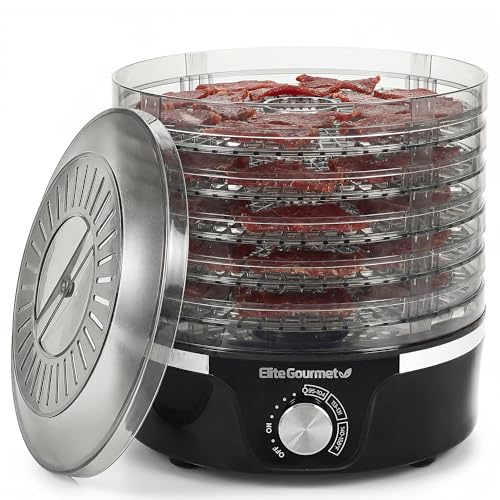
The Elite Gourmet EFD319 offers adjustable temperatures from 95°F to 158°F, ideal for mushrooms and delicate produce. Its 350W horizontal airflow provides even dehydration without tray rotation. The five 11.4″ BPA-free trays can expand to accommodate larger batches. Transparent trays help monitor progress, reducing heat loss when checking on progress. This model is best for home cooks who want reliable, even drying in moderate batch sizes without fuss.
- Best for: Mushroom fans who want consistent heat and easy monitoring.
- Limitations: Heat distribution is dependable but not the fastest option for very large loads.
Magic Mill Food Dehydrator Machine
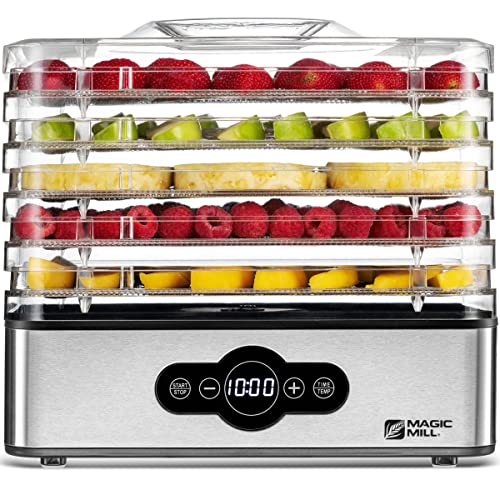
The Magic Mill model uses a 240W drying process with five stackable trays and a timer-temperature control. It emphasizes vitamin and mineral retention and can be adjusted to raise tray height to fit thicker layers. Stainless steel trays and BPA-free plastic body combine durability with easier cleaning. It suits buyers who want a mid-range capacity with robust construction for daily or weekly mushroom drying.
- Best for: Users who value durable stainless steel trays and adjustable spacing for thick mushroom slices.
- Limitation: Moderate power may mean longer drying times on large batches.
Cercker 8-Tray Food Dehydrator
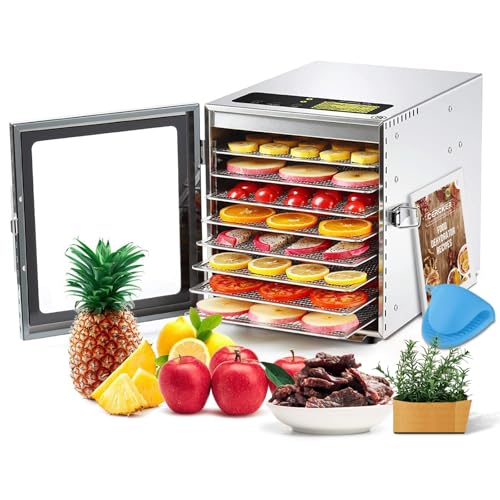
Cercker’s 8-tray model emphasizes powerful drying with an exhaust fan and air circulation at up to 1600 rpm. It uses 100% BPA-free stainless steel, with a large tray capacity to handle thick or layered mushroom pieces. This unit suits buyers who require the ability to dry sizable batches quickly and safely, with durable design. A potential caution is to ensure proper ventilation due to the strong airflow.
- Best for: Mushrooms in larger batches needing quick, uniform drying.
- Limitation: Higher airflow may require careful placement to avoid overheating or drafts near walls.
Small 5-Tray Dehydrator Model 704M
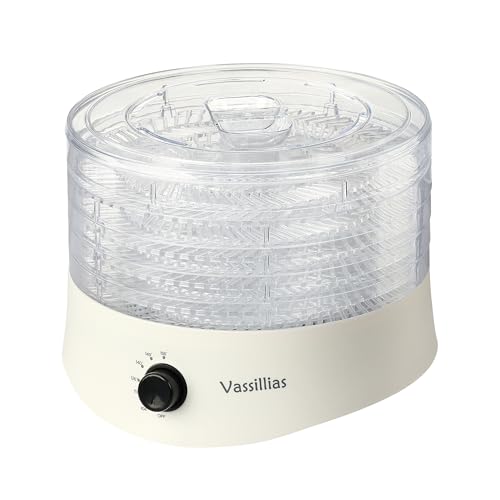
This compact 704M offers 5 BPA-free trays with adjustable temperature control from 104°F to 158°F. It’s designed for small batches, space-saving operation, and beginner-friendly use. The unit includes a powerful fan for even airflow, making it a sensible pick for mushroom enthusiasts who don’t need large volume drying.
- Best for: Small kitchens and first-time users focusing on mushrooms and herbs.
- Limitation: Limited capacity may require multiple rounds for large harvests.
Cosori Dehydrator With 6 Trays

The Cosori model features 6 stainless steel trays and 600W power for faster, more efficient drying. It provides a larger drying space, helping mushroom batches to dehydrate faster while maintaining quality. A brushless motor keeps noise low, supporting overnight operation in quiet households. This option is best for those who want speed without sacrificing control or space.
- Best for: Users who want quicker drying and quieter operation.
- Limitation: Slightly more complex setup due to higher power and airflow.
Buying Guide
What batch size do you have?
Choose a dehydrator with tray space that fits your typical harvest. If you routinely dry large mushroom batches, look for models with 8 trays or expandable trays and strong airflow.
How important is temperature control?
Precise temperature control helps preserve texture and flavor. For mushrooms, a range around 95°F to 158°F is common; models offering adjustable steps allow tailoring to different mushroom varieties.
What materials matter?
FDA-approved, BPA-free plastics and stainless steel trays promote safety and durability. Stainless steel trays resist staining and are easy to clean, while BPA-free plastics reduce chemical exposure.
How easy is monitoring progress?
Clear, transparent trays or windows help you monitor progress without lifting lids. Models with see-through trays save heat and reduce moisture loss during checks.
Is noise or footprint a concern?
Quiet operation is beneficial for overnight drying. Compact models fit smaller kitchens, but may come with trade-offs in batch size or power.
Energy efficiency and maintenance
Look for models with efficient airflow and even heat distribution to minimize drying time. Removable trays that are dishwasher-safe simplify cleanup and maintenance.
Summary of key considerations
- Batch size capacity vs. footprint
- Temperature range and step precision
- Tray material and ease of cleaning
- Airflow design for even drying
- Monitoring features and noise level
FAQ
- What temperature is best for mushrooms when using a dehydrator?
Most mushrooms dry well between 95°F and 135°F; mushrooms with denser caps may benefit from the higher end of the range. - Is a tray rotation system necessary?
No. Models with uniform airflow and fixed trays can dehydrate evenly without rotating trays. - Can I dehydrate mushrooms and jerky in the same unit?
Yes, but you should use appropriate temperature settings and avoid cross-flavor transfer by keeping items separate and clean. - What maintenance helps extend a dehydrator’s life?
Regularly clean trays, check seals for wear, and ensure the fan is free of dust and debris. - Are stainless steel trays better than BPA-free plastics?
Stainless steel trays are generally more durable and easier to sanitize, while BPA-free plastics reduce chemical exposure and can be lighter. - Do all dehydrators have a timer?
Many models include a timer; check each product’s features to confirm.