Best Commercial Dishwasher Exhaust Fan Options for Efficient Ventilation
When selecting a commercial dishwasher exhaust fan, the goal is clear: maximize air movement, minimize noise, and ensure reliable, long-lasting operation in harsh kitchen environments. This guide highlights five solid choices suitable for restaurants, food trucks, canopies, and industrial kitchens. Each product is evaluated for airflow, build quality, and best-use scenarios to help you pick the right match for your space and needs.
Who this picks best serves: fast-paced restaurants needing high air exchange; food trucks and outdoor kitchens requiring weatherproof components; warehouses or factories needing robust, durable exhaust; and installations where space constraints call for compact, efficient units. Below is a quick summary of the selected options to compare at a glance.
| Product | Airflow (CFM) | Power | Key Strength | Best For |
|---|---|---|---|---|
| FICBXRA Hood Exhaust Fan, 0.5HP | 1900–2600 | 110V | High-speed, centrifugal upblast | Busy kitchens requiring strong exhaust |
| VEVOR Commercial Kitchen Exhaust Fan, 2109 CFM | 2109 | 560W | Weatherproof, low-noise operation | Outdoor canopies and food trucks |
| CAPTIVE-AIRE Direct Drive Inline Exhaust Fan | 900–1800 | 1 HP | Totally enclosed ECM motor, durable Crosstown build | Dishwasher or general ventilation projects |
| CXRCY 1400 CFM Upblast Roof Fan | 1400 | 2700 RPM, 260W | All-copper motor, all-weather shell | Industrial kitchens and facilities |
| VEVOR 2400 CFM Roof Exhaust Fan | 2400 | 250W | High airflow, energy-efficient | Restaurants needing rapid venting |
FICBXRA Hood Exhaust Fan — 0.5HP, 1900–2600 CFM

This high-speed centrifugal upblast exhaust fan delivers 1900 to 2600 CFM with a 0.5 HP, 110V single-phase motor. It is UL705 and ETL rated, reflecting standard compliance for commercial kitchen use. Best for busy food service operations that require rapid removal of heat, smoke, and odors around hoods or canopies.
Who this is best for: compact-to-mid sized kitchens needing robust exhaust without excessive power draw. Limitations: performance can vary with duct length and static pressure, so ensure compatible ductwork and mounting requirements.
Why chosen: its direct-drive setup reduces moving parts and maintenance, while the wide CFM range supports diverse cooking loads. This makes it a strong all-around option for high-heat kitchens and mobile food operations.
VEVOR Commercial Kitchen Exhaust Fan — 2109 CFM
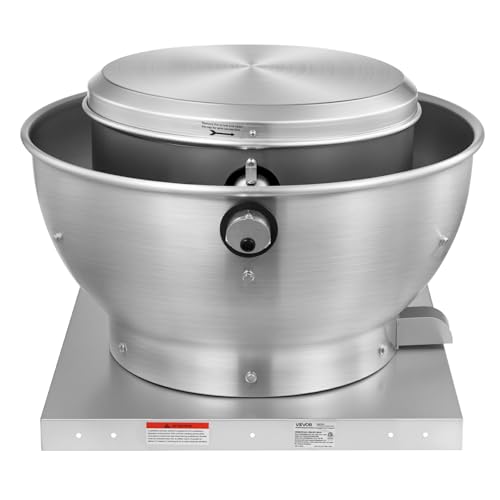
Equipped for outdoor or semi-outdoor use, this 2109 CFM unit features weatherproof IP54 protection and a corrosion-resistant aluminum alloy housing. A 560W copper motor provides strong airflow with a comparatively quiet under-75 dB operation, suitable for canopy hoods and food trucks where weather exposure is a concern.
Best for: outdoor installations or canopies where wind, rain, or temperature swings are common. Better for: environments prioritizing durability and quiet performance over maximum CFM. Caution: ensure sufficient electrical supply and compatible mounting to realize its full operational life in exposed settings.
VEVOR 1616 CFM — Direct Drive, 0.5HP

With 1616 CFM and a 0.5 HP direct-drive motor, this unit emphasizes strong suction with a low noise profile (≤75 dB). Built from a durable aluminum alloy and designed for outdoor exposure, it is well-suited for small- to mid-sized commercial kitchens and outdoor hood applications.
Best for: installations requiring solid airflow without the largest footprint or power draw. Choose this if you need a balance of efficiency and performance in a weather-exposed area. Limitation: lower CFM compared to higher-capacity models may require supplementary units for very large kitchens.
CAPTIVE-AIRE Direct Drive Inline Exhaust Fan — 900–1800 CFM

This 1.0 HP, 115V inline exhaust fan features a Totally Enclosed Air Over ECM motor and a stainless-steel housing, ideal for dishwasher exhaust or general ventilation in commercial settings. It provides reliable performance with robust construction suited for long-term use.
Best for: dishwasher exhaust or general ventilation where a compact inline design is preferred. Better for: environments requiring durable, corrosion-resistant housing. Caution: ensure the ECM motor is compatible with your control system and electrical supply.
CXRCY 1400 CFM Upblast Roof Fan

Featuring a full-copper motor running at 2700 RPM, this unit delivers 1400 CFM with a low 260W power draw. The spun-aluminum housing and all-weather design provide protection against rain and debris, making it suitable for roof-mount installations in factories, warehouses, or restaurant kitchens with rooftop venting needs.
Best for: roof-mounted exhaust where high reliability is required in tough weather. Better for: energy-conscious operations due to high efficiency. Limitation: 2700 RPM operation may require careful mounting to minimize vibration and noise transfer into building structure.
FICBXRA Hood Exhaust Fan — 1HP, 3500 CFM

This high-velocity, 1 HP direct-drive centrifugal upblast fan delivers a robust 3500 CFM for kitchens with heavy grease and smoke loads. The unit uses lightweight, corrosion-resistant aluminum and is designed for mounting on roofs or walls for strong, reliable venting.
Best for: large-volume restaurants or industrial kitchens with substantial exhaust demands. Better for: projects requiring maximum CFM in a compact footprint. Caution: ensure hood sizing and ductwork align with the 3500 CFM output to avoid over-venting or pressure issues.
Buying Guide: Key Considerations for Commercial Dishwasher Exhaust Fans
What airflow do you need? Determine the required CFM based on dishwasher load, hood size, ceiling height, and intended exchange rate. Higher CFM generally handles heavier smoke and heat but may consume more power and raise noise levels.
Do you need weatherproofing? Outdoor or canopy installations benefit from IP54-rated enclosures and corrosion-resistant housings. Consider all-weather design to minimize maintenance in harsh environments.
What motor and drive type fit your setup? Direct-drive fans reduce maintenance but may require precise mounting. ECM motors offer energy efficiency and smoother operation for long-term savings, especially in variable loads.
What about installation and ductwork? Matching fan size to hood and duct diameter is critical. Excessive static pressure reduces performance; ensure the system is designed for the fan’s CFM and RPM without excessive duct length or turns.
Noise considerations matter. Look for units advertised with low decibel levels, especially in open kitchens or shared spaces. Balance airflow needs with acceptable sound levels for staff comfort and customer experience.
Durability and compliance. UL or ETL listings indicate compliance with safety standards. Stainless or aluminum housings resist grease and corrosion in kitchen environments.
FAQ
- What is the difference between upblast and inline exhaust fans? – Upblast fans vent air upward through a roof or wall, while inline fans sit inside ductwork, pushing air through a connected system. Upblast units are common for rooftop hood ventilation.
- How do I choose the right CFM? – Calculate required air changes per hour for your space, then select a fan with sufficient CFM to achieve the desired ventilation rate given duct length and restriction.
- Is weatherproofing essential for all commercial fans? – Not always, but outdoor or canopy installations benefit significantly from IP-rated housings and corrosion-resistant materials.
- Can I mix different brands in a single system? – It’s possible but not recommended without a compatibility assessment of motors, controls, and electrical requirements.
- What maintenance is typically needed? – Regular inspection of belts or bearings (for belt-driven units), cleaning grease from housings, and checking electrical connections to prevent downtime.
- Do these fans require professional installation? – In most commercial environments, licensed electricians and HVAC technicians should perform installation to ensure compliance with codes and safety standards.