Best Induction Stove Oven Combination for Modern Kitchens
Choosing an induction stove oven combination means balancing fast, precise induction heating with a capable oven cavity. This guide highlights five top options suited for varying needs—from full-size freestanding ranges to compact built-in tops that pair with ovens. The best picks are explained for different buyers: busy families seeking speed and even baking, apartment dwellers needing space efficiency, and professional setups requiring robust, commercial-style performance.
Summary of chosen products:
- Kenmore 2296853 5.6 cu. ft. Front Control Induction Range Oven — Versatile front controls with true convection and air fry.
- FORNO 30-Inch Espresso Donatello Freestanding Induction Range — Large capacity with digital controls and convection.
- VEVOR Built-in Induction Electric Stove Top 30 Inch — Built-in 5 burners, high power, and precise touch controls.
- TI-1+1B 25-Inch Built-In Dual Burner Cooktop — Induction plus gas combo for flexible cooking.
- ChangBERT Induction Cooktop NSF Certified Pro Edition — Commercial-grade induction surface with Schott glass.
Kenmore 5.6 Cu. Ft. Induction Range Oven

Best for: Busy households that want a full range with responsive induction cooktop and a feature-rich oven. This Kenmore model combines 5.6 cubic feet of capacity with 4 dual-ring induction elements, a true convection oven, and an air fry function for healthier, crispy results. Front control design makes cooking and timing straightforward, with a temperature probe for precise results. A potential limitation is that larger meals may require thoughtful placement due to the single oven cavity.
FORNO 30-Inch Espresso Donatello Induction Range

Best for: Home chefs who need a large oven cavity and durable convection performance. The 5.0 cu. ft. oven and four radiant elements enable simultaneous multi-dish cooking. Its digital display, spacious cavity, and true convection are ideal for evenly baked goods and roasted dishes. Choose this if you prioritize a roomy oven and a modern control interface; a potential caveat is the price and installation requirements for a 30-inch freestanding unit.
VEVOR Built-in Induction Electric Stove Top 30 Inch
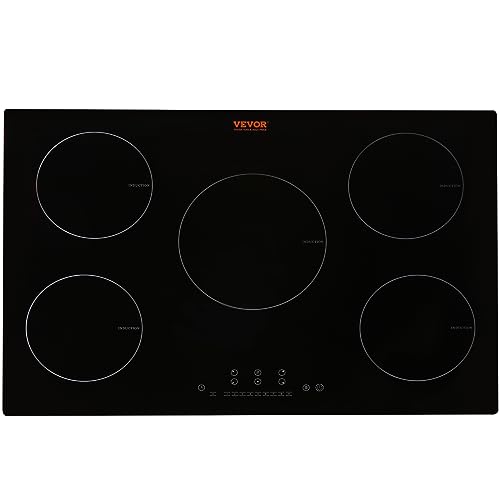
Best for: Home cooks seeking a powerful built-in cooktop with multiple zones and high heat. This 30-inch model offers five heating zones (up to 9000W total), nine power levels, and a user-friendly digital sensor touch control. It is particularly suited for modern kitchens with limited counter space, though it is a cooktop, not an oven, so it pairs best with a separate oven if an all-in-one unit is not required.
TI-1+1B 25-Inch Dual Burner Cooktop

Best for: small kitchens or RV setups that need a compact surface with both induction and gas options. The 25-inch unit combines one induction burner and one gas burner, offering versatile cooking modes in a tight footprint. Opt for this if you want hybrid fuel flexibility and limited space; the trade-off is reduced overall burner count and a smaller oven absence.
CHANGBERT Induction Cooktop Pro Edition

Best for: Commercial-grade or heavy-use kitchens needing robust reliability and fast heat with a professional-grade surface. This NSF-certified induction cooktop uses Schott Ceran glass for durability and a wide heating zone design. It is suited for professional environments or serious home chefs; a potential limitation is the need for proper venting and electrical supply in some installations.
Buying Guide: How to Choose the Right Induction Stove Oven Combination
- Cooking style and family size: Do you need a large oven cavity (family meals, holiday cooking) or a compact surface for everyday use? A true convection oven improves even browning and can support air fry features in select models.
- Power and responsiveness: Induction offers rapid heating and precise control. Look for multiple cooking zones, high wattage, and temperature probe options for consistent results.
- Space and layout: Freestanding ranges save space when you want an all-in-one unit, while built-in tops require matching oven modules or separate wall ovens.
- Controls and usability: Front controls or digital displays with clear timers help beginners and seasoned cooks alike. Temperature probes aid with exact doneness without opening the door.
- Durability and maintenance: Ceramic glass surfaces are easy to clean but can scratch if not treated carefully. Consider models with easy-to-clean finishes and oven racks that tolerate frequent use.
- Energy efficiency and safety: Induction is typically more energy-efficient than gas or electric coils. Look for safety features like child locks, auto shutoff, and residual heat indicators.
FAQ
- What is the main benefit of an induction stove oven combination?
– Induction provides fast, precise heating, while the oven handles baking and roasting in one appliance or a connected setup, saving space and time. - Is a freestanding induction range better than separate components?
– Freestanding ranges integrate cooktop and oven in one unit, which is convenient for fewer installation steps and a cohesive look, but separate components can offer more customization and potentially more oven capacity. - Do induction cooktops require special cookware?
– Yes. Induction requires magnetic cookware. Most modern stainless steel and cast iron work well; non-magnetic aluminum or copper may not heat efficiently. - What should I consider for installation space?
– Check cutout dimensions, electrical requirements (often 240V), ventilation needs, and whether a proper vent can support convection baking and any air fry features. - Is convection necessary for baking?
– Convection improves even heat distribution and faster cooking times, especially for roasts and pastries. If a model has a convection option, it’s advantageous for consistent results. - How important is a temperature probe?
– A temperature probe helps you monitor internal doneness without opening the oven, reducing heat loss and ensuring accurate results.