Best Natural Gas Countertop Stoves for Small Kitchens and Apartments
Answering the search intent for a natural gas countertop stove, this guide compares popular NG/LPG-convertible units that fit tight spaces. Each pick suits different needs—compact apartments, mid-size kitchens, or portable setups. The top five below offer good fuel flexibility, solid safety features, and practical burner layouts. The quick-reference table highlights what makes each model stand out and who it’s best for.
| Product | Best For | Why It Stands Out |
|---|---|---|
| KOXKING Black 24 Inch Gas Cooktop | Small to mid-sized kitchens | Convertible NG/LPG, four burners, built-in design |
| VEVOR 2 Burner Commercial Gas Stove | Fast-cook, compact counters | High BTU, dual-fuel capability, independent burners |
| LLAMA VIVA 12 Inch Gas Stove | Portable or compact homes | Dual fuel, thermocouple safety, stainless steel |
| ThermoMate 12 Inch Built-In Rangetop | Efficient, easy cleanup | Sabaf burners, flameout protection, stainless panel |
| VEVOR 4 Burners Commercial Stove | Small restaurant or busy kitchen | Four burners, high heat, dual-fuel option |
KOXKING 24 Inch Gas Cooktop Review
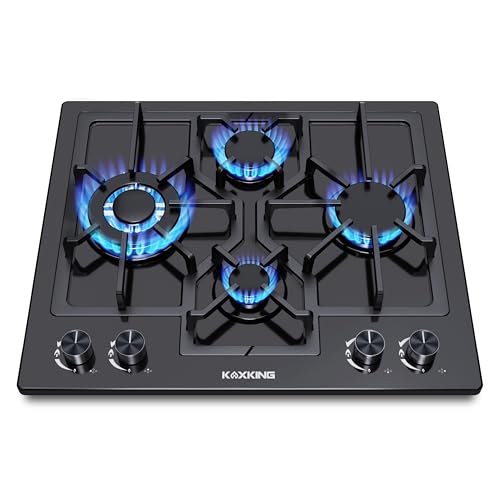
Best for users who want a compact built-in option with flexible fuel compatibility. The KOXKING model is NG/LPG convertible, easing installation in homes with varying gas supply. Its four-burner layout supports multitasking—from simmering sauces to high-heat searing. The 24-inch footprint fits many apartment kitchens without sacrificing performance.
Who it’s best for: apartment dwellers or small kitchens needing a versatile four-burner setup. Why selected: balance of space-saving design and fuel flexibility. Caution: ensure the included conversion kit is properly installed for safety and efficiency when switching fuels.
VEVOR 2 Burner Commercial Gas Stove

Best for fast service and small kitchen setups where quick meals matter. This two-burner model delivers high BTU output and independent burner controls, making it easier to manage different recipes. It’s compatible with NG and propane, with the default configuration favoring natural gas.
Who it’s best for: cooks who need fast heating and precise control in a compact footprint. Why selected: the independent burner control helps streamline multi-dish timing. Caution: propane adaptation requires switching accessories, so verify the included parts before use.
LLAMA VIVA 12 Inch Dual Fuel Cooktop
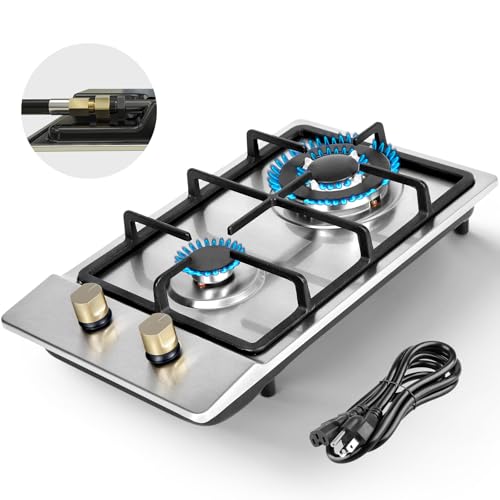
Best for compact homes or mobile setups where portability matters. LLAMA VIVA offers two burners with dual-fuel capability and a thermocouple safety system. Its stainless steel body and cast-iron grates stand up to regular use while maintaining a sleek look in small kitchens.
Who it’s best for: small households needing reliable dual-fuel capability in a portable or countertop-friendly design. Why selected: thermocouple safety adds an important layer of protection. Caution: the compact size means lower overall output; choose this if you don’t require high-volume cooking.
ThermoMate 12 Inch Heavy Built-In Rangetop
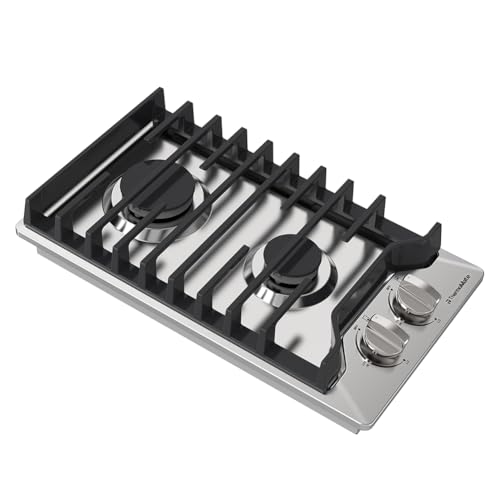
Best for kitchens that require robust build quality and easy maintenance. The ThermoMate rangetop uses Italy Sabaf burners for precise flame control, plus a thermocouple flameout protection system. Its 0.03-inch stainless steel panel and dishwasher-safe cast-iron grates help with quick cleanup in active kitchens.
Who it’s best for: home cooks who value durable construction and safety features. Why selected: strong emphasis on flame stability and cleanability. Caution: the 12-inch footprint limits burner area; consider larger layouts if you regularly cook large pans.
VEVOR 4 Burners Commercial Stove

Best for small commercial kitchens or high-usage homes needing multiple simultaneous cooking zones. This model provides four burners with independent controls and robust heat output. The dual-fuel capability adds installation flexibility for varied gas supplies.
Who it’s best for: small restaurants, catering setups, or larger households that frequently cook several dishes at once. Why selected: high burner count helps optimize workflow. Caution: installation and maintenance complexity increases with more burners; ensure proper ventilation and clearance in your space.
Buying Guide: Key Purchase Considerations
- Fuel compatibility: Choose a unit that natively supports Natural Gas and Propane or offers an easy, documented conversion. This avoids lingering compatibility issues if your gas supply changes.
- Burner layout and BTU: For multitasking, look for multiple burners with different BTU ratings. A rapid/high-BTU burner pairs well with a steady simmer burner for sauces.
- Size and installation type: Built-in countertop stoves save counter space and create a seamless look. Measure cabinet openings and ensure proper clearance around the cooktop.
- Safety features: Thermocouple flameout protection, push-to-turn knobs, and sturdy cast-iron grates reduce risk and improve reliability during busy cooking sessions.
- Material and cleaning: Stainless steel or glass-ceramic surfaces with easy-to-clean components help maintain aesthetics and hygiene in small kitchens.
- Portability vs. permanence: Portable dual-fuel options suit renters or campers, while built-in rangetops provide a stable kitchen upgrade for homeowners.
- Maintenance and parts availability: Check replacement parts (valves, burners, igniters) and warranty terms to ensure long-term serviceability.
Frequently Asked Questions
- What is the difference between natural gas and propane in countertop stoves?
– Natural gas typically provides a steadier supply with lower pressure, while propane offers higher BTU output and stronger flame when needed. Most dual-fuel models switch via nozzle changes or adapters. - Can I convert any NG stove to LPG?
– Not all stoves are convertible. Use models specifically labeled as NG/LPG convertible and follow the manufacturer’s conversion kit instructions for safety. - Are four-burner stoves always better for small kitchens?
– More burners increase multitasking capability, but they require more counter space and ventilation. Choose based on your typical cooking workload and space. - Is safety protection essential for countertop stoves?
– Yes. Features like flameout protection and child-proof controls reduce risk, especially in households with children or pets. - What should I consider when choosing between built-in and portable options?
– Built-in options save space and look integrated; portable units offer flexibility for renters or temporary setups. Consider ventilation requirements and stability. - Do these stoves require a vent hood?
– Most do for indoor use, especially in compact kitchens. Check local code requirements and install a ventilation solution appropriate for the cooktop’s BTU output.