Best Chest Freezer for Cold Plunge: Turn Freezers Into Ice Baths
Answer: A chest freezer with a dedicated cold plunge liner is the most practical setup for consistent ice baths at home. The top picks below are best for DIY plunge tubs, for cold-water therapy enthusiasts, and for buyers who want a compact, year-round solution. Each item is suited to different space, budget, and performance needs.
| Product | Brand | Capacity | Best For |
|---|---|---|---|
| Caplide BoxPlunge Cold Plunge Liner Box | Caplide | 10 – 19 cu ft | Best for converting a standard chest freezer into a dedicated cold plunge tub |
| COWSAR 3.5 Cu.Ft Chest Freezer | COWSAR | 3.5 cu ft | Best for compact spaces with deep-freeze capability |
| EUHOMY 3.5 Cu.Ft Chest Freezer | EUHOMY | 3.5 cu ft | Best for easy mobility and small footprints |
| Midea MERC04C4BAWW Chest Freezer | Midea | 3.5 cu ft | Best for garage or basement secondary freezer use |
| Frigidaire 7 Cu. Ft Chest Freezer | Frigidaire | 7 cu ft | Best for larger, multi-person plunge or meal-prep backup |
Caplide BoxPlunge Cold Plunge Liner Box

Features include a 100% quiet, all-in-one liner designed to convert a 10 cu ft or 19 cu ft chest freezer into a cold plunge tub. It is described as not condensating water, suitable for year-round use, and compatible with a BoxPlunge filter and control box for enhanced performance. It fits 7 cu ft freezers but may be loose. Energy efficiency is noted because the chest freezer is well insulated. Best for buyers who want a plug-and-play plunge liner that minimizes setup time and maximizes insulation.
Best for: Home users who want a dedicated plunge setup without remodeling. Limitations: Requires a compatible chest freezer and additional BoxPlunge components for full functionality.
COWSAR 3.5 Cu.Ft Chest Freezer

Features include an electronic temperature control panel with a digital internal display, a temperature range from approximately 14°F to 40°F (with quick-freeze to -40°F within 48 hours), and a compact 3.5 cu ft capacity. Best for: Smaller households or spaces needing a true deep-freeze option in a compact footprint. Limitations: Ultra-low temperature range is designed for freezing rather than dedicated plunge insulation; ensure proper liner integration for plunge use.
EUHOMY 3.5 Cu.Ft Chest Freezer

Highlights include a compact 3.5 cu ft capacity, wheels for mobility, a drainage port, and a high-density foam insulation layer. Temperature range and noise levels are designed for quiet operation in apartments, garages, or dorms. Best for: Buyers needing lightweight, mobile storage with a small footprint that can double as a plunge option with appropriate liner. Limitation: Not explicitly designed as a plunge tub; additional conversion accessories may be needed for plunge use.
Frigidaire EFRF7003 Chest Deep Freezer

This 7.0 cu ft chest freezer offers a large storage capacity with seven temperature settings and a removable vinyl-coated wire basket for better organization. Best for: Households that need a spacious secondary freezer and want straightforward temperature control. Limitation: Not specifically marketed for plunge use; depth and internal dimensions should be measured before adapting to a plunge liner.
VEVOR Chest Freezer, 6.7 Cu.Ft
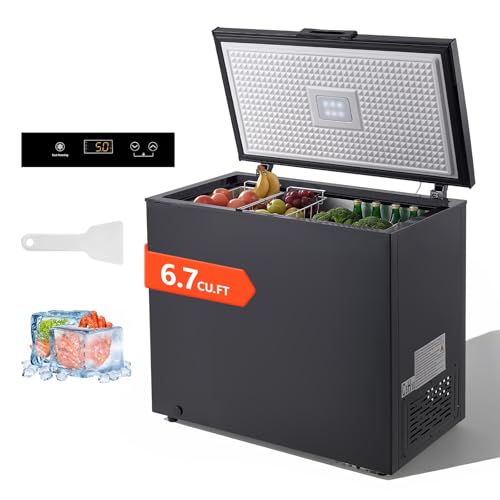
Features a 6.7 cu ft capacity with two baskets, a precise electronic control panel, and a temperature range suitable for deep freezing. It emphasizes energy efficiency and low noise operation. Best for: Buyers who want a larger chest freezer with organized storage and accurate temp control. Limitation: Not explicitly a plunge liner; additional accessories may be needed for safe plunge conversion.
Buying Guide: Chest Freezer For Cold Plunge
- What size should you choose? Consider how many bath participants you plan for and how much space you have. 3.5 cu ft models are great for single-person plunges or tight spaces; 7 cu ft and larger offer room for multi-user setups or bulk storage alongside a plunge liner.
- Can the freezer be converted? A dedicated cold plunge liner or kit (like the Caplide BoxPlunge) is often required to convert a chest freezer into a stable plunge tub. Ensure compatibility with your freezer model and internal dimensions.
- Insulation and condensation: For consistent ice baths, use a well-insulated freezer liner and ensure the unit minimizes condensation. A good plunge setup should not drip water onto surrounding surfaces.
- Temperature control: Plunge setups benefit from precise temperature control. Choose freezers with a clear temperature display or a digital control panel for easier monitoring during sessions.
- Mobility and installation: If you need to relocate the unit, look for a model with wheels or easy-to-maneuver dimensions. Consider garage or basement placement for space and climate considerations.
- Longevity and energy use: Look for energy-efficient models with solid insulation. For year-round use, a low-noise operation helps maintain a comfortable home environment.
Frequently Asked Questions
- Can I use any chest freezer for a cold plunge? Not all freezers are designed for conversion. Use a liner or conversion kit compatible with your model to minimize leaks and condensation.
- Do I need special pump or filter with a plunge liner? Some liners require a separate filter or control box for best performance. Follow the liner’s installation guidance for compatibility.
- Is a larger freezer better for cold plunging? A larger capacity provides more water volume and can support more participants, but ensure your space and liner kit are compatible with the freezer’s dimensions.
- Will using a freezer for cold plunging affect electricity usage? A well-insulated chest freezer will minimize incremental energy use when converted for plunge use, but monitor energy needs with your specific setup.
- What safety considerations should I follow? Keep cords, water, and electrical components separated. Use a grounded outlet and follow manufacturer safety guidelines for any included control or filtration systems.
- Can I use a freezer without a liner for cold plunging? Direct use without a liner is not advisable due to potential leaks, condensation, and hygiene concerns. A liner or dedicated plunge tub improves safety and ease of cleaning.