Best Solar and Electric Food Dryers for Healthy Snacking
Looking for a reliable dryer to preserve fruits, vegetables, jerky, and herbs? This guide covers five top picks that suit different needs—from solar-powered options to compact electric models. The list helps buyers choose based on capacity, drying speed, and ease of use. Ideal for home cooks who want nutrient-rich, preservative-free snacks.
Summary table of chosen products:
| Product | Best For | Key Benefit |
|---|---|---|
| JUA Technologies Solar Food Dehydrator | Sun-powered drying enthusiasts | Mini greenhouse design speeds sun drying |
| Cercker Food-Dehydrator Machine | Large-capacity, thick-cut foods | Stainless steel, powerful air flow |
| OSTBA Food Dehydrator | Balanced budget with features | Adjustable temp, 5 trays, clear window |
| Rosewill Compact Food Dehydrator | Small to mid-size batches | 360° hot air circulation, adjustable timer |
| uhyOHF Energy Food Dehydrator | Versatile temp control | 60–80°C range for multiple foods |
JUA Technologies Solar Food Dehydrator
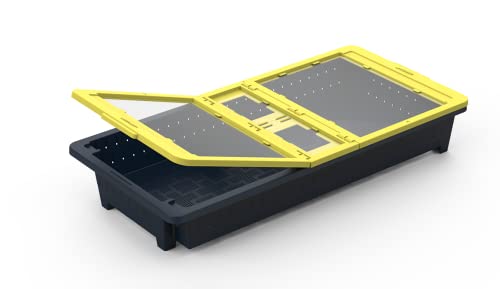
Features include a USA-made design with 1 Dehytray Solar Dehydrator, 1 Hygrometer, and 100% BPA-free food-grade materials. It acts as a mini-greenhouse to accelerate sun drying for herbs, fruits, and vegetables. Best for buyers who want a solar-powered approach and a compact, domestic-made option. Caution: performance depends on sun exposure and climate, so results vary by location.
Cercker Food-Dehydrator Machine 8 Trays
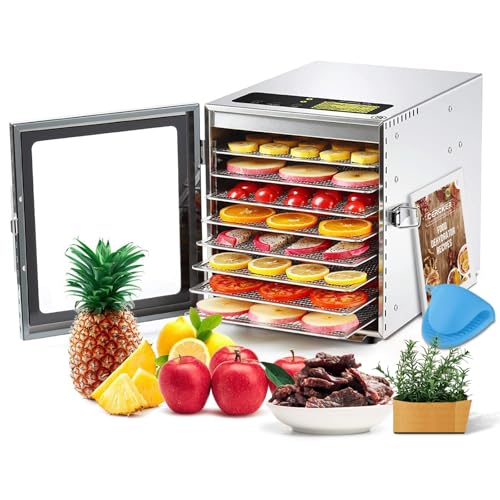
Best for large batches and thick-cut foods. This 8-tray unit uses a powerful air circulation system and 1600 rpm fan to evenly dry meats, fruits, and vegetables. It employs food-grade stainless steel and has a reliable edge-wrapping design for durability. Choose this if you need more tray capacity and uniform drying. Caution: larger footprint and higher power use than smaller models.
OSTBA Food Dehydrator
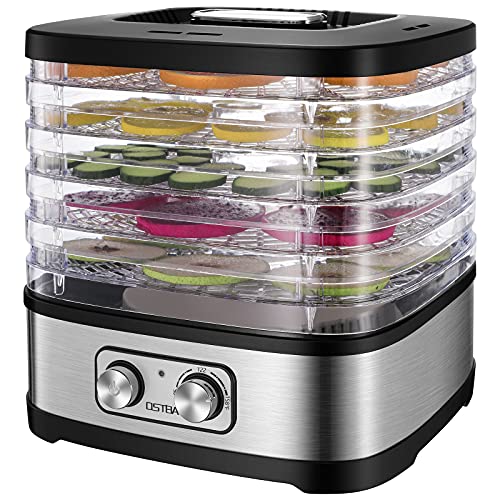
Best for budget-conscious shoppers who still want solid performance. The OSTBA model offers adjustable temperature (95–158°F), 5 BPA-free trays, and a transparent window for monitoring. The 360° airflow promotes even drying, protecting vitamins and minerals. Caution: max tray height is fixed unless you adjust spacing; thick items may require pre-cutting.
Rosewill Compact Food Dehydrator

Best for small to mid-size batches with precise control. It features 5 trays, 360° hot air circulation, and a 0.5–48 hour adjustable timer. Temperature ranges 95–158°F, enabling gentle drying for herbs or longer-term preservation for jerky. Choose this for reliable, versatile everyday use. Caution: at full capacity, airflow may slow if items are densely packed.
uhyOHF Energy Food Dehydrator

Best for flexibility in temperature control. The 6-tray unit offers 60–80°C adjustable settings ideal for fruits, vegetables, jerky, and herbs. Easy to clean with removable trays and a manual that guides usage. Best for households needing a broad temperature range to dial in different ingredients. Caution: 60–80°C is moderate; for jerky or tough cuts, ensure proper prep and slicing.
Buying Guide
- Drying method – Solar dryers rely on sunlight and often speed up with a greenhouse effect, while electric dehydrators rely on fan-assisted convection for consistent results regardless of weather.
- Capacity and trays – Determine how much you plan to dry at once. More trays increase throughput but may require more space and longer setup.
- Temperature control – Look for models with adjustable ranges. Lower temps preserve nutrients; higher temps speed up drying for tougher items.
- Material safety – BPA-free trays and food-grade stainless steel improve safety and longevity. Removable trays simplify cleaning.
- Monitoring features – A clear window or hygrometer helps track progress and reduce over-drying. Some models include built-in timers.
- Maintenance and cleaning – Dishwasher-safe trays save time; ensure easy accessibility for routine cleaning and drying.
- Best use cases – Solar options suit sunny climates and off-grid setups; electric dehydrators excel in controlled indoor environments and year-round use.
Frequently Asked Questions
- What is the main difference between solar and electric dehydrators? Solar models use sunlight to heat and dry, while electric models rely on a fan and heater for consistent drying regardless of weather.
- How do I know which tray size to choose? Consider the item thickness and batch size. Thicker slices need more spacing and sometimes bigger trays.
- Can I dry meat in these devices? Yes, provided the unit supports safe meat drying temperatures and proper preparation. Use appropriate slicing and seasoning guidelines.
- Are all trays BPA-free? Most modern dehydrators use BPA-free trays; always verify in product specs.
- How long does it take to dry foods? Time varies by item, thickness, temperature, and method. Thin fruit slices may dry in a few hours; jerky may take longer.
- Do these devices retain nutrients? Drying at proper temperatures helps retain vitamins and minerals; avoid excessive heat that can degrade sensitive nutrients.