Best Beverage Fridge Comparison: Mini Fridge Pros and Cons for Every Kitchen
The best choice depends on your space, storage needs, and what you primarily chill. This guide compares common beverage fridges and mini fridges, highlighting who they’re best for, how they differ, and practical buying tips. Ideal buyers include home bar enthusiasts, office workers stocking drinks, students in dorms, and small-apartment dwellers needing flexible storage for cans, bottles, and wine. Below is a concise selection of five relevant models with clear reasons to choose each.
| Model | Capacity | Great For | Why It Stands Out |
|---|---|---|---|
| Honeywell Beverage Refrigerator and Cooler | 116 Can | Home bar and office environments requiring glass showability | Glass door for visibility, digital thermostat, adjustable shelves |
| EUHOMY Mini Fridge 130 Can Beverage Cooler | 130 Can | Party hosts and multi-person spaces needing flexible layout | 5 removable shelves, precise digital control, UV-resistant glass |
| Saeoola Beverage Refrigerator 3.2 Cu Ft | ~105 drinks | Dorms, apartments, small offices | Double glass door, 7-set temperature presets, LED interior light |
| hOmeLabs Beverage Refrigerator | 120 Cans | Home bars and multi-drink storage | Reinforced door, 3 removable shelves, crisp LED lighting |
| Icyglee Beverage Refrigerator 126 Can | 126 Can | Large beverage collections in compact footprint | 8-slot adjustable shelves, precise temperature control |
Honeywell Beverage Refrigerator and Cooler

Features: Three pane glass door for temperature control, electronic digital thermostat, slide-out plastic-coated shelving. Best for: buyers who want a clear view of beverages and precise climate control in an office or bar area. Why selected: the glass door plus digital controls offer easy monitoring and consistent cooling. Caution: glass doors can be more prone to fingerprint staining and require regular cleaning for optimal clarity.
EUHOMY Mini Fridge 130 Can Beverage Cooler

Features: 3.2 cu. ft. capacity with 5 removable shelves, digital temperature control from 37°F to 61°F, LED display and a glass door with UV protection. Best for: households or offices needing flexible organization and precise cooling for a mix of sodas, beer, and wine. Why selected: strong capacity with adaptable shelving and modern cooling. Caution: glass door and shelves require careful loading to avoid overfilling and potential door alignment issues.
Antarctic Star Beverage Refrigerator Cooler 68 Can

Features: 1.7 cu.ft capacity with 2 adjustable shelves, digital thermostatic controls, tinted double-pane glass door. Best for: compact spaces like desks, small offices, or dorm rooms needing a dedicated drink fridge. Why selected: compact form with digital control for small-scale cooling. Caution: smaller capacity means frequent restocking for larger gatherings.
Saeoola Beverage Refrigerator 3.2 Cu Ft

Features: 4 adjustable/removable shelves, double glass door with stainless steel frame, built-in soft LED interior light, 32°F-50°F range. Best for: spaces requiring a balance of size, storage versatility, and gentle lighting for drink selection. Why selected: large internal capacity relative to footprint with adaptable shelving. Caution: door seal and double-glass design may require periodic inspection to maintain energy efficiency.
hOmeLabs Beverage Refrigerator

Features: 3.2-cubic-foot capacity, reinforced glass door, white LED lighting, holds 120 cans with 3 removable shelves. Best for: home bars or offices needing a stylish, spacious cooler with clear visibility. Why selected: solid capacity and modern design. Caution: power consumption varies with door opening frequency; avoid frequent full-door access to maintain consistent cooling.
Icyglee Beverage Refrigerator 126 Can
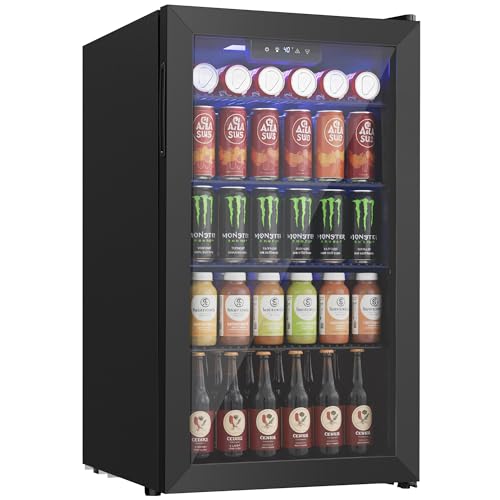
Features: 3.2 cu.ft capacity, 8-slot adjustable shelves, tempered glass door with low-e film, 34°F-64°F temperature control. Best for: larger can collections in homes or offices where a flexible interior layout is needed. Why selected: broad temp range and robust shelving. Caution: ensure door closes firmly to avoid cold air loss and energy inefficiency.
Buying Guide: Key Considerations for Beverage Fridges and Mini Fridges
- Capacity and layout: Determine how many cans or bottles you plan to store and whether you prefer adjustable shelves for tall bottles or uniform cans. Larger models offer 120+ can capacity; smaller options fit compact spaces but may require frequent restocking.
- Temperature control: Look for precise digital thermostats with a clear display. Typical ranges span from about 32°F to 64°F. A wider range supports beer, soda, and wine, while tight control helps maintain optimal flavors and carbonation.
- Door design: Glass doors showcase contents but can require more frequent cleaning and a sturdier seal. Double-pane or low-e glass improves insulation but may add cost. Solid doors save energy in very tight spaces but reduce visibility.
- Shelves and interior layout: Removable or adjustable shelves enable customization for bottles of varying sizes. Chrome wire shelves are common, while solid shelves reduce dye/odor absorption and are easier to clean.
- Footprint and placement: Measure available space to avoid overhangs or doors hitting walls. Door swing direction matters if placed under cabinets or against walls.
- Energy use and noise: Energy-efficient models minimize power draw. Noise levels matter for bedrooms or quiet offices; look for models with solid-door construction and insulated cabinets if you are sensitive to sound.
- Durability and build quality: Stainless steel or reinforced interiors resist wear in high-traffic settings. If frequent door openings are expected, prioritize shelves and thermostats that endure daily use.
Frequently Asked Questions
- Can a beverage fridge also chill wine? Yes, many models support a wine-friendly temperature range, typically around 45–60°F, while still accommodating sodas and beer. Check the specific model’s range to ensure it fits your needs.
- Is a glass-door fridge better than a solid-door fridge? Glass doors maximize visibility and quick selection but may have slightly higher energy use and require more frequent cleaning. Solid doors save energy and keep interiors cooler when opened often.
- What size should I choose for office use? Consider a compact 3.2–3.5 cu ft fridge with adjustable shelves to store a mix of cans and small bottles. For larger teams, a 4–6 cu ft model with more shelves offers better scalability.
- Do mini fridges use more energy than full-size fridges? Generally, smaller fridges use less overall energy, but efficiency depends on insulation, door design, and usage patterns. A well-sealed unit wastes less energy when opened less frequently.
- What maintenance helps extend cooling efficiency? Keep door seals clean and crack-free, avoid leaving doors open for extended periods, and ensure adequate clearance around the vent areas for proper airflow.
- Are these units suitable for wine storage? While many models can handle wine at slightly cooler or moderate temperatures, dedicated wine coolers with stable, lower humidity levels offer better long-term wine preservation. If wine is your main priority, choose a model that emphasizes a stable environment and a wine-friendly temperature range.