Best Self-Feeding Baby Bottles With Tube Straw Systems for Toddlers
Answering the search intent for parents seeking self-feeding bottles: these options leverage built-in tubes or straw systems to help toddlers feed more independently while supporting upright positioning and reduced air intake. Best for caregivers who want hands-free feeding aids during travel, car rides, or daily routines. Below are five top picks that emphasize anti-colic design, safe materials, and toddler-friendly features. A quick summary table follows to help you compare at a glance.
| Product | Size / Pack | Best For | Notes |
|---|---|---|---|
| Hands-Free Baby Bottle – Dinosaur, 9 oz (2 Bottles) | 2 × 9 oz | Traveling families with toddlers needing 1-2 bottles | Anti-colic, tube straw system, pediatrician recommended |
| Hands-Free Baby Bottle – Lion, 9 oz (1 Pack) | 1 × 9 oz | Single-bottle needs, car seat and stroller use | Lightweight, easy to clean |
| Hands-Free Baby Bottle – Pink, 9 oz (1 Bottle) | 1 × 9 oz | Everyday home and travel feeding | Anti-colic, tube straw system |
| Hands-Free Baby Bottle – Lion, 9 oz (2 Bottles) | 2 × 9 oz | Two-bottle setups for busy families | Convenient for caregivers on the go |
| Oberni Baby Bottles – Weighted Straw 9 oz | 1 × 9 oz | Weighted straw for balanced feeding and upright posture | BPA-free, non-slip handle |
Hands-Free Baby Bottle – Dinosaur (2 Bottles)

Product: Hands-Free Baby Bottle – Dinosaur, 9 oz, 2-pack
- Designed to aid feeding toddlers 1 year and older while traveling, in strollers, car seats, or at home.
- Safe materials: BPA-free, lead-free, phthalate-free; set includes two 9 oz bottles.
- 3m+ unisex baby bottle with a tube straw system for toddlers; pediatrician recommended.
Best for: Families who need a two-bottle solution for consistent self-feeding routines on the go. Choose this if you want a ready-to-use two-bottle setup with a shared anti-colic system.
Caution: The two-bottle package may require more storage space; ensure valve and straw connections are cleaned thoroughly to maintain performance.
Hands-Free Baby Bottle – Lion (1 Pack)

Product: Hands-Free Baby Bottle – Lion, 9 oz, 1 bottle
- Travel-friendly and suitable for car seats and strollers.
- Safety: BPA-free, lead-free, phthalate-free; 3m+ unisex bottle with tube straw system.
- Best for: Parents seeking a compact single-bottle option with the same self-feeding benefits. Ideal when you don’t need a multiple-pack.
Limitation: Designed as a single bottle; if you rely on multiple daily bottles, a multi-pack may be more economical.
Hands-Free Baby Bottle – Pink (9 oz, 1 Bottle)

Product: Hands-Free Baby Bottle – Pink, 9 oz, 1 bottle
- Designed to aid feeding toddlers 1 year and older; great for travel and home use.
- Safe materials: BPA-free, lead-free, phthalate-free; 9 oz bottle with a tube straw system.
- Best for: Parents who prefer a pink-accent bottle for everyday self-feeding without needing a second bottle right away.
Limitation: A single bottle may require frequent cleaning if used for multiple daily feeds.
Hands-Free Baby Bottle – Lion (2 Bottles)
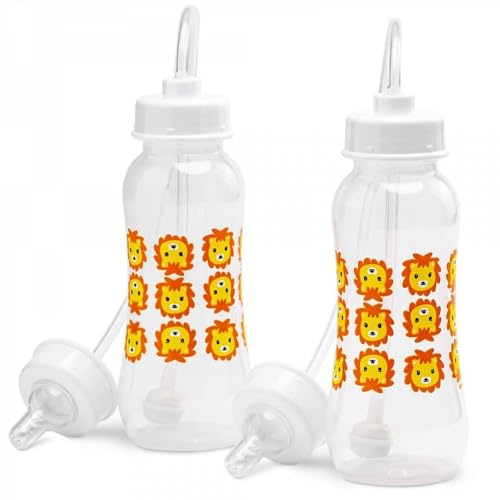
Product: Hands-Free Baby Bottle – Lion, 9 oz, 2-pack
- Designed to aid feeding toddlers 1 year and older while traveling, in a stroller, car seat, or at home.
- Safe materials: BPA-free, lead-free, phthalate-free; 2 × 9 oz bottles; tube straw system for toddlers.
- Best for: Families needing a reliable two-bottle self-feeding setup to cover multiple daily feeds.
Limitation: If you only need a tiny bottle option, 9 oz may be larger than some toddlers’ initial self-feeding needs.
Hands-Free Baby Bottle – 4 Oz (2 Bottles) Pink

Product: Hands-Free Baby Bottle – 4 oz, 2-pack
- Designed to aid feeding toddlers 1 year and older; handy for home use and short trips.
- Safe materials: BPA-free, lead-free, phthalate-free; 2 × 4 oz bottles with tube straw system.
- Best for: Parents seeking smaller volumes for paced feeding and quick transitions from baby to toddler feeding.
Limitation: Smaller capacity means more frequent refills for longer outings or busy days.
Oberni – Weighted Straw Toddler Bottles

Product: Oberni Baby Bottles, Weighted Straw, 9 oz
- Anti-colic design with a vented valve to reduce air intake and related spit-up.
- Breast-like nipple made from food-grade silicone; BPA-free and easy to clean.
- Best for: Parents seeking a bottle with a weighted straw that encourages upright feeding and easier handling.
Limitation: The weighted straw design may require careful cleaning to maintain performance and ensure proper seal on the vent.
Buying Guide: Key Considerations For Self-Feeding Bottles
- Intended use and age: Most self-feeding bottles target toddlers 1 year and older. Consider whether you need travel-ready options or home-use bottles primarily.
- Feeding posture: Upright straw systems support natural swallowing and can reduce gas and ear pressure. Look for bottles advertising upright feeding benefits.
- Anti-colic features: Nipple valves, venting, and straw systems help minimize air intake. Check for dual-vent or built-in valve designs if colic is a concern.
- Materials and safety: BPA-free, lead-free, and phthalate-free materials are standard. Inspect for easy cleaning and dishwasher compatibility where possible.
- Capacity and packaging: Decide between single-bottle or multi-pack options. Multi-packs can be more economical for families with ongoing feeding needs.
- Ease of cleaning: Wide-neck designs and simple valve assemblies reduce cleaning effort and improve hygiene.
- Weight and handling: A non-slip handle or ergonomic grip can help toddlers manage the bottle as they gain independence.
- Compatibility with existing accessories: Ensure valve, nipple, and straw sizes suit your toddler’s preference and feeding pace.
FAQ
- Q: Are these self-feeding bottles suitable for air travel? A: Yes, many models are designed for travel and can help maintain feeding routines on the go.
- Q: Do self-feeding bottles reduce colic? A: Anti-colic features, including venting and straw systems, aim to minimize air intake, which can help with gas and fussiness for some babies.
- Q: What age is best for transitioning to self-feeding bottles? A: Typically around 12 months and older, depending on the child’s development and feeding readiness.
- Q: Are there safety concerns with straw-based bottles? A: Choose BPA-free and lead-free bottles; clean valves and straws regularly to prevent mold or residue buildup.
- Q: Can I mix two-bottle and single-bottle options in a feeding routine? A: Yes, many caregivers combine multi-packs with single bottles to fit daily needs and schedules.
- Q: How do I choose the right capacity? A: For travel or busy days, 9 oz bottles are common; for quick feeds or beginners, consider smaller 4 oz options.