Best 18-Degree Knife Sharpeners for Precision Edges
Answering the search intent: these sharpeners are ideal for home cooks and professionals who want a consistent, sharp edge at around 18 degrees. The top picks cover both manual and electric styles, with adjustable angles to fit Western and Asian knives. Best for users who want precise angle control, easy maintenance, and reliable edge retention. This guide highlights five options that align with an 18-degree focus, plus a concise buying table to compare key details at a glance.
| Product | Best For | Angle Range | Type |
|---|---|---|---|
| 5 Precision Adjust Knife Sharpener (Sharp Pebble) | Home cooks needing adjustable angles | 12°, 15°, 18°, 21°, 24° | Manual |
| Chef’sChoice 15XV EdgeSelect | Serrated and straight-edge knives requiring 15° edges | 15° (and conversions to other edges) | Electric |
| RazorSharp Adjustable Sharpening System | Versatile kitchen and professional knives | 14°–24° | Manual |
| Cangshan 1026108 3-Stage Sharpener | Western and Asian knives with two-stage sharpening | 14°–24° | Manual |
| Work Sharp Precision Adjust Knife Sharpener Kit | Multi-purpose, portable sharpening | 15°–30° | Manual |
5 Precision Adjust Knife Sharpener by Sharp Pebble
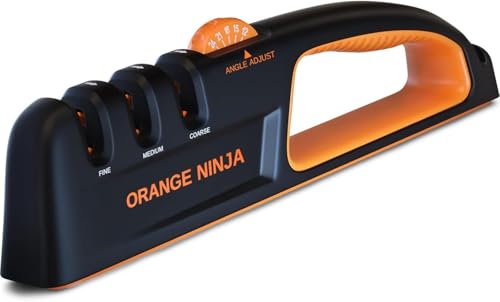
Best for users who want adjustable sharpening angles at multiple presets. The Sharp Pebble model provides 12°, 15°, 18°, 21°, and 24° slots, enabling precise edge formation for various blade types. It is especially suited for straight-edged knives; serrated blades and scissors are not compatible. The ergonomic, handheld design makes quick adjustments straightforward, and it doubles as a pocket and hunting knife sharpener in addition to kitchen use. A key strength is maintaining a razor edge with minimal passes, and the 18° setting is ideal for many chef’s knives.
Who it’s for: cooks who regularly switch between knife styles and want a single, compact tool to maintain surgical precision. Limitation: not suitable for serrated blades or scissors, which may require a separate sharpener.
Chef’sChoice 15XV EdgeSelect
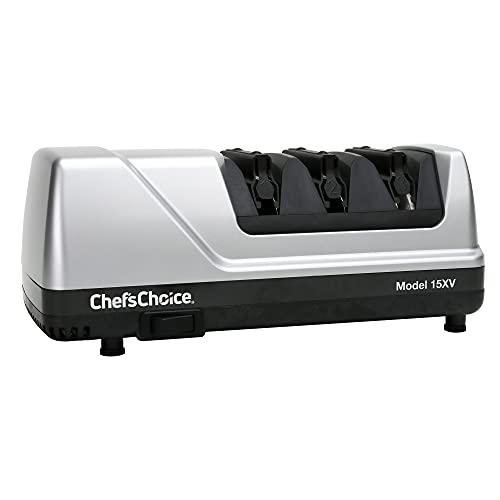
Best for converting factory edges into high-performance 15-degree edges, with diamond abrasives and flexible guides for automatic angle control. The product supports straight-edge and serrated knives, offering a broad sharpening range. It is a strong choice for users who value a precise, repeatable angle with minimal effort and a straightforward on/off operation. A potential limitation is that switching angles or blade types may require following specific guides to ensure optimum results.
RazorSharp Knife Sharpener With Adjustable Angle Guide

Best for precision sharpening across a wide angle range, with diamond-coated ceramic stones for durability. The adjustable knob supports angles from 14 to 24 degrees, making it suitable for kitchen, professional, and chef knives. The diamond-coated ceramic stones extend blade life and deliver consistently sharp results. Limitation: performance depends on maintaining consistent technique, as with most manual sharpeners.
AIERLIAN Knife Sharpener Tool

Best for steady edge maintenance with a two-angle system at 20° and 15° suitable for many household knives. It uses #400 diamond and #3000 ceramic discs to first remove a shallow burr and then polish for a refined edge. The magnetic angle supports help maintain consistent sharpening. Choose this if you want a simple, reliable system with a longer-term edge retention focus. Caution: not designed for serrated blades or scissors.
Cangshan 1026108 3-Stage Sharpener

Best for both Western- and Asian-style knives with a two-stage sharpening approach. The coarse tungsten carbide stage restores dull edges quickly, while the fine ceramic stage hones and finishes, with an additional ceramic slot for sharpening two-piece shears. Angle adjustment ranges from 14° to 24°. Best for buyers who want a complete, compact solution in one unit. Limitation: primarily manual sharpening, requiring some practice to achieve consistent results.
Work Sharp Precision Adjust Knife Sharpener Kit
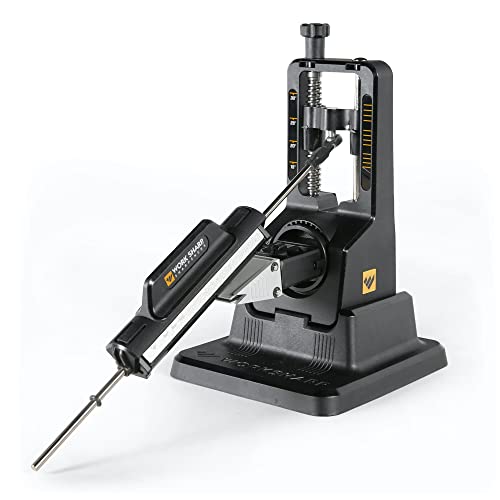
Best for versatility and portability with a fixed-angle guidance system and adjustable range from 15° to 30°. A three-sided abrasive jig and a v-block clamp help stabilize sharpening, while the 1-degree increment adjustments enable precise reprofiling or polishing. Choose this if you want a single tool capable of sharpening a wide variety of knives, including serrated blades. Limitation: manual operation requires careful technique to maximize results.
Buying Guide
What should you consider when choosing an 18-degree knife sharpener?
- Angle needs: Do you primarily use 15° or 18° edges, or do you switch between angles for different tasks?
- Knife types: Are you sharpening straight-edge, serrated, or specialty blades?
- Portability and setup: Do you want a compact manual sharpener or a powered unit with adjustable guides?
- Durability and maintenance: Do you need diamond abrasives, ceramic finishes, or tungsten carbide for longevity?
- Ease of use: Is a guided system with preset angles preferable to manual freehand sharpening?
How to compare options quickly:
- Angle range: Ensure the device covers 14°–24° if you want 18° capability.
- Edge type compatibility: Verify whether serrated knives are supported if that’s in your kitchen.
- Maintenance: Diamond abrasives last longer and resist clogging; ceramic finishes provide a fine polish.
- Ease of use: Electric sharpeners offer convenience; manual units require technique but are inexpensive and portable.
Frequently Asked Questions
- What is the advantage of an 18-degree edge? – It provides a balance of sharpness and durability for many kitchen knives, especially softer steels and common chef’s knives.
- Can I sharpen serrated knives with these tools? – Some models support serrated blades; others do not. Check product specs before purchasing.
- Are adjustable-angle sharpeners better than fixed-angle ones? – Adjustable models offer flexibility for multiple blade types and preferences, which is beneficial if you own diverse knives.
- How often should I sharpen knives? – Frequency depends on use and blade condition; moderate home use may require sharpening every few months, with interim touch-ups as needed.
- Is a manual sharpener as effective as an electric one? – Manual sharpeners can be highly effective when used correctly; electric units provide speed and consistent angles with less effort.
- What maintenance is required after sharpening? – Wipe blades clean, dry the sharpener, and store it in a dry place to prevent corrosion or residue buildup.