Best Vintage Electric Meat Grinders for Home Use
Answering the search for reliable vintage-style electric meat grinders, this guide highlights five contemporary models that vibe with retro aesthetics while delivering modern performance. These grinders are best for home cooks who want high-capacity grinding, sausage stuffing, or kibbeh making without professional gear. The top picks include compact options for small kitchens and heavier-duty units for weekend batch cooking. Below is a quick summary to help you compare features at a glance.
| Product | Best For | Notes |
|---|---|---|
| Aiheal Electric Meat Grinder | Bulk grinding & sausage making | 3 sausage tubes, 3200W max, copper motor |
| Weston Electric Meat Grinder | Frequent use & stuffing | 1 HP motor, 2 speeds, durable build |
| AAOBOSI Meat Grinder | Home cooks needing storage | Smart touch screen, auto-reverse, built-in storage |
| VEVOR Commercial Meat Grinder | High throughput | 1100W, heavy-duty, ETL listed |
| FOHERE Commercial Meat Grinder | Restaurants/home shops | 1100W, 330 lbs/hour, versatile |
Aiheal Electric Meat Grinder Review

Best for high-volume home use. This grinder offers a 300W base with 3200W max locked power to speed up bulk grinding, suitable for beef, pork, venison, and fish. The 100% copper motor and stainless steel components contribute to durability. A locking knob and overload protection target safer operation, turning off automatically if overheating or overloading occurs.
Why it’s chosen: The combination of power, safety features, and multiple sausage attachments makes it ideal for hunters or meal-preppers who grind in larger batches. Caution: the max power mode should be used in bursts to avoid overheating during extended sessions.
Weston Electric Meat Grinder & Sausage Stuffer

Best for predictable home use with easy stuffing. The 750W (1 HP) motor handles grinding at 4–5 pounds per minute and offers two speeds plus a reverse to prevent jams. Die-cast aluminum body and metal gears provide sturdy construction, while cam action headlock ensures secure attachment. It suits cooks who often grind for burgers or sausage, and who value reliability.
Why it’s chosen: The dual-speed design and jam-prevention features are practical for steady weekend projects. Limitation: heavier setup may take more counter space than compact models.
AAOBOSI Meat Grinder With Touch Screen

Best for tech-friendly kitchens that crave ease of use. The 3000W max, 350W rated power engine powers up to about 4 pounds per minute. Features a smart touch color screen, auto-reverse to prevent jams, and built-in storage to keep accessories organized. Includes two blades, three grinding plates, and a sausage/kibbe attachment for versatile tasks.
Why it’s chosen: The integrated storage and user-friendly interface make it a strong fit for busy households seeking a modern control experience. Caution: continuous operation guidance recommends avoiding long uninterrupted runs to prevent overheating.
VEVOR Commercial Meat Grinder

Best for high-throughput needs. This 1100W motor grinder operates at up to 193 r/min, capable of handling about 550 lbs per hour. The stainless steel exterior and metal gear build are designed for heavy-duty use, with simple single-button operation and a wide 54 mm feeder tube to minimize pre-cutting. It suits small restaurants or serious home cooks.
Why it’s chosen: Strength and speed are its fortes, with durable materials suitable for frequent, heavy grinding. Limitation: larger footprint may be impractical for compact kitchens.
FOHERE Commercial Meat Grinder
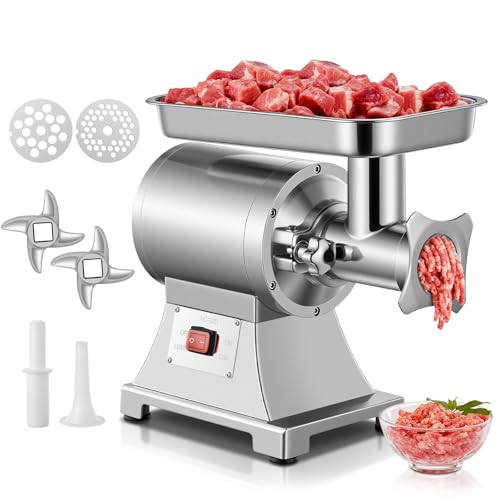
Best for heavy-duty home or small-shop settings. This 1100W unit processes up to 330 lbs/hour with a robust aluminum body and stainless steel hopper components. It is designed for continuous use with low noise and easy cleaning. It handles pork, beef, venison, and vegetables, and supports sausages, patties, and other minced products.
Why it’s chosen: A balanced option for frequent use requiring a wide range of grinding tasks. Caution: ensure adequate ventilation to dissipate heat during long sessions.
Buying Guide: How to Choose Your Vintage-Style Electric Meat Grinder
- Power and throughput: Look for motor wattage, RPM, and hourly meat capacity. Higher power supports bigger batches, but may mean a larger footprint and more heat during use.
- Construction and durability: Stainless steel or aluminum bodies with copper motors generally offer longer life. Check blade and plate materials for longevity and cleanability.
- Attachments and versatility: Consider whether you need sausage stuffing, kibbeh, kubbe attachments, and multiple grinding plates for texture control.
- Safety features: Overload protection, heat auto-shutoff, and secure head attachments reduce risk during operation.
- Maintenance and cleaning: Machines with dishwasher-safe parts or easy-to-disassemble components save time. Look for rust-proof finishes and simple cleaning paths.
- Size and workspace: Match the unit’s footprint and weight to your kitchen or shop space. Consider whether you need a compact model or a heavy-duty grinder for frequent use.
- Noise and heat: Heavy-duty grinders can produce noticeable noise and heat. Check for heat dissipation features and noise ratings when possible.
Frequently Asked Questions
- What grind capacity is best for home use?
– For typical home use, 2–4 pounds per minute is a comfortable range, with higher capacities ideal for batch cooking or hunting-season processing. - Is a copper motor worth it?
– Copper motors generally offer better efficiency and durability, which can translate to longer life in busy kitchens. - Can I safely run these grinders for long periods?
– Most recommend intervals of use to prevent overheating; look for overload protection and auto-shutoff features as a safety aid. - What attachments should I expect?
– Common attachments include multiple grinding plates, sausage stuffing tubes, and kubbe/kibbeh kits for diverse recipes. - Are these grinders suitable for vegetables?
– Some models are designed to handle vegetables and spices, but performance varies. Check manufacturer notes for compatibility. - Do these models require assembly every time?
– Many include quick-attach heads and simple assembly, but planning a short setup routine can save time during busy cooking sessions.