Best Dry Age Meat Machines for Home or Commercial Use
Whether you’re aging beef at home or running a small chef’s operation, a dedicated dry aging fridge or cabinet helps you achieve consistent flavor, texture, and safety. This guide highlights reliable dry aging fridges and cabinets that balance capacity, control, and practicality for a variety of buyers. The top picks below are best for startups, small restaurants, butcher shops, and serious home enthusiasts seeking precise temperature and humidity management.
Summary table of selected products:
| Product | Capacity | Key Feature | Best For |
|---|---|---|---|
| VEVOR 232 LBS Dry Aging Fridge | 232 lbs | Wide temp 34°F–77°F; humidity 60–85% | Small-to-medium commercial use, home enthusiasts with steady demand |
| VEVOR 298 LBS Dry Aging Fridge | 298 lbs | Professional-grade aging environment; built-in lock | Restaurants, butcher shops seeking higher capacity |
| VEVOR 99 LBS Dry Aging Fridge | 99 lbs | Compact but professional-grade aging environment | Smaller kitchens or aging experiments |
| Ca’Lefort Dry Age Fridge | 298 lbs | 360° airflow; UV protection; 304 stainless steel | High-volume kitchens, premium aging standards |
| Dry Ager For Meat by Aromaoveite | 7.5 kg (about 16.5 lbs) | LED digital timer; compact dry aging cabinet | Small batch aging at home or boutique use |
VEVOR 232 LBS Dry Aging Fridge
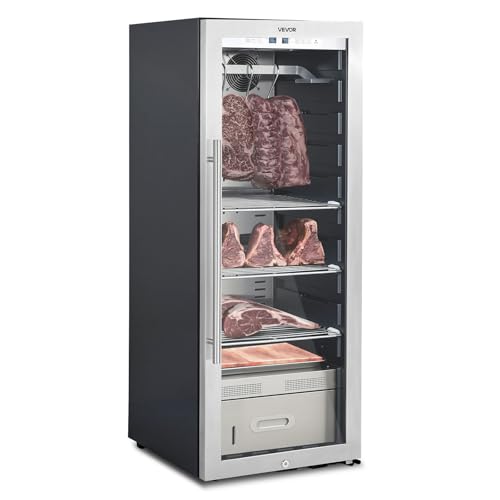
This large-capacity dry aging fridge centers on flexible organization with removable hooks, shelves, and trays. It supports up to 232 lbs of meat with hooks rated at 11 lbs and shelves at 66 lbs each. The unit spans a 34°F to 77°F temperature range and 60% to 85% humidity, controlled via a digital panel. Best for: home enthusiasts or small commercial setups needing steady, scalable aging. Limitation: Himalayan salt is not included, requiring an additional purchase for aging cycles that call for salt-based flavors.
VEVOR 298 LBS Dry Aging Fridge
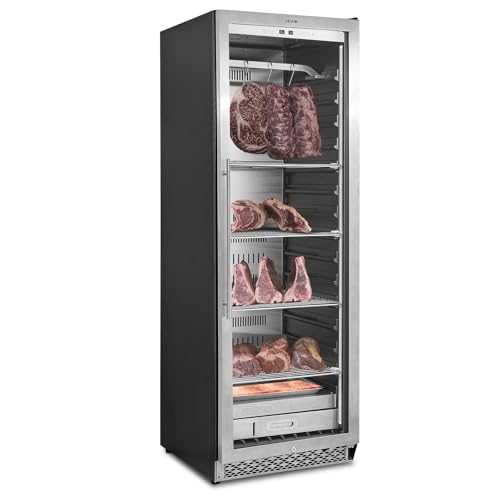
This 298-pound model emphasizes a professional-grade aging environment with a robust air circulation system and a lock for security. It maintains 34°F to 77°F and humidity from 60% to 85%, making it suitable for higher-volume aging. Best for: restaurants or butcher operations seeking large batches and consistent results. Caution: Himalayan salt is not included; you’ll need to buy it separately for certain aging profiles.
VEVOR 99 LBS Dry Aging Fridge

This compact option offers a professional-grade aging environment in a smaller footprint. With an air circulation system and a locking feature, it provides secure aging and reliable flavor development. Best for: small kitchens or aging curiosities testing different cuts. Caution: Like other VEVOR units, Himalayan salt is not included and must be purchased separately if intended for aging profiles requiring salt-based media.
Ca’Lefort Dry Age Fridge
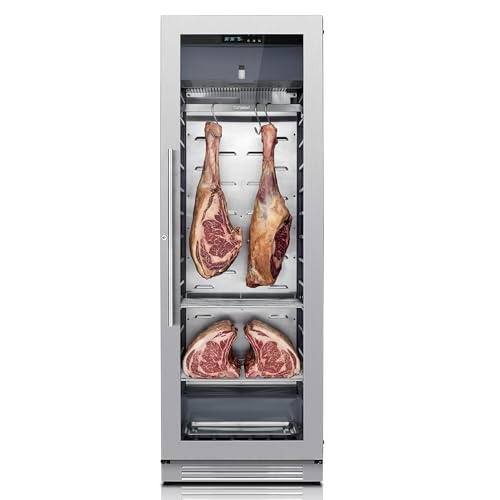
Ca’Lefort emphasizes a high-volume, commercial-grade aging cabinet with 360° airflow, triple purification, and a full 304 stainless steel interior. It’s built for durability and security, featuring a UV-blocking glass door and a keyed lock. Best for: bustling restaurants or bar/kitchen setups that require uniform aging and strict inventory protection. Limitation: Premium features come with a higher upfront investment; ensure space and power needs align with kitchen operations.
Dry Ager For Meat By Aromaoveite

This stainless steel meat drying cabinet doubles as a dry aging chamber for jerky, sausages, and other shelf-stable products. It features LED digital timing and a wide 30–90°C (86–194°F) range, plus a robust air circulation system for even drying and aging. Best for: studios, small eateries, or hobbyists exploring dry aging with precise timing. Caution: It’s a dehydrator style unit, so users seeking deep beef aging should confirm suitability for aging raw beef versus drying jerky.
Note on Other Options
Several products on the market offer bags and membranes to assist DIY aging at home. These accessories are not substitutes for a dedicated aging fridge when reliable temperature and humidity control is the priority. If your goal is consistent, food-safe aging for multiple cuts with predictable outcomes, investing in a purpose-built dry aging fridge or cabinet is typically more efficient than relying solely on bags or dehydrator cabinets.
Buying Guide: Key Considerations For Dry Aging Machines
What capacity fits your operation?
Capacity ranges from about 99 lbs to nearly 300 lbs. Choose a size that aligns with typical weekly aging volume and available space. Larger units reduce refilling frequency but require more dedicated space and power.
How important are temperature and humidity controls?
Precise control of temperature (roughly 34°F–77°F) and humidity (60%–85%) is crucial for consistent aging. Digital controls simplify adjustments and monitoring, helping maintain profile consistency for cuts like ribeye or sirloin.
What about airflow and filtration?
360° airflow or robust air circulation helps prevent uneven aging. Some models include purification steps (like activated carbon or UV filtration) to maintain clean air in high-volume settings.
Are security features important?
For commercial use, a lockable door or security provisions help protect inventory in open kitchen layouts or display settings. Consider models with reinforced doors and tamper resistance if needed.
Is salt or other aging media necessary?
Some aging profiles call for Himalayan salt or specific media to influence flavor. Check whether salt is included with the unit; most models require purchase separately.
What is the best fit for your budget?
High-capacity, feature-rich models deliver consistent aging but come with higher price points. For beginners or small-scale use, compact units with solid control and security can provide good value while expanding aging capabilities over time.
FAQ
- What is the typical aging temperature range? Most dry aging fridges maintain 34°F to 77°F, with humidity between 60% and 85% to balance moisture loss and microbial control.
- Do I need Himalayan salt with a dry aging fridge? Not always. Some setups use salt as part of the aging media, but many fridges do not require it; salt availability is often external.
- Is a built-in or freestanding unit better? Freestanding units offer flexibility and easier installation; built-in models can save space in commercial kitchens but may require stricter venting and integration.
- Can these machines handle large cuts? Yes, most units advertise shelf or hook capacities that accommodate large ribeye, short loin, or whole primal sections, depending on the model.
- What maintenance is needed? Regular cleaning of interior surfaces, door seals, and ensuring air filters or purifiers remain unobstructed helps sustain aging quality and safety.
- Are these units safe for commercial use? Many models are designed for restaurant or butcher shop environments, with reinforced construction and secure doors to protect inventory.