Best Hood Fans for Gas Stoves: Top 5 Under Cabinet and Wall-Mount Options
When selecting hood fans for gas stoves, the main goals are strong exhaust, quiet operation, and durable construction. This guide highlights five top options that balance performance and practicality for American kitchens, from compact apartments to larger home setups. Each product is suited for different kitchen sizes and venting needs, including ducted and ductless installations. Read on to find which hood fan best fits your cooking style and space.
Overview of chosen products:
- FIREGAS 30 Inch Under Cabinet Range Hood — 300 CFM, quiet operation, stainless steel, two-speed exhaust.
- FIREGAS Range Hood 30 Inch Under Cabinet — 300 CFM, ducted/ductless convertible option, rocker control.
- Zomagas 30 Inch Under Cabinet Range Hood — 280 CFM, slim design, aluminum grease filter, dual-speed.
- Tieasy Wall Mount Range Hood 30 Inch — 450 CFM, ducted or ductless convertible, 3 speed, LED lighting.
- VIKIO HOME Under Cabinet Range Hood 30 Inch — 980 CFM, gesture sensing, touch control, fingerprint-resistant stainless steel.
FIREGAS 30 Inch Under Cabinet Range Hood

Best for: small kitchens and apartments needing a compact, hard-wired vent with solid airflow. This 30-inch model operates at 300 CFM with a quiet design, suitable for condos and compact spaces where space is a premium. The stainless steel construction resists corrosion, with a multi-layer aluminum filter to trap grease and oil. A two-speed exhaust and 2W LED light provide practical control and visibility while cooking. Note the unit is hard-wired, not plug-in, which influences installation decisions for retrofits.
Why selected: This model emphasizes efficient performance in tight spaces. The 430-grade stainless steel improves durability, and the 45 dB rating at high speed keeps household noise reasonable. Its simple rocker controls and low-profile form factor make it easy to operate daily. The option to substitute a charcoal filter (model FGS-TF39-LW) adds flexibility for ductless use. Best for renters or buyers prioritizing low-profile aesthetics and steady exhaust without loud operation.
Caution: Verify ducting compatibility and local electrical requirements, since the unit is hard-wired and intended for dedicated installation. Filter replacement intervals depend on use and cooking style.
FIREGAS Range Hood 30 Inch Under Cabinet

Best for: small to medium kitchens in homes or apartments that require ducted or ductless flexibility. This 30-inch hood also features 300 CFM of exhaust with two speeds and a ducted/ductless conversion option. It provides a sturdy aluminum filter system to trap grease, with two-speed operation and a bright LED light for cooking visibility. The rocker control keeps operation intuitive, and the unit remains quiet at the upper setting for daily use.
Why selected: The dual configuration is ideal for spaces where future venting needs might change. Its durable steel build and reliable filtration help maintain kitchen air quality during heavy cooking. It is a practical choice for renters seeking a reversible installation path or homeowners planning a future venting upgrade. LED lighting helps ensure accurate cooking temps and reduces shadowing on the stove face.
Caution: The model’s maximum sound level rises with higher intensity. Consider spacing and cabinet design to minimize any potential noise amplification in open-plan layouts.
Zomagas 30 Inch Under Cabinet Range Hood

Best for: households needing a slim, affordable under-cabinet option with solid performance for everyday cooking. This 30-inch hood delivers 280 CFM and two speeds, making it suitable for typical family meals where smoke and steam are moderate. The ducted/ductless compatibility broadens installation options, while the silicone or aluminum grease filter helps keep maintenance straightforward. The simple rocker control emphasizes ease of use for quick adjustments.
Why selected: It combines compact dimensions with efficient suction, making it a sensible choice for apartments and smaller kitchens without compromising on air removal. The included grease filter and aluminum filter construction aid longevity and cleanup. It’s a reliable, budget-conscious pick for those prioritizing straightforward functionality over high-end features.
Caution: The airflow is robust but may be less effective for very heavy frying or open-plan kitchens without proper ducting. Regular filter cleaning extends the hood’s life and maintains suction efficiency.
Tieasy Wall Mount Range Hood 30 Inch
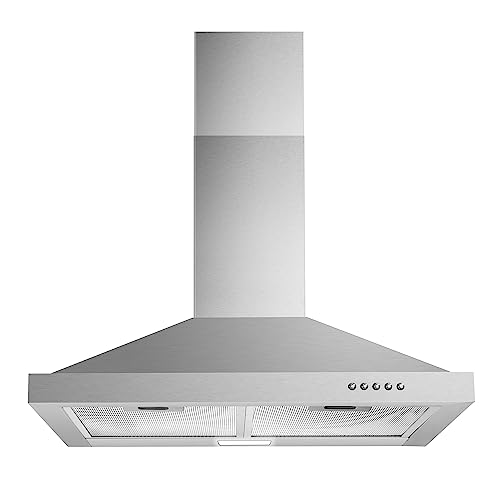
Best for: kitchens that require stronger extraction with a chimney-style design. This 450 CFM hood supports ducted or ductless configurations and uses a 3-speed push-button control with LED lighting. The 430-grade stainless steel finish provides durability and a clean look, while the adjustable chimney accommodates ceilings from 7.5 to 8.5 feet, with extension options for higher ceilings.
Why selected: For serious home cooks, 450 CFM offers better smoke control during high-heat methods like stir-frying. The ducted/ductless flexibility is a strong advantage for homes lacking exterior venting or planning future renovations. The urban-chic chimney style complements modern kitchens and provides robust air movement without excessive noise at mid speeds.
Caution: Higher CFM typically equals higher noise potential. Consider spacing and fan speed in open-plan spaces to maintain conversation-level noise.
VIKIO HOME Under Cabinet Range Hood 30 Inch

Best for: kitchens needing high-capacity venting and advanced controls. This 30-inch hood delivers 980 CFM, advanced gesture sensing, and a touch panel, along with LED lighting and wider baffle filters. It’s designed for heavy cooking and busy households, where quick, powerful air removal is essential to maintain air quality during high-output meals.
Why selected: The independent motor and higher CFM provide a substantial edge for large or open kitchens with strong cooking heat. Gesture control adds a modern, hygienic method to operate the hood, while fingerprint-resistant stainless steel reduces smudging from frequent use. The design supports long-term durability and easy cleaning, suitable for frequent heavy-use scenarios.
Caution: Higher airflow can increase noise at peak speed. For daily use, rely on mid-speed settings to balance performance and quiet operation in open living spaces.
Buying Guide: Key Purchase Considerations
What suction level do you need? For small apartments or light cooking, 280–300 CFM is usually sufficient. For larger kitchens, heavy frying, or open layouts, aim for 450–980 CFM. Consider ducted vs. ductless options based on your building’s venting constraints and future renovation plans.
How important are noise and lighting? If you cook during late hours or in an open-plan space, prioritize quieter models (below 50–55 dB on high) and bright LED lighting to aid safe cooking and cleanup.
What materials and filtration matter? Stainless steel builds resist corrosion and are easier to clean. Look for multi-layer grease filters; carbon filters enable ductless setups but must be replaced periodically for optimal odor control.
Installation considerations: Check whether the hood is hard-wired or plug-in. Ensure proper clearance above the cooktop (often 24–30 inches for gas ranges) and confirm ceiling height compatibility for chimney-style models. If you’re unsure, choose a model with flexible ducting and clear mounting options.
Frequently Asked Questions
- What is the typical CFM needed for gas stoves?
Most residential gas stoves perform well with 300–600 CFM, depending on pan size and cooking style. Heavier cooking may justify higher capacities like 450–980 CFM.
- Which is better for an apartment: ducted or ductless?
Ducted tends to remove air outdoors for better odor control, while ductless uses filters and recirculates air indoors, which is easier to install in apartments without exterior venting.
- Do higher CFM hoods mean more noise?
Often yes, but many modern models balance high CFM with noise-reduction design. Look for dB ratings at high speed to compare.
- How long do grease filters last?
Filter life varies with use; periodic cleaning and replacement every 3–6 months are common, with more frequent changes in high-usage kitchens.
- Can I install a hood myself or should I hire a professional?
Hard-wired installations and complex venting typically require a licensed HVAC or electrician. Simple ductless or plug-in configurations may be feasible for DIY projects.
Choosing the right hood fan for a gas stove depends on kitchen size, venting constraints, and cooking style. The five options above provide a spectrum of capacity, installation flexibility, and control features to help buyers select confidently.