Best Garbage Disposal Extension Cords for Safe, Flexible Power Access
Answering the top questions buyers have when selecting a garbage disposal extension cord: these cords are designed to handle high-wall outlet reach, fit standard 3-prong disposals, and tolerate everyday use in kitchens. This guide highlights five dependable options and clarifies who they’re best for, plus practical tradeoffs. Suitable for homeowners updating a disposal setup, renters in need of a temporary but safe solution, and DIY enthusiasts seeking reliable connections in tight spaces.
| Product | Length | Gauge | Better For | Limitation |
|---|---|---|---|---|
| POWTECH Heavy Duty 6 FT | 6 ft | 14 AWG | Major appliances and tight wall spaces | Prime for larger load; avoid extremely long runs indoors |
| Seeklyze 16/3 6 FT | 6 ft | 16 AWG | Indoor household appliances on a budget | Not ideal for very high-wattage devices |
| FancyTark 3 Foot CRD-00 | 3 ft | 12-14 AWG (approx.) | Directly connected disposals with short reach | Limited length for tight kitchens |
| KUNCAN 3 Ft Flat Cord | 3 ft | 14 AWG | Flat plug for flush walls and tight spaces | Short length may require more planning |
| Amazon Basics 6 Ft Extension | 6 ft | 16 AWG | General indoor use with electronics and tools | Basic protection, not heavy-duty |
POWTECH Heavy Duty 6 Ft Extension Cord
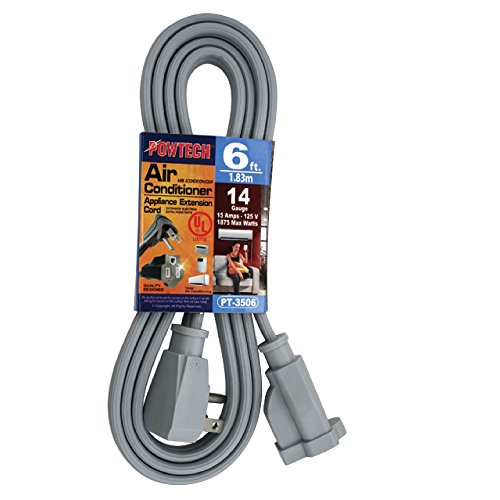
The POWTECH 6 ft cord is UL Listed for air conditioners and major appliances. It uses 14-gauge insulation and provides up to 1875 watts and 15 amps at 125V. Best for delivering power to large devices like washers, dryers, refrigerators, or power tools, especially when space behind furniture is tight due to its angled plug. This cord suits buyers needing a sturdy, wall-flush option in constrained kitchen or utility spaces.
Who it’s best for: households with large-appliance setups that require a robust, flush-mountable cord. Why chosen: its heavy-duty vinyl insulation and angled plug reduce wall-space intrusion and clutter behind appliances. Limitation: designed for up to 1875W; exceed this with high-wattage devices could trip a circuit.
Seeklyze 16/3 6 FT Indoor Extension Cord

This 16 AWG, 6-foot extension cord offers solid power delivery for typical home devices like laptops, coffee makers, and small office equipment. It’s ETL listed and features strain-relief design for durability during frequent plug/unplug cycles. The cord’s rounded, drop-resistant design helps protect connections in mobile or shared workspaces. Best for: low to mid-wattage indoor devices in homes or small offices. Limitation: limited amperage for high-power appliances compared to heavier gauges.
FancyTark 3 Foot CRD-00 Garbage Disposal Cord

This 3-foot garbage disposal power cord is designed as a replacement for common models like InSinkErator and Badger. It provides a simple, direct installation path with a compact length. Best for: quick replacement in kitchens with limited space behind the disposal. Limitation: short reach may require relocation or additional cords for distant outlets.
KUNCAN 3-Foot Flat Appliance Power Cord

The KUNCAN flat plug cord uses SPT-3 14 AWG wiring and a grounded three-prong plug. It’s designed to sit flush against walls, reducing clutter behind appliances. Best for: tight kitchens or spaces where a standard cord would protrude. Limitation: 3-foot length may not reach distant outlets, so plan outlet placement accordingly.
Amazon Basics Extension Cord, 6 Ft

The Amazon Basics 6-foot extension cord offers standard 13-amp, 125V capacity with 16 AWG conductors. It’s a reliable all-purpose option for indoor use with consumer electronics, tools, and media equipment. Best for: budget-conscious buyers needing a dependable everyday extension. Limitation: not specialized for heavy-duty appliances; avoid overloading beyond its 13-amp rating.
Buying Guide: Key Considerations For Garbage Disposal Extension Cords
What length do you actually need? Measure from the outlet to the disposal to avoid excess slack or insufficient reach. Short cords reduce clutter but may require repositioning outlets or disposals. Larger rooms or cabinetry may justify 6 ft cords or longer.
Which gauge is right? For garbage disposals and similar appliances, 14 AWG or better is typical for safety and performance. Thicker gauges (lower AWG number) handle more current with less resistance. If your disposal is high-wattage, choose 14 AWG or 12 AWG equivalent options.
Is a flat plug important? Flat or right-angle plugs help cords sit flush against walls and behind furniture, maximizing space in tight kitchens. Choose flat-design cords when outlets are close to cabinet edges or appliances sit near walls.
What about safety certifications? Look for UL or ETL listings to ensure the cord meets safety standards for indoor use. Strain-relief features and durable insulation extend cord life in busy kitchens.
Best practice for installation: ensure the extension cord is rated for the appliance’s wattage, keep cords away from heat sources, and avoid daisy-chaining multiple cords or power strips with a garbage disposal for safety and reliability.
FAQ
- What is a typical wattage you should consider for a disposal extension cord?
Most garbage disposals draw moderate amp loads; select cords rated for at least 15A and 125V, with 14 AWG or better to handle typical loads safely.
- Can I use a longer extension cord with a disposal?
Yes, but avoid long, thin cords that add resistance. Heavier gauges and shorter runs reduce voltage drop and improve performance.
- Is a flat plug better for kitchens?
Yes, flat or right-angle plugs help keep the cord close to the wall, reducing interference with cabinets and furniture.
- Should I choose a specialist disposal cord over a general-purpose extension?
Specialist cords are often designed with disposal usage in mind, offering tailored length options and reinforced ends for frequent plug/unplug cycles.
- What safety features should I look for?
Look for UL/ETL listings, strain-relief features, and rugged insulation that resists wear from moisture and kitchen traffic.