Best Dry Aged Steak Machines for Home Beef Aging
Yes, you can dry-age steak at home with purpose-built equipment. This guide highlights five top options that cater to different needs, from dedicated dry aging fridges to practical aging bags and compact units. Best for meat enthusiasts seeking precise control, best for beginners exploring dry aging at home, and best for small kitchens. Read on for clear comparisons, pros, and cautions to help you choose.
| Product | Best For | Capacity |
|---|---|---|
| VEVOR 232 LBS Dry Aging Fridge | Serious home or small commercial aging with precise control | 232 lbs total capacity |
| UMAi Dry Aging Bag for Steaks (Pack of 3) – 12” x 24” | Beginner to intermediate home aging without dedicated fridge | Up to 18 lbs per bag (steaks) |
| Cobalance Dry Aging Fridge for Steaks | Compact, adjustable aging for varied cuts | Up to 33 lbs |
| SteakAger PRO 40 Ultimate Bundle | Compact, dedicated aging with reliable results | Up to 40 lbs |
| UMAi Dry Aging Bag for Steaks (Pack of 3) – 16” x 28” | Brisket or bone-in steaks; family households | Up to 20 lbs per bag |
Introduction: Best Dry Aged Steak Machines For Home Beef Aging
VEVOR Dry Aging Fridge For Steaks
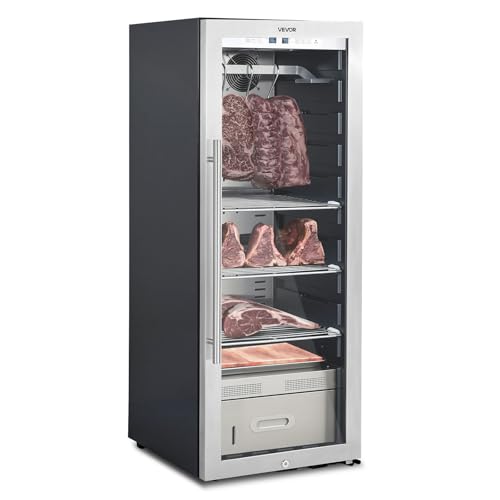
Best for: Growing home butcher projects or small commercial setups needing large, organized aging space. The VEVOR unit supports up to 232 lbs with removable hooks, shelves, and trays. It offers a wide temperature range and adjustable humidity, enabling controlled aging for beef, pork, and more. Consider this if you plan steady, larger-scale dry aging and want flexible layout options.
Caution: The listed size and capacity emphasize storage; ensure your space accommodates a 24-inch-wide fridge and consistent power supply for precise control.
UMAi Dry Aging Bag For Steaks (Pack Of 3)

Best for: Beginners or hobbyists who want to age steaks without a dedicated machine. UMAi dry aging bags simplify the process by containing the aging environment within the bag, supporting up to 18 lbs per bag for ribeye, striploin, or sirloin. This approach is ideal for first-timers seeking a more approachable path to dry-aged beef.
Caution: Bags require careful handling and bag-specific aging durations. Results depend on precise timing and the chosen aging conditions.
Cobalance Dry Aging Fridge For Steaks

Best for: Those wanting a compact, single-door aging unit with adjustable temperature and humidity. The Cobalance unit handles up to 33 lbs and includes a dry aging-friendly air circulation system with a carbon filter for improved air quality. Choose this if you need a balanced, space-conscious aging cabinet with clean airflow.
Caution: Its capacity is more compact than larger fridges, so you may need to plan batch aging schedules or rotate cuts frequently.
SteakAger PRO 40 Ultimate Bundle

Best for: Dedicated home beef aging with reliable, built-in refrigeration. The PRO 40 provides up to 40 lbs of aging capacity in a compact package with a stylish stainless steel exterior. It is designed for steady, consistent dry aging and targets steak lovers who want reliable, repeatable results in a home setting.
Caution: It is a specialized appliance, so consider your kitchen layout and whether you want a constant dedicated aging unit rather than a modular approach.
UMAi Dry Aging Bag For Steaks (Pack Of 3) – 16” x 28”

Best for: Brisket or bone-in steaks and larger cuts aged at home. The larger bag size accommodates bigger portions, up to 20 lbs in some configurations, and is designed to work with at-home aging projects without a dedicated cabinet. Use this when you want flexible, bag-based aging for varied cuts.
Caution: Bag-based aging is sensitive to environmental control. Temperature and humidity must be monitored closely to achieve the desired tenderness and flavor.
Buying Guide: Key Considerations For Dry Aged Steak Machines
What size and capacity do I need?
For beginners, smaller units or aging bags are easier and less expensive. If you plan to age large quantities regularly or want to display multiple cuts, a fridge with high capacity (like 232 lbs) can reduce frequent refills and handling.
How precise should temperature and humidity control be?
Precise control helps achieve consistent results. Look for digital controls that allow a defined range for temperature (roughly 34°F to 72°F or higher) and humidity (40% to 85% or more). Air circulation and filtration improve odor control and aging stability.
Is a dedicated aging fridge worth it?
A dedicated aging fridge provides stable, repeatable conditions and can store multiple cuts with hooks, shelves, and trays. It is best for serious hobbyists or small businesses that age frequently and in larger quantities.
How do aging bags compare to fridges?
Aging bags are simple to use and portable but depend heavily on proper environmental control outside the bag. Fridges offer more consistent conditions but require more space and investment. Choose based on your budget, space, and how hands-on you want to be.
What are common limitations to expect?
Limitations include space constraints, power requirements, and the need for ongoing monitoring. Bags may require more careful timing, while fridges demand regular cleaning and filter maintenance.
What about multi-use or versatility?
Some units are designed to age meat only, while others can also preserve cheese or other foods. Consider whether you want a unit that can adapt to different aging needs or flavors.
Storage and placement considerations
Place aging equipment in a well-ventilated area away from direct heat sources. Ensure the unit fits your kitchen or dedicated aging room and that walls, doors, and ventilation clearances are respected for safe operation.
Cleaning and maintenance
Regular cleaning of shelves, racks, and seals is essential. Some models offer built-in filtration to maintain air quality; check the maintenance requirements listed by the manufacturer.
FAQ
-
What is the difference between dry aging and wet aging?
Dry aging exposes meat to controlled air and temperature to concentrate flavors and change texture; wet aging uses vacuum-sealed bags to preserve moisture and tenderness. Dry aging typically yields stronger beef flavors.
-
Can I dry-age steak in a regular refrigerator?
Dry aging requires specific conditions. A standard fridge is not ideal due to fluctuating temperature and humidity. Use a dedicated aging fridge or controlled bags with careful environmental monitoring.
-
How long does dry aging usually take?
Typical aging durations range from 14 to 45 days, depending on cut and desired flavor and tenderness. Longer aging intensifies flavor and texture but increases risk if conditions are not well managed.
-
Are dry aging bags safe for home use?
Yes, when used as directed and kept under appropriate temperature and humidity, dry aging bags can safely age beef at home, especially for smaller cuts and shorter durations.
-
Which option is best for a first-time user?
Aiming for a balance of ease and control, a dry aging bag set or a compact fridge with adjustable controls is a practical starting point. Bags provide convenience, while a compact fridge offers more consistent aging conditions.
Frequently Asked Questions (At a Glance)
- What is the optimal humidity for dry aging beef?
- Do I need salt or Himalayan salt for dry aging?
- How often should I rotate or check the meat during aging?
- Can you reuse UMAi dry aging bags for multiple aging cycles?