Best Steel vs Aluminum Cookers: A Clear Buyer’s Guide for American Kitchens
When choosing a cooker, steel and aluminum options each offer distinct advantages. This guide targets buyers who want durable construction, safe cooking, and reliable performance for everyday meals. Steel cookers excel in longevity and compatibility with induction stoves, while aluminum variants often shine with lighter weight and quicker heat transfer. Below, five top steel-based cookers are reviewed for practicality, safety, and value. A quick summary table helps you compare key specs at a glance.
| Product | Capacity | Best For |
|---|---|---|
| Prestige Deluxe Alpha Stainless Steel Pressure Cooker | 2 Liters | Small households needing quick, reliable meals |
| VEVOR Pressure Cooker, 8Qt | 8 Qt / ~7 L | Families seeking versatile, multi-use functionality |
| AROMA Select Stainless Rice Cooker | 4-Cup uncooked / 8-Cup cooked | Weekly meal prep and versatile rice-based meals |
| Fullwill Dual-Pot Electric Pressure Cooker | 6 QT + 5 QT | Multi-program versatility with dual pots |
| Presto 01362 6-Quart Stainless Steel | 6 Quart | Budget-friendly, reliable steel option |
Prestige Deluxe Alpha Stainless Steel Pressure Cooker
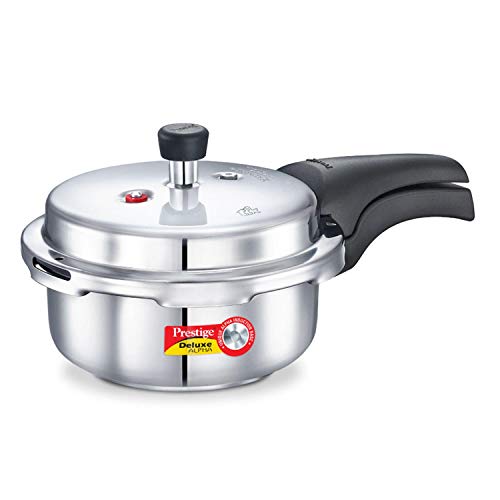
Capacity: 2 Liters. Features include Unique Alpha Base and a Unique Pressure Indicator for transparent pressure monitoring. This compact cooker is best for small apartments, singles, or couples seeking quick, consistent meals without extra bulk. It is selected for its durable stainless steel construction and specialized Alpha base that aims to improve heat distribution. Caution: limited capacity means it may not suit large families or batch cooking as a primary option.
VEVOR Pressure Cooker, 8Qt

Capacity: 8 Qt / ~7 L. Best for medium to large households that want a multi-use pot for soups, beans, rice, and sauces. The three-pressure settings (60kPa, 100kPa, and manual) plus a triple-layer bottom support fast, even heating on varied stovetops, including induction. It’s a solid choice when speed and versatility matter. Limitation: the feature set can be complex for first-time users; consult the manual for optimal operation, especially with high-pressure settings.
AROMA Select Stainless Rice Cooker

Capacity: 4-Cup uncooked / 8-Cup cooked. Stainless steel inner pot and preset options for White Rice, Brown Rice, Steam, and Quinoa make it a practical all-rounder for weekly meal prep. Best for households prioritizing clean, durable cookware and straightforward, reliable rice-based meals. Caution: smaller capacity means batch sizes may need multiple cycles for larger families.
Fullwill Dual-Pot Electric Pressure Cooker
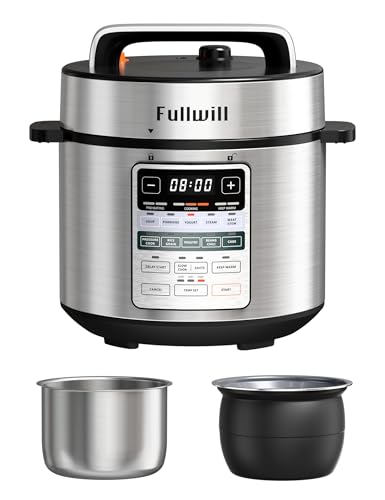
Capacity: 6 QT stainless steel pot and 5 QT ceramic pot. This 12-in-1 multi-cooker supports pressure cooking, rice, yogurt making, slow cooking, steaming, and more. Best for cooks who want both steel and ceramic cooking surfaces in one appliance, enabling a range of textures and flavors. Choose this if you value dual-pot versatility and a broad array of programs; caution: dual-pot models can be heavier and take up more counter space than single-pot units.
Deeluban Stainless Steel Pressure Cooker 8 Quart

Capacity: 8 Quart. Features include a multi-layer base suitable for induction and a safety-focused design with automatic pressure-limiting valves and safety windows. Best for households needing robust safety features and compatibility with various stove types. Recommendation is for serious cooks who require reliable performance across different cooking surfaces. Limitation: claims emphasize safety mechanisms; real-world ease of use should be evaluated with practice to avoid over-pressurization risks.
Presto 01362 6-Quart Stainless Steel

Capacity: 6 Quart. This model is positioned as a budget-friendly, reliable steel option with a pressure regulator that maintains proper cooking pressure automatically. Best for budget-conscious buyers or those seeking a straightforward, low-maintenance cooker. Limitation: may lack some high-end safety features or premium design found in pricier models; verify compatibility with your stove type and dishwasher guidance for cleaning.
Buying Guide: Steel Cookers vs Aluminum Cookers
- Heat conduction: Aluminum heats faster but can react with acidic foods; stainless steel with aluminum or copper cores reduces reaction risk while maintaining quick heating.
- Durability and safety: Stainless steel generally lasts longer and resists corrosion; steel models with multiple safety valves are preferred for frequent pressure cooking.
- Induction compatibility: If you have an induction stove, ensure the cooker explicitly supports induction (or has a compatible base).
- Capacity and usage: Choose capacity that matches your family size and typical meal type to avoid overfilling or underutilizing space.
- Maintenance: Stainless steel is often easier to clean and more resistant to staining; check dishwasher compatibility for ease of maintenance.
- Price vs value: Steel cookers tend to be more durable and safer long-term investments, while aluminum options may be lighter and cheaper upfront.
Frequently Asked Questions
- What is the main difference between steel and aluminum pressure cookers?
– Steel cookers are typically more durable and corrosion resistant, often with better compatibility on induction stoves, while aluminum cookers heat up quickly and are lighter in weight but may react with acidic foods in some cases. - Are steel pressure cookers safer to use?
– Yes, steel models with robust safety features like multiple valves and locking mechanisms generally offer strong safety margins for daily use. - Should I prefer a multi-pot cooker or a single-pot cooker?
– Multi-pot cookers offer versatility for different cooking tasks in one unit, but they are heavier and take more counter space; single-pot models are simpler and more compact. - Is induction compatibility essential for a steel pressure cooker?
– Not always, but if you use an induction stove, choose a cooker explicitly listed as induction-compatible or with a suitable base construction. - Which capacity is best for a small family?
– A 2–6 quart range suits smaller households; for larger families, 8 quart or larger models provide more flexibility for batch cooking. - Do high-pressure settings affect nutrient retention?
– High-pressure cooking can retain many nutrients, provided cooking times are appropriate for the recipe and food type.