Best Apple Cider Press and Grinder for Home Juicing
Answering the common buyer question: which apple cider press and grinder combination delivers reliable juicing, durability, and reasonable effort for home use? This guide spotlights five well-rounded options, each suited to different user needs—from hobbyist cider makers to small-family juicing projects. Expect clear differences in capacity, material quality, and ease of use. The selections favor products with sturdy construction, efficient grinding, and consistent juice extraction, helping you decide which setup best fits your workflow and fruit volume.
Overview of top picks for quick comparison:
| Product | Best For | Capacity | Material | Typical Use |
|---|---|---|---|---|
| American Harvester Cider Press/Fruit Press and Grinder | Budget-friendly dual-use setup | Small to medium | Hard maple, cast iron | Juicing, small-batch wine |
| SQUEEZE master Fruit Apple Cider Wine Classic Press | Higher juice yield | 4.75 gal / 18 L | Solid wood basket, stainless steel components | Extended pressing sessions |
| EJWOX Fruit and Apple Crusher (7L) | High-capacity hand-crank | 7 L / 1.8 gal | Stainless steel frame | Home brewing, cider, and juice |
| MOSAKAR 1100W Fruit Apple Crusher | Powerful, fast grinding | Small to medium | Stainless steel | High-output juicing |
| VEVOR 1.8 Gal Fruit Crusher | Balanced home use | 7 L / 1.8 gal | Stainless steel & aluminum | Daily juice, cider, and wine |
American Harvester Cider Press/Fruit Press and Grinder

The American Harvester setup combines a grinder and press in one compact unit, built with hard maple and cast iron for durability. It’s designed for home fruit processing, delivering a straightforward path from grinding to juice extraction. Best for hobbyists seeking a single solution that handles both grinding and pressing without switching equipment.
Who it’s best for: buyers prioritizing an affordable, space-saving dual-function apparatus for small batches. Why selected: the combination minimizes gear changes and reduces clutter in a home garage or small workshop. Caution: wood and iron components require regular care to prevent rust and keep joints tight.
SQUEEZE master Fruit Apple Cider Wine Classic Press

This press features a longer hand shank and a spirally configured press, designed to reduce labor and make operation more accessible—even for users who prefer lighter effort. Its 4.75-gallon (18 L) basket supports larger batches than typical home models, with a focus on higher juice yield due to a thicker press plate and larger pressing area. Built with food-grade stainless steel for safety and longevity.
Who it’s best for: crafters who want higher throughput with less manual strain. Why selected: better juice yield per press cycle and convenient whiskey or wine production workflows. Caution: wood-free basket components mean a fully stainless surface is better for long-term rust resistance in humid environments.
EJWOX Fruit and Apple Crusher (7L)
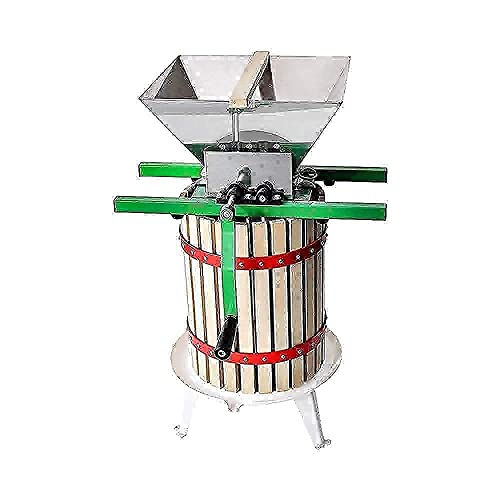
This EJWOX crusher is designed for high-capacity home use, with a 7 L/1.8 gal hopper and efficient 1/4-inch piece output ideal for easy pressing. The device employs stainless steel construction for durability and cleanability. It’s a practical pick for households that want a robust manual crusher without relying on electricity.
Who it’s best for: home brewers and cider makers who need a reliable, easy-to-assemble crusher with consistent pulp size. Why selected: strong capacity, straightforward operation, and rust-resistant materials. Caution: manual pressing may require substantial effort during large batches; consider a secondary press if you have very high output.
SQUEEZE master Fruit Wine Cider Press
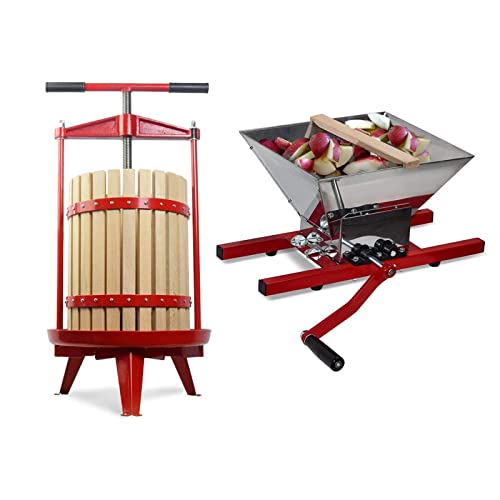
This model expands on the SQUEEZE master line with a larger pressing setup and a T-shaped hand shank for comfort. It emphasizes higher juice yield through larger pressing area and a robust design capable of handling 22 to 33 pounds of fruit per press cycle. Best for: small-scale producers who consistently work with larger fruit loads.
Why selected: designed for efficiency and throughput, reducing manual workload while maintaining juice quality. Caution: higher capacity means larger footprint and potentially more storage requirements.
1100W Mosakar Fruit Apple Crusher

This high-power grinder is built to handle substantial volumes, capable of grinding apples, pears, and potatoes into fine pulp. All contact parts use AISI 304 stainless steel with electrolytic polishing for a clean finish. It’s positioned for users needing fast, consistent pulp for cider, wine, or juice production.
Who it’s best for: users needing maximum throughput in shorter timeframes. Why selected: strong motor and stainless construction ensure durable daily use. Caution: electrical power requirements and noise levels may be considerations for quiet environments or apartment use.
VEVOR 1.8 Gal Fruit Crusher

The VEVOR unit provides a balanced 7 L capacity with a stainless steel hopper and solid cast aluminum gears. It emphasizes durability and long-term rust resistance, making it suitable for regular home use. It’s a versatile option for apples, pears, and other fruits, with a focus on reliable grinding efficiency.
Who it’s best for: buyers seeking a dependable, mid-range option with durable materials and simple maintenance. Why selected: combination of high capacity, rugged construction, and a straightforward setup. Caution: ensure your workspace can accommodate the full footprint for comfortable operation during long sessions.
Buying Guide
- Capacity and batch size: Choose a unit that fits your typical fruit volume per session. Larger batches require bigger baskets or hoppers and more pressing area.
- Material and cleanliness: Stainless steel contact parts ease cleaning and reduce corrosion risk. Look for rust-resistant frames and durable pressing components.
- Manual vs. powered: Manual crushers are quiet and simple but require effort; powered options speed up processing but may be heavier and noisier.
- Ease of assembly and maintenance: Favor models with clear setup steps, straightforward disassembly, and readily available replacement parts.
- Durability and warranty: Prioritize solid construction (metal frames, reinforced joints) and check for maintenance requirements like oiling wood components or tightening hardware.
- Juice yield and texture: A larger press area and thicker press plates generally increase juice yield and improve consistency of pulp texture for cider or wine.
- Cleanability: Stainless steel surfaces and removable components reduce cleaning time and simplify sanitation between batches.
Frequently Asked Questions
- What is the typical batch size for home cider presses? — Batch sizes vary by model, commonly ranging from 4 to 18 liters per pressing cycle, depending on basket size and press area.
- Is a motor essential for pressing? — Not required for many setups; most home models are manual. A motor is beneficial for higher throughput but adds cost and complexity.
- Can these devices handle fruits other than apples? — Yes, most units can process pears, grapes, and berries, though capacity and texture may vary by fruit type.
- What maintenance is needed after pressing? — Clean all stainless steel surfaces, dry thoroughly, and inspect for rust on wooden parts or joints; lubricate moving parts if recommended by the manufacturer.
- Which model is best for beginners? — A compact dual-use press or a mid-range crusher with straightforward assembly is typically best for first-time buyers.
- Are wooden baskets durable for long-term use? — Wooden baskets can be durable with proper care, but stainless or all-metal components reduce maintenance needs in humid environments.