Best Hand Operated Meat Slicer for Home Kitchens: Top Picks
Answering the common buyer question: if you want precise, hands-on control for slicing meat, cheese, and bread without an electric motor, these hand-operated slicers are the best options. They’re ideal for home cooks who value portability, simple maintenance, and direct, manual control. Use cases vary from deli-style thin slices to thicker cuts for hot pots, sandwiches, and meal prep. Below are five top picks chosen for reliability, design, and practical user guidance. A quick product comparison is provided in the summary table to help you decide faster.
| Product | Best For | Key Benefit |
|---|---|---|
| Starfrit Deli Slicer (6.5″ Blade) – 2-in-1 | Home chefs needing compact, versatile manual slicing | Sturdy base with non-slip suction for stability |
| Manual Frozen Meat Slicer – Upgraded | Hot pot lovers and BBQ fans | Adjustable 0.2–8 mm; durable, ergonomic |
| Starfrit Deli Slicer with Bonus Peeler | Cooks slicing bread, meat, and cheese | Wide range thickness; easy storage |
| Borlebbi Meat Slicer – 200W Electric (not hand) | Those open to semi-electric for easy slicing | Two removable blades and large tray |
| Failenfeivp Manual Frozen/CN Slicer | Budget-conscious food prep at home | Adjustable thickness; four suction cups for stability |
Starfrit Deli Slicer, 6.5″ Blade
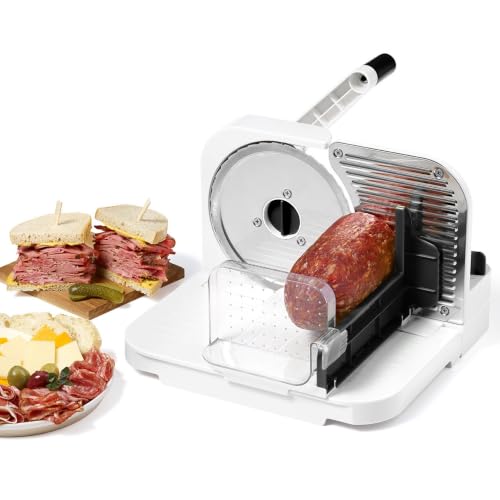
The Starfrit Deli Slicer uses a 6.5-inch stainless steel serrated rotary blade. It supports slice thickness from deli-thin to 1 inch, making it suitable for meats, cheese, and bread. A sturdy base and extra-large non-slip suction base promote stability and safety during use. Best for compact kitchens or users who want a simple, manual slicer without complex setup.
Best for: small households that require quick, consistent slices of deli meats, cheeses, or bread. Better for: those prioritizing safety features and stable operation on a countertop. Choose this if: you value a compact, easy-to-store slicer with adjustable thickness. Caution: manual operation may require more effort for thick cuts or very firm items.
Manual Frozen Meat Slicer, Upgraded

This manual slicer is designed for frozen meats, beef, mutton, ham, and similar items. It offers adjustable thickness from 0.2 mm to 8 mm via a rotating knob and inner nuts. The upgraded version emphasizes a dual-layer stainless steel build and ergonomic handling, with four non-slip suction cups and a meat press cover for stable, even cuts. Best for: hot pot and BBQ enthusiasts who need consistent thickness on frozen cuts.
Best for: families doing regular frozen-meat prep. Better for: achieving precise thickness for buffet-style portions. Choose this if: you want a robust, free-standing unit that grips firmly to the counter. Caution: slight surface scratches may appear from handling in transit, but function remains intact.
Starfrit Deli Slicer with Bonus Peeler

This model echoes the 6.5″ blade with a precision-thickness knob and places emphasis on versatility for meats, cheeses, and bread. It also highlights a safe, ergonomic design with a food pusher and thumb guard. Best for: cooks who slice a mix of deli-type items and larger foods like hams or baguettes. Better for: users who want an easy storage solution due to nestable design. Caution: ensure proper cleaning of moving parts to maintain smooth operation.
Borlebbi Meat Slicer

Electric, not purely hand-operated, this 200W slicer delivers faster cuts with removable 7.5″ stainless steel blades and a stainless steel tray. It includes a child lock, adjustable thickness from approximately 0-15 mm, and easy cleaning features. Best for: households that want a motor-assisted option for frequent slicing. Better for: users who value quick, clean slices with minimal manual effort. Choose this if: you’re comfortable with an electric accessory as part of a hand-help workflow. Caution: electric devices require careful storage and safety checks, especially around kids.
Failenfeivp Manual Frozen Meat Slicer CNH2

This Failenfeivp model emphasizes sturdy stainless steel construction with an ergonomic handle for fatigue-free slicing. Thickness is adjustable via screws, ranging from 0.25 mm to 25 mm, and includes four suction cups to minimize movement. Best for: home cooks who want a versatile manual slicer for meats and vegetables. Better for: those who cut rib or bone-related items after removing a baffle. Caution: heavier use may require extra counter grip for stability.
Failenfeivp Manual Frozen Meat Slicer WG

This WG version mirrors the CNH2 line with similar stainless steel durability and adjustable thickness, emphasizing stability with four suction cups and a non-slip press cover. Best for: budget-conscious buyers who want reliable manual slicing with wide thickness range. Better for: those who prefer easy-clean features and simple assembly. Caution: as with all manual slicers, ensure consistent pressure to avoid uneven slices on tougher cuts.
Buying Guide
- What type of slices do you need? If delicate deli-thin slices are your goal, look for a model with a reliable thickness knob and a sharp, small blade.
- Stability matters. Choose units with non-slip bases or suction cups for safe operation on a countertop.
- Manual vs. electric. Manual slicers offer portability and simplicity, while electric models reduce effort and are better for frequent, larger slicing tasks.
- Maintenance and cleaning. Prefer removable parts and accessible cleaning to maintain hygiene and performance.
- Thickness range. A broader adjustable range accommodates a wider variety of foods, from meats to breads.
- Safety features. Look for food pushers, guards, and easy access to blade edges to reduce the risk of injury.
FAQ
- Q: Are hand operated meat slicers safe for beginners? A: Yes, when used with safety features like guards and non-slip bases. Always read the user manual and maintain a firm grip.
- Q: Can these slicers cut frozen meat? A: Some models are designed for frozen or semi-frozen meat, but many work best with thawed or semi-frozen items. Check the thickness range and blade type.
- Q: Do these slicers require electricity? A: Most listed models are manual; one option is electric for easier slicing, depending on your preference for effort vs. control.
- Q: How do I clean a manual slicer? A: Remove detachable parts, wash with warm soapy water, and dry thoroughly to prevent corrosion and ensure hygiene.
- Q: What foods can I slice with these slicers? A: Commonly meats, cheeses, and bread. Some models accommodate vegetables and larger items, depending on blade size and carriage design.
- Q: Is a larger blade always better? A: A larger blade enables bigger slices and wider versatility, but it also increases weight and footprint. Choose based on your typical portion sizes.