Best Portable Meat Cutting Machines for Home and Commercial Use
Answering the common buyer question: these portable meat cutting machines offer varying power, cut thickness, and mobility to fit home kitchens, small markets, or busy prep areas. This guide highlights five top options and explains who benefits most from each model. Whether you’re slicing boneless meat, bone-in cuts, or preparing batches for a deli, you’ll find a clear, comparison-friendly overview below.
| Product | Brand | Power | Best For |
|---|---|---|---|
| Meat Cutter Machine, 1100W Electric Slicer Cutting Machine Portable Commercial Meat Slicer | LKOBERTF | 1100W | High-output kitchens needing fast slicing and vertical, finger-safe operation |
| VEVOR Meat Cutting Machine, 850W Commercial Slicer | VEVOR | 850W | Commercial-grade slicing with durable blade set for frequent use |
| Meat Cutter Machine Commercial, Fresh Meat Slicer with 3 mm Blades | FOHERE | 750W | Eye-catching, stainless steel tool for mid-volume prep |
| 2000W Commercial Electric Meat Bandsaw | Generic | 2000W | Heavy-duty bone-in cuts and large-piece processing |
| EKway Commercial Electric Meat Saw, 750W Bone Saw | EKway | 750W | Versatile bone cutting with adjustable thickness |
Meat Cutter Machine, 1100W Electric Slicer
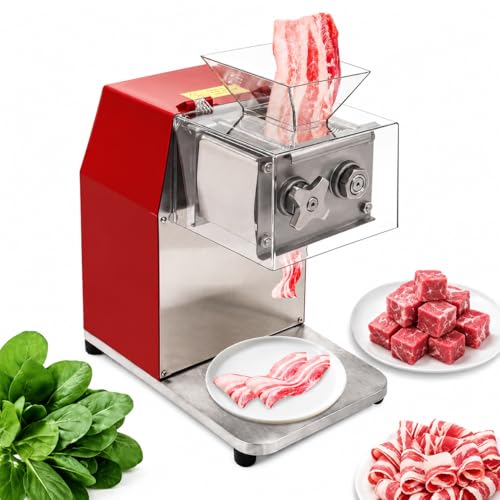
Best for high-demand environments needing fast throughput. The 1100W copper motor delivers quick slicing for beef, chicken, and lamb. The vertical drop design minimizes finger contact, enhancing safety in busy kitchens. The stainless steel build resists rust and is easy to clean, with a removable blade set for maintenance. Ideal for small supermarkets, catering prep, and home chefs who prioritize speed and hygiene.
Who it’s best for: commercial kitchens with heavy daily use, small butcher shops, and home cooks who value safety and durability. Limitation: the model’s bulkier footprint may require dedicated counter space.
2026 Home Lightweight Electric Bone And Meat Saw
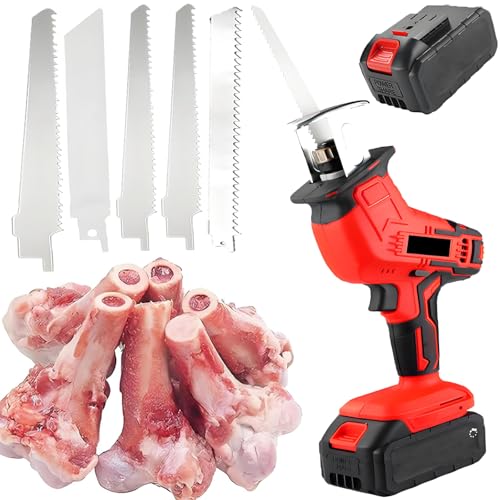
Best for versatile, portable bone and meat cutting in semi-professional settings. This model features a pure copper motor for efficiency and a stainless steel blade that resists rust. LED lighting helps maintain straight cuts, and the adjustable handle supports horizontal, vertical, or angled cuts. Suitable for home workshops, small butcher setups, and mobile prep teams. Caution: battery-powered operation is limited to cordless use, and battery life should be monitored for long shifts.
VEVOR Meat Cutting Machine, 850W

Best for steady, low-noise operation in semi-professional kitchens. The 850W motor powers a robust 3.5 mm slice thickness, with a set of 48 blades to reduce jamming during quick runs. The blade is detachable for easy cleaning and maintenance. Suitable for supermarkets, small restaurants, and caterers who need predictable slices without frequent jams. Limitation: only the 3.5 mm blade set is included, with optional blade sets sold separately.
Meat Cutter Machine Commercial, 3 mm Blades

Best for bright, visually monitored slicing with rapid throughput. This FoHORE model uses a 750W motor and 3 mm blades, with a transparent PC cover to watch the cutting process. It supports different states of meat through multiple passes and features a detachable blade for easy replacement. Choose this if you want a cost-effective, eye-catching slicer for mid-volume operations. Caution: blade speeds and thickness may require careful handling during first uses.
VEVOR Commercial Meat Cutting Machine, 551 Lbs/H

Best for stainless steel durability and high-capacity processing. This model features a stainless steel body and blade, a transparent PC window, and a powerful 850W copper motor capable of 551 lbs per hour. The 3.5 mm cut thickness is standard, with easy blade detachment for cleaning and maintenance. Suitable for mid-to-large kitchens and small-scale butcher shops. Limitation: the 3.5 mm blade is the standard set; upgrading blades may be needed for other thicknesses.
Buying Guide
Key considerations when choosing a portable meat cutting machine:
- Power and throughput: Higher wattage typically means faster slicing and greater capacity. Match power to daily output needs.
- Cut thickness options: Look for machines with adjustable or multiple blade thicknesses to accommodate different meat cuts.
- Material and build: Stainless steel bodies resist corrosion and simplify cleaning, which matters for food safety.
- Safety features: Vertical or finger-safe designs reduce risk during rapid slicing in busy environments.
- Maintenance and blade accessibility: Detachable blades and easy cleaning extend equipment life and hygiene.
- Portability and size: Consider counter space, mobility, and whether a bench-mounted or freestanding model fits your setup.
- Special features: LED lighting, transparent covers, and sturdy handles can improve accuracy and comfort during long use.
Practical buyer questions
- Which machine is best for bone-in meat processing? The 2000W bone saw models are designed to handle larger bone-in cuts and provide wide cut capacity, but ensure you have the space and ventilation for a higher-power unit.
- Is a higher wattage always better? Higher wattage generally supports faster cutting and heavier loads, but consider the specific meat types you process and the required cut thickness to avoid overkill.
- Do I need a safety-forward design? Yes, vertical drop and finger-safe features minimize direct contact during cutting, which is beneficial in high-volume environments.
- What maintenance should I plan for? Regular blade cleaning, rust-prevention oil, and blade replacements as needed keep the machine performing consistently.
- Can I use these in a home kitchen? Many models are suitable for home use, but confirm countertop space, ventilation, and legal compliance for home-based commercial equipment in your area.
- Are detachable blades user-friendly? Detachable blades simplify cleaning and replacement, reducing downtime between batches and improving hygiene.
FAQ
- What is the typical cut thickness available on these machines? Most models offer 3.0–3.5 mm standard, with some variants allowing other thicknesses via different blade sets.
- Are these machines suitable for frozen meat? Some units handle frozen or semi-frozen meat with heavier blades, but check manufacturer guidelines for best results.
- Can these machines slice boneless and bone-in meat? Yes, many models are designed to handle both boneless and bone-in cuts, though bone-in processing may require specific blades or configurations.
- How do I clean these machines? Detachable blades and removable covers simplify washing; use food-safe cleaners and ensure parts are thoroughly dried after cleaning.
- Is assembly difficult? Most units come with straightforward assembly and replacement parts; refer to included manuals for step-by-step guidance.
- Do these machines require professional installation? Generally no, but verify electrical requirements (voltage and plug type) and ensure a compliant workspace.