Best Dough Flattening Machines for Effortless Pastry and Pizza Prep
For home bakers and small kitchens, choosing a reliable dough flattening machine speeds up pastry, pizza, and pasta prep. The top picks here cover manual and semi‑manual options that require little or no electricity, plus sturdy builds for consistent thickness control. This guide highlights who each product is best for, why it was selected, and practical cautions to consider before you buy. The focus is on machines that reliably flatten dough to precise thicknesses, ideal for croissants, pizzas, sheets of fondant, and rolled dough work.
Buyer types you’ll see represented: home bakers who want simple, no‑fuss operation; small commercial setups needing compact, durable units; and hobbyists seeking precise thickness for themed decorations. The following table compares the five chosen products at a glance.
| Product | Best For | Key Thickness Range | Power |
|---|---|---|---|
| VEVOR Manual Dough Sheeter | Small commercial kitchens and serious home bakers | 0–0.5 inches (12 mm) | Manual |
| HESMAX 12″ Dough Sheeter | Home bakers and small bakeries needing space efficiency | 0–0.98 inches (0–25 mm) | Manual |
| XGZ Folding Dough Rolling Machine | Compact storage and versatile pastry work | 0–25 mm (approx. 0–0.98 inches) | Manual |
VEVOR Manual Dough Sheeter Machine

Best for: small commercial kitchens and serious home bakers who want a completely manual, electric-free dough sheet experience. This model uses a manual drive to flatten dough through a roller, enabling control over texture with repeated passes. It is designed for fondant, sugar paste, croissants, pasta, and pizza dough. The adjustable thickness ranges from 0 to 0.5 inches, allowing ultra-thin sheets for decorative petals or delicate lace work as well as thicker sheets for rolled dough projects. The removable handle, panel, and roller simplify cleaning and storage, which is helpful in busy kitchens.
Why selected: the VEVOR unit emphasizes a straightforward, hands-on approach with a clear thickness dial and a robust build for frequent use. Its height and width accommodate standard dough sheets without requiring power, making it stable for long sessions. This model is a reliable pick for those who prefer traditional dough preparation methods or operate in venues where electricity usage is limited.
Caution: as a manual device, continuous long sessions may require more physical effort. Ensure the rollers and surfaces are kept clean to prevent dough buildup that can affect sheet consistency.
EliteEdge Manual Pizza Dough Press Machine

Overview
Best for: households and small shops that want consistently pressed pizza dough in under-control thickness. This press uses a stable cast iron and 304 stainless steel construction to resist deformation and support repeated use. The 240 mm/9.5 in pressing plate accommodates dough under 9.5 inches in diameter, making it suitable for standard pizzas and hand pies. The design emphasizes even pressing and quick results.
Why selected: the EliteEdge model delivers uniform thickness with a straightforward vertical pressing action. The widened base adds stability on counter surfaces, reducing drift during pressing. It’s particularly good for users who want quick, repeatable dough discs without manual rolling.
Caution: the press is optimized for up to a 9.5-inch diameter; larger dough discs should be avoided to maintain even pressure and prevent damage to the plate or base.
15.75in Chrome Dough Laminator

Best for: those who routinely roll pasta sheets, pizza dough, and pastry for large sheets. The chrome-plated rollers provide durability and smooth operation, while the long 15.75-inch rollers help achieve consistent sheet thickness with less effort. The adjustable thickness control and a durable cast‑iron and steel frame contribute to reliable performance for repeated use.
Why selected: this laminator offers a longer roll length, which is advantageous when working with large dough sheets or sheeted pastry. It balances durability with an approachable manual operation that suits semi-commercial setups and ambitious home cooks.
Caution: chrome rollers require regular cleaning to prevent dough buildup that can affect sheet uniformity. Avoid using highly sticky dough without proper flouring to prevent sticking.
XGZ Folding Dough Rolling Machine

Best for: kitchens needing space-saving equipment with versatile applications. This folding unit includes two rolling boards—a rough and a smooth surface—made of eco-friendly PE and designed with a one-piece molding technique. It supports a wide thickness range from 0 to 25 mm and uses food-grade stainless steel contact surfaces for safer dough handling.
Why selected: the folding design reduces footprint when not in use, making it ideal for small studios or markets. The dual boards allow different dough textures and finishing techniques, which is helpful for croissants, pasta sheets, or pastry work. It also emphasizes a compact storage solution without sacrificing performance.
Caution: as a folding model, stability and even pressure depend on proper setup on a clean, flat surface. Ensure the base is secured to prevent movement during rolling.
Folding Dough Rolling Machine With Two Rolling Boards
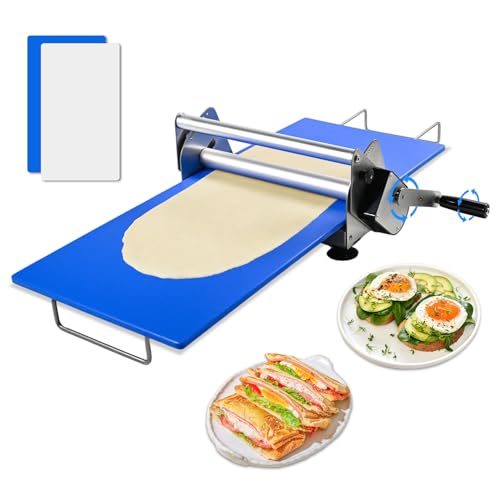
Best for: bakers who want a two-board setup for varied dough textures and recipe styles. This unit includes two rolling boards, one rough and one smooth, with adjustable thickness settings from 0 to 17.5 mm. The stainless steel structure and PE boards are designed for frequent, heavy use, suitable for pastry, croissants, pizza dough, and cookie dough.
Why selected: the two-board design expands versatility, enabling different doughs and finishes in a single machine. The adjustable thickness range supports precise control across a range of recipes, from thin sheets for linguine to thick pastry dough for puff croissants.
Caution: ensure both boards are properly aligned and secured during use to prevent uneven sheets or board shift under pressure.
Buying Guide
What thickness range do you need? If you frequently work with ultra-thin sheets for decoration or fondant, choose a model with a 0–0.5 inch range or finer. For pizza and croissant dough, a 0–25 mm (roughly 0–1 inch) range may be more versatile.
Manual vs. assisted: Manual machines prevent electricity use and are cost-efficient, but they require more hand effort. If you bake large batches or have frequent sessions, a robust manual unit with smooth operation is worth the extra effort. For occasional use, a lighter manual model may suffice.
Materials matter: Look for food-grade stainless steel components and easy-to-clean surfaces. Chrome rollers resist wear and corrosion, while PE boards reduce sticking. A foldable design helps save space in small kitchens or pop-up bakeries.
Maintenance considerations: detachable components simplify cleaning. Regularly remove dough remnants and wipe down rollers to maintain consistency. Avoid using overly sticky doughs without flouring to prevent food buildup on rollers and boards.
What’s best for you now? If you want a compact, electric-free option for fondant and decorative work, the VEVOR dough sheeter is ideal. For pizza and pastry prep with sturdy construction, the EliteEdge press and HESMAX dough roller provide reliable, uniform thickness. If storage and space saving are priorities, the folding models from XGZ and At dsetr suit small kitchens and budding bakeries.
Frequently Asked Questions
- What thickness range should I prioritize for pizza dough? A range up to 12–25 mm (0.5–1 inch) works well for standard pizza bases and some calzone doughs.
- Are manual dough sheets less expensive to operate? Yes, they require no electricity, but they demand more manual effort and space for turning the handle consistently.
- Can these machines handle croissant dough? Yes, several models accommodate delicate doughs, but pay attention to the recommended dough textures and rolling settings for best results.
- Is maintenance difficult? Most models use detachable components for easy cleaning. Regular cleaning after sessions helps maintain even thickness and dough quality.
- Which is best for small kitchens? Foldable and compact models with dual boards or folding mechanisms are ideal for saving space without sacrificing performance.