Best Clutch Motor Sewing Machines for Industrial and Home Use
Finding the right clutch motor sewing machine means matching power, noise, and reliability to your sewing needs. This guide highlights five top clutch motors and servo options that work well for industrial and home projects. It targets buyers who need durable, high-speed operation, or energy efficiency in sewing machines. Each product is best for specific setups, from zigzag and overlock machines to heavy-duty beaders. The summary table below helps you compare key points at a glance.
| Product | Best For | Voltage | Power | Notes |
|---|---|---|---|---|
| Industrial Sewing Machine Clutch Motor, 400W 3450RPM (YIYIBYUS) | Industrial machines needing simple control | 110V/220V | 400W | Includes belt guard; versatile voltage |
| Servo Motor Sewing Machine, 750W (JURPLIX) | Energy-saving, quiet operation | 110V | 750W | Variable speed, CW/CCW |
| 400W Clutch Motor, DOL12HS Style (GMSLuu) | Rugged industrial reliability | 110V/220V | 400W | Sturdy base and noise-reducing pads |
| Clutch Motor 1/2HP, 110V (Cutex Sewing Supplies) | Multiple machine types with included hardware | 110V | ~0.5HP | Pre-assembled with pulley and guards |
| TBVECHI 400W Clutch Motor, 3450RPM | Durable, stable performance | 110V/220V | 400W | Sturdy cast iron/steel design |
Industrial Sewing Machine Clutch Motor by YIYIBYUS

The YIYIBYUS clutch motor is designed for broad compatibility with switchable 110V/220V voltage. It features an 8.2-foot cord and an on/off switch for easy, adjacent control. Best for industrial machines that require straightforward, reliable clutch operation and flexible voltage use. The long cord length helps in workshop layouts where outlets are not near the sewing area. A potential limitation is the absence of advanced safety features beyond basic protection, so run-time monitoring is advised.
Servo Motor With Controller, JURPLIX 750W

This servo motor delivers energy savings by powering the motor only when sewing, potentially cutting electricity use by up to 50–70% compared with traditional clutch motors. It operates quietly (lower noise) and includes safety mechanisms to automatically shut off under abnormal conditions. Best for users prioritizing energy efficiency, reduced noise, and smoother operation. A limitation is higher initial cost and the need for compatible controllers and wiring in some machines.
Industrial Clutch Motor, DOL12HS Style 400W

With a sturdy cast-iron base and pre-drilled mounting holes, this motor emphasizes durability and stability during operation. It offers 400W at 3450 RPM, making it well-suited for industrial sewing machines that demand reliable speed and smooth running. Best for shops that need a reliable, vibration-minimizing motor. A caution is the potential weight and mounting considerations in compact setups.
Clutch Motor For Industrial Machines, 1/2HP

This unit arrives as an assembled system with a switch box, pulley, guard, and adjustable belt tension. It includes sealed bearings, a built-in light tap, and a ready-to-use solution for upgraded machines needing robust clamping and vibration-absorbing mounts. Choose this if you want a ready-to-run package. Limitations include the need for compatible pulleys and belts for your specific machine model.
TBVECHI 400W Clutch Motor, 3450RPM

TBVECHI emphasizes a sturdy build with a cast-iron and aluminum frame, designed to reduce vibration and noise while delivering strong 400W power at 3450 RPM. It includes pre-drilled holes and a solid base for easy mounting. Best for workshops needing a robust, long-lasting motor. The limitation is that users should verify belt and pulley compatibility with their specific machine to ensure optimal performance.
Enduro Sewing Machine Motor – 550W Servo
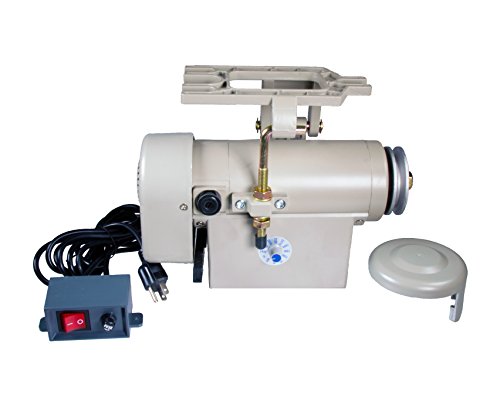
The Enduro SM-550 is a clutchless high-torque servo motor delivering up to 550W at a maximum of 3300 RPM. It emphasizes constant, quiet operation and energy efficiency, with a side-mounted speed-control knob for easy adjustments. Best for users seeking quiet performance and a straightforward speed setup. A potential limitation is the need for compatible servo controls and machine compatibility checks.
Buying Guide: Key Purchase Considerations
- Machine compatibility: Confirm voltage (110V vs 220V) and mounting patterns before purchasing.
- Power needs: Industrial machines may prefer 400W or higher; light-duty setups can manage with 400W or 3450 RPM units.
- Speed control: Servo motors offer variable speeds and energy savings, while clutch motors provide simple, immediate clutch engagement.
- Noise and vibration: Look for models with noise-reducing features, shock-absorbing mounts, or rigid builds for stability.
- Energy efficiency: Servo motors generally consume power only when sewing, which saves energy over time.
- Safety features: Overheat, overcurrent, and under/over voltage protections help protect the motor and machine.
- Installation: Check included hardware (pre-drilled holes, bases, guards) to minimize extra mounting work.
FAQ
- What is the difference between a clutch motor and a servo motor?
Answer: A clutch motor drives the machine continuously with clutch engagement, while a servo motor uses electronic control for variable speed and typically saves energy, turning on only when sewing. - Which motor is best for high-speed zigzag stitching?
Answer: Motors rated around 400W with stable RPMs, like the 3450 RPM class, are well-suited for high-speed zigzag and overlock tasks. - Do I need 110V or 220V for my motor?
Answer: Check your machine’s power supply and wall outlet compatibility. Many industrial motors support both voltages or are listed for a specific voltage. - Are servo motors louder than clutch motors?
Answer: Servo motors are generally quieter because they run with controlled speed and less idle power, especially when paired with appropriate controllers. - Is installation difficult for an existing sewing machine?
Answer: It varies; many units come with pre-drilled holes and mounting hardware, but you may need to adapt pulleys or belts to your model. - What maintenance is required for these motors?
Answer: Regular inspection of belts, mounts, electrical connections, and cooling (where applicable) helps maintain performance and longevity.