Best Food Vacuum Bag Machines for Fresh Storage and Sous Vide
Answer: A quality food vacuum bag machine helps extend freshness, lock in flavor, and reduce waste. This guide highlights five top options, each best for different needs—from compact handheld use to robust, multi-mode sealing for bulk prep. Ideal buyers include home cooks who sous vide, meal-preppers seeking long-term storage, and those who want quick, hands-off sealing with reliable bags.
Summary of selected products:
| Product | Best For | Key Benefit |
|---|---|---|
| FoodSaver Vacuum Sealer | All-around home use | Automatic bag detection and dual heat strips |
| XinBaoLong Vacuum Sealer Bags Rolls | Long-term storage | Commercial-grade, BPA-free rolls, customizable length |
| MZROT Vacuum Sealer Machine | Digital precision | 6-in-1 functions with timer |
| Bonsenkitchen Vacuum Sealer | Versatile modes | External vacuum, multiple modes |
| MEGAWISE Vacuum Sealer | Value bundle | Moist/Dry modes with hose and bags |
FoodSaver Vacuum Sealer Machine

Best for: Everyday home use with reliable, automated sealing. The dual heat sealing strips create a strong, airtight seal, while built-in bag cutters reduce waste. This model is well-suited for cooks who vacuum seal frequently and want consistent results across a range of foods.
Why selected: It combines automatic bag detection with durable sealing and a value-oriented bundle of bags and rolls, making it a practical all-purpose machine for beginners and seasoned users.
Caution: Some users may prefer a larger work surface for frequent bulk sealing; consider counter space before purchase.
XinBaoLong Food Saver Bags Rolls (6 Pack)

Best for: Long-term freezer storage and sous vide enthusiasts who need customizable bag lengths. These commercial-grade, BPA-free rolls extend storage up to multiple times longer and minimize waste with cut-to-length flexibility.
Why selected: The rolls are designed for durability and sealing performance, reducing the chance of punctures and leaks during marinating or freezing. They fit most standard sealers that use cut-to-length bags.
Caution: Ensure you cut bags evenly to maintain a proper seal; uneven cuts can compromise vacuum integrity.
MZROT Vacuum Sealer Machine

Best for: Users who want precision with digital timing and multiple modes, including a built-in cutter. The 75KPa suction provides fast sealing, and the compact design suits small kitchens or apartment living.
Why selected: The digital timer and 6-in-1 features allow tailored sealing for different foods, combining speed with control. It is especially handy for those who portion meals ahead of time.
Caution: Check bag compatibility, as some thicker bags may require manual testing to ensure a complete seal.
Bonsenkitchen Vacuum Sealer Machine
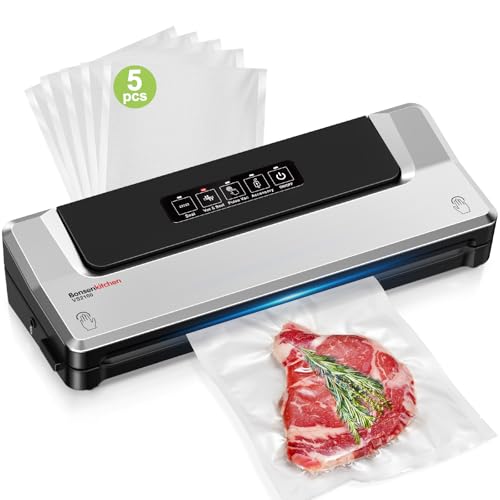
Best for: Kitchen-savvy users who want multiple modes and an external vacuum system for jars and sous vide bags. It supports batch sealing with efficient performance and a compact footprint.
Why selected: It offers a robust mix of modes (Vac & Seal, Pulse Vac, Seal, Accessory), making it versatile for different foods and storage needs. It is strong for those prioritizing flexibility over sheer speed.
Caution: The external vacuum feature requires compatible accessories; verify compatibility with your jars and bags before use.
MegaWise Vacuum Sealer Machine
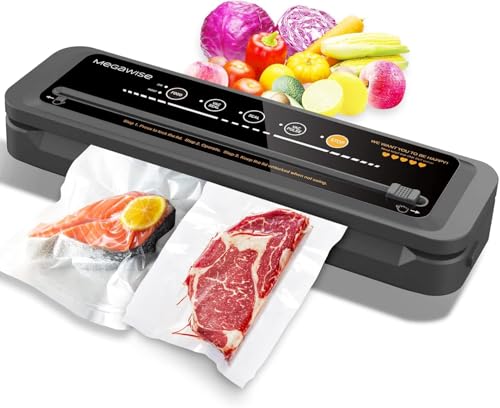
Best for: Value-conscious buyers who want a comprehensive starter kit with bags and a built-in cutter. The 80kPa suction and dry/moist modes suit general meal prep and bulk portioning.
Why selected: It combines strong suction with practical modes and a starter bag set, offering a balanced option for those new to vacuum sealing or on a budget.
Caution: The bundled bags may run short for large quantities; consider buying additional rolls if you plan frequent sealing sessions.
Updated Vacuum Sealer Machine 2026 (MEGAWISE)

Best for: Home cooks who want an updated design with powerful suction and versatile modes for moist and dry foods. It includes a hose for jars and wines, expanding storage options.
Why selected: The 80kPa suction power and moist/dry modes offer strong performance for diverse foods, making it a reliable all-around option in a compact form factor.
Caution: Consistent results depend on bag quality; use recommended bag types to maintain the best seal.
Buying Guide
What to consider when choosing a food vacuum bag machine
- Sealing power and speed: Higher suction speeds up sealing and extends freshness, especially for bulk storage and sous vide prep.
- Modes and versatility: Dry vs. moist settings, pulse vac, and accessories compatibility affect how you store different foods.
- Bag type and cost: BPA-free, durable rolls vs. pre-cut bags; weigh waste reduction against ongoing bag costs.
- External vacuum capability: Jars and sous vide bags expand storage options but require compatible accessories.
- Maintenance and durability: Look for built-in cutters, dual heat strips, and easy-to-clean surfaces for long-term use.
- Counter space and portability: Compact units save space; consider the footprint if you prep frequently.
- Starter kits: Some models include bags or rolls, which influences initial value and immediate usability.
Frequently Asked Questions
- What foods benefit most from vacuum sealing? Foods with moisture or air exposure, such as meat, fish, berries, and prepared meals, stay fresher longer when sealed properly.
- Can all bags be used with a vacuum sealer? Not all bags are compatible. Use bags designed for vacuum sealing and follow the manufacturer’s recommendations.
- Is vacuum sealing safe for sous vide? Yes, many machines support sous vide, but check bag compatibility and ensure bags are food-grade and BPA-free.
- How long can vacuum-sealed foods last? Sealed foods last longer in the freezer (months to years) and weeks in the fridge, depending on the item and storage conditions.
- Do I need external vacuum accessories? External vacuum options are beneficial for jars and specialty bags, expanding storage options beyond standard bags.
- What maintenance helps extend a sealer’s life? Regularly clean sealing areas, replace worn gaskets as needed, and store in a dry place to prevent corrosion.