Best Spiral Cutters for Vegetables: Top Vegetable Spiralizers for Zoodles
Spiral cutters turn ordinary vegetables into long, noodle-like strands for healthier meals. This guide highlights five top options suited for different kitchens and needs, from manual handheld tools to multi-blade models. Ideal buyers include home cooks seeking quick, carb-conscious meals, meal-preppers aiming for batch noodle prep, and small households prioritizing compact storage. Below is a quick comparison to help you choose the right spiralizer for your cooking style.
| Product | Best For | Notes |
|---|---|---|
| Brieftons 5-Blade Spiralizer | Everyday zoodles and veggie pastas | 5 labeled blades for varied cuts |
| Qioihkp Egg Spiral Slicer | Creative twists for salads and snacks | Compact and simple to use |
| Veggetti Veggie Slicer | Budget-friendly, quick veggie noodles | Dual blade options |
| WellToBe 6-Blade Spiralizer | Most blade variety and durability | Storage caddy included |
| Vollum Japanese Turning Spiralizer | Professional-grade garnishes | Multiple serrated blades |
Brieftons 5-Blade Vegetable Spiralizer & Veggie Noodle Maker
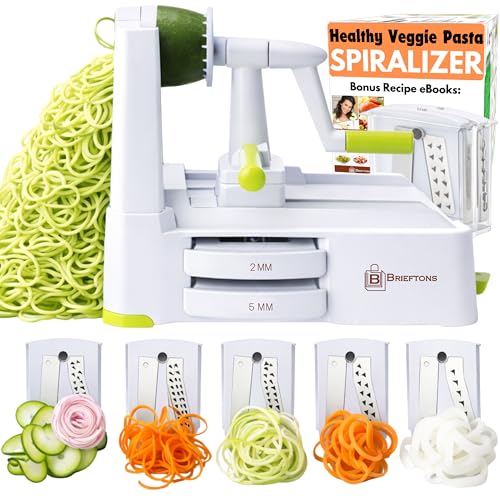
The Brieftons model provides five labeled blades for precise cuts: 2mm angel-hair, 3mm spaghetti, 5mm fettuccine, 5.5mm pappardelle, and a flat ribbon slicer. It’s a hand-crank design that works without electricity, ideal for quick zucchini noodles, sweet potato spirals, and beet ribbons. The blades are Japanese 420-grade stainless steel, designed to stay sharp with regular use and resist rust. The body is BPA-free, and the unit includes a suction pad for stable operation on flat surfaces.
Who this is best for: home cooks who want a versatile, compact tool with clearly labeled blades for consistent results. Why selected: this model combines blade variety with ease of use, making it suitable for a range of produce and meal-prep routines. Caution: dishwasher use is top-rack only and avoid high-heat cycles to preserve blade edges.
Qioihkp Egg Spiral Slicer

This spiral cutter is designed for smooth, uniform spirals from potatoes, carrots, or cucumbers. It emphasizes ease of twisting with an ergonomic finger-ring handle and a compact stainless-steel build for everyday storage. The tool excels at adding decorative spirals to salads, bento boxes, and snacks, offering a simple, hands-on approach to veggie noodles without electricity.
Best for: users who want a lightweight, straightforward tool for occasional spiral cuts. Why chosen: its ergonomic handle and compact ironclad build support quick, repetitive slicing. Limitation: it may require more manual effort with very hard vegetables, and cleaning should avoid crevices where residue can accumulate.
Veggetti Veggie Slicer

The Veggetti uses dual stainless steel blades to create thick or thin noodle strands, making it versatile for different recipes. It’s designed for quick turns and works well with zucchini, squash, cucumbers, carrots, and more. A spiked holder helps grip vegetables securely during use, contributing to safer, steadier slicing.
Best for: budget-conscious cooks who want quick, dependable veggie noodles. Why chosen: the dual blade options allow varying thickness without switching tools. Caution: as a compact device, it may require more careful handling with very long vegetables to avoid tipping during use.
WellToBe 6-Blade Vegetable Spiralizer

This model provides six blades stored in a practical caddy, including one flat blade and four interchangeable blades plus a main fixed blade. It’s built from 304 stainless steel for durability and uses multiple blade types to create noodles, ribbons, and slices. The structure is designed to deliver sturdy performance for daily meal prep and batch cooking.
Best for: users who want a durable, blade-diverse option with organized storage. Why chosen: the caddy and six-blade setup offer more creative options than many competitors. Limitation: assembly and blade changes can be a bit fiddly for first-time users.
Vollum Japanese Turning Vegetable Spiralizer
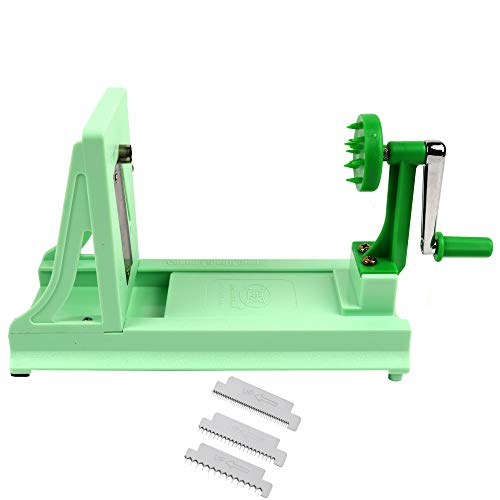
The Vollum turning spiralizer emphasizes professional-grade performance with one straight-edged blade for wide slices and three serrated blades for different strand widths. It supports diverse vegetables, from zucchini to beets, and is positioned as a robust option for both home kitchens and small professional setups. This tool is especially strong for garnish work and varied textures.
Best for: cooks needing broad blade versatility and confident, consistent spirals. Why chosen: multiple serrated blades enable finer or coarser noodles, good for garnish-heavy meals. Limitation: larger footprint may be less ideal for compact drawers or small kitchens.
Buying Guide
Which spiralizer fits your routine?
Manual spiralizers like Brieftons and Veggetti are quick for everyday meals and small batch prep. Electric or turning models, such as Vollum, offer more consistent outputs for larger tasks but may take up more space.
How many blades do you actually need?
Five to six blades cover a wide range of cuts, including spaghetti, fettuccine, and ribbons. If you frequently garnish dishes or prepare diverse recipes, a model with multiple blade options is advantageous.
Material and maintenance considerations
Look for 304 or 420-grade stainless steel blades for durability and rust resistance. BPA-free bodies are preferable for health-minded shoppers. Dishwasher safety on the top rack is a common convenience, but some blades require hand washing to preserve sharpness.
Storage and stability matter
Models with blade caddies or integrated storage help keep parts organized. Suction bases improve stability on countertops during use, reducing slips and spills.
Safety and ease of use
Ergonomic handles, gripping aids, and smooth twisting action minimize hand fatigue. For first-time users, simpler designs with clear blade labeling reduce the risk of cutting or mishandling blades.
Frequently Asked Questions
- What is a spiralizer used for?
A spiralizer creates noodle-like strands from vegetables, offering a low-carb alternative to pasta and adding texture to salads, stir-fries, and bowls.
- Are these tools easy to clean?
Most models are dishwasher-safe on the top rack, but blades should be handled with care. Some parts may require hand washing to maintain sharpness and prevent damage.
- Which blade size should I start with?
Begin with a medium-thickness blade (around 3-5 mm) to gauge texture preferences before moving to thinner or thicker cuts.
- Can spiralizers handle hard vegetables?
Yes, many blades are designed to cut through firm produce like beets, carrots, and squash, but harder vegetables may require steady twisting and shorter sessions to avoid blade dulling.
- Do spiralizers replace all pasta dishes?
They can replace many noodle-based dishes but may not suit every recipe. They’re best for meals that benefit from fresh vegetable noodles or ribbons.