Best Dough Rolling Machines for Bakery: Top Picks for Consistent, Professional Results
Whether you operate a bustling bakery or a home kitchen that aims for professional-grade dough sheets, a reliable dough rolling machine is essential. This guide highlights five strong options suited for croissant dough, pizza bases, puff pastry, and more. Each entry includes who it’s best for, why it’s chosen, and a practical caution. If you need consistent thickness control, space-saving designs, or robust stainless steel construction, you’ll find a suitable pick below.
| Product | Brand | Best For |
|---|---|---|
| 22.7″ Commercial Electric Dough Sheeter | HESMAX | Bakeries and high-volume home bakers |
| Folding Dough Rolling Machine (2 Boards) | Atdsetr | Compact spaces, croissants and cookies |
| 12″ Folding Dough Sheeter | UNGAII | Small bakeries and home kitchens |
| Folding Dough Sheeter (40.5″×22.8″) | Xigugo | Restaurant or large home kitchen |
| 40.6″ Foldable Dough Sheeter | Aobole | Versatile doughs in limited spaces |
22.7″ Electric Dough Sheeter With Adjustable Thickness

This high-torque electric dough sheeter is best for professional bakeries and serious home kitchens that require stable, continuous dough processing. It provides smooth rolling for both soft pastry dough and denser bread dough, with a wide thickness range to cover croissants, pizza bases, and bread dough.
- Best for: Medium to high-volume baking environments that demand consistent sheet thickness.
- Why selected: Strong motor and durable stainless steel construction support long runs without fatigue.
- Limitations: Larger footprint; may require a dedicated workstation.
Folding Dough Rolling Machine With Two Boards
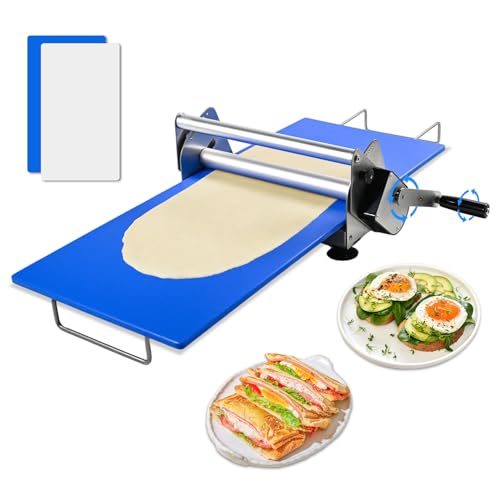
Best for compact kitchens and versatile rolling needs, this manual dough sheeter comes with two boards (one rough, one smooth) and adjustable thickness from 0–17.5 mm. It’s ideal for croissants, Danish pastry, pizza, and cookie dough in smaller spaces.
- Best for: Small shops or home bakers needing a portable, space-conscious option.
- Why selected: Non-stick, non-toxic boards and foldable design save storage space.
- Limitations: Manual operation means more labor than electric models.
12-Inch Folding Dough Sheeter With 2 Boards

This compact 12-inch model focuses on home bakers and small shops needing precise thickness control in a space-saving footprint. It offers adjustable thickness up to 17.5 mm and folding capability for easy storage.
- Best for: Home bakers and petite bakeries seeking professional results without large equipment.
- Why selected: Clear thickness references and folding design make storage simple.
- Limitations: Smaller work surface limits batch size compared to larger models.
Folding Dough Sheeter With 40.5″×22.8″ Board

A robust manual option with a large footprint, this model suits restaurants and larger home kitchens needing to roll puff pastry, Danish bread, and pizza dough with a wide thickness range. It emphasizes ease of operation and stability.
- Best for: Restaurants or bakeries that require substantial sheet sizes and heavy use.
- Why selected: Durable stainless steel build and a wide 0–25 mm thickness setting.
- Limitations: Size may challenge small workspaces; manual operation requires more effort.
40.6″ Foldable Dough Sheeter, 0–25mm

This foldable model balances versatility and space efficiency for bakeries and serious home users. It offers precise thickness control with fine increments and a heavy-duty stainless steel construction for durable everyday use.
- Best for: Bakers needing a flexible, all-purpose sheeter that stores compactly when not in use.
- Why selected: Dual design supports a wide range of dough types from pizza to pastry.
- Limitations: Foldable parts require proper maintenance to avoid shifting during heavy loads.
Buying Guide: Key Purchase Considerations
What size and capacity do you need?
Consider your typical batch size and available workspace. Larger models handle bigger dough sheets but require more counter space or storage. For small kitchens, compact folding models provide adequate performance without dominating the room.
How important is thickness precision?
If you bake croissants, puff pastry, or layered doughs, precise thickness settings matter. Models with clear grooves or fine increments (0.5 mm steps or similar) deliver more consistent results across recipes.
Electric vs. manual?
Electric sheeters offer easier operation and less physical strain, suitable for high-volume output. Manual units save energy and are often more affordable but demand more effort and time per sheet.
Materials and durability
Food-grade stainless steel surfaces resist rust and simplify cleaning. Durable construction reduces maintenance downtime and supports longer service life in busy environments.
Portability and storage
Folding designs and detachable parts enhance storage in kitchens with limited space. Ensure you can disassemble and reassemble the unit safely without specialized tools.
Maintenance and safety
Look for non-slip bases and stable mounts to prevent movement during operation. Removable, washable components simplify hygiene routines in bakeries and home kitchens alike.
FAQ
- What dough types can a sheeter handle? Most models handle croissant dough, puff pastry, pizza dough, Danish pastry, and similar sheetable doughs. Check thickness range to ensure compatibility with your recipes.
- Is a manual dough sheeter suitable for a busy bakery? For high-volume production, an electric model reduces fatigue and speeds up throughput. Manual units are best for smaller shops and occasional use.
- How much space does a foldable dough sheeter require? Foldable models can store compactly, but their working footprint when in use varies. Measure your counter space and consider clearance for folding and feeding dough.
- What maintenance is needed? Regular cleaning of stainless steel surfaces and rolling boards prevents residue buildup. Dry thoroughly and inspect moving parts for wear.
- Can these machines replace a rolling pin? They provide consistent thickness and efficiency, but for delicate or small-batch tasks, a manual approach with a rolling pin may still be preferred.
- Do these machines come with warranties? Warranty terms vary by model and seller. Review the product listing for coverage details and service options.