Best Sewing Machine Motors for Smooth, Reliable Performance in 2026
The best motor for a sewing machine depends on your needs: lightweight, quiet operation for home sewing; robust power for industrial projects; or easy maintenance for hobbyists. This guide highlights five top options that balance efficiency, compatibility, and value. Each pick is described with who it’s best for, why it stands out, and a practical caveat. Use the quick comparison table to compare key details at a glance.
| Product | Brand | Power | Best For | Notes |
|---|---|---|---|---|
| Fbshicung Sewing Machine Motor Kit | Fbshicung | 100W | Home sewers who want a complete kit | Includes foot pedal, belt, bracket, bolts, carbon brush |
| SYLPHID Servo Motor AC110V | SYLPHID | 750W | Heavy-duty, low-noise industrial use | All machines, energy saving |
| Lonsge Servo Motor | Lonsge | 750W | Industrial and home workshops | Controller and run options included |
| LOOSTYLE AC110V Motor | LOOSTYLE | 100W | Compatibility with Singer models | Maintenance-friendly, easy to repair |
| SMUDUKKIT Home Motor Kit | SMUDUKKIT | 100W | Budget-friendly home sewing upgrades | Includes essential kit components |
Fbshicung Sewing Machine Motor Kit

Best for beginners or hobbyists who want an all-in-one package. The motor is a 110V, 100W unit with a 7000rpm rating and includes a foot controller, belt, bolts, and carbon brush. It’s suited for domestic machines with straightforward maintenance needs. The copper windings and a traditional commutator are cited as advantages over aluminum designs, which can contribute to longevity in light to moderate sewing tasks.
Who this is for: home sewers building or upgrading a small setup who value an all-in-one kit and simple replacement parts. Why selected: complete package reduces sourcing steps and potential compatibility concerns.
Limitations: rated at 100W, which is adequate for lighter fabrics and standard projects but may limit performance on high-speed, heavy-duty work. Consider if you frequently sew thick materials or long sessions.
SYLPHID 750W Servo Motor

Best for heavy-duty projects and quiet operation. This servo motor offers a full-metal body, universal fit with major brands, and notable energy savings (claimed around half the electricity cost). It’s designed for both home workshops and light industrial use, with a focus on durability under daily use. It’s well-suited for flatbed, overlock, and upholstery machines.
Who this is for: buyers needing robust, long-lasting performance with lower noise. Why selected: great balance of power, energy efficiency, and broad compatibility.
Limitations: as a larger wattage unit, it may be heavier and requires appropriate mounting and wiring. Verify compatibility with your specific machine model before purchase.
Lonsge Industrial Servo Motor

Best for versatility across various machines. This unit is a 110V, 750W servo with a controller and foot switch included, capable of 200–6000RPM. It emphasizes energy efficiency (claimed 70–75% savings) and quiet operation, making it suitable for home studios or small factories where downtime is costly.
Who this is for: users needing a flexible motor that can run many machine types, from flatbed to serger. Why selected: high efficiency combined with broad compatibility and included control hardware.
Limitations: ensure your table space and mounting plan support a servo motor with a controller and extra components, as some setups require customization.
LOOSTYLE 100W Motor For Singer Models
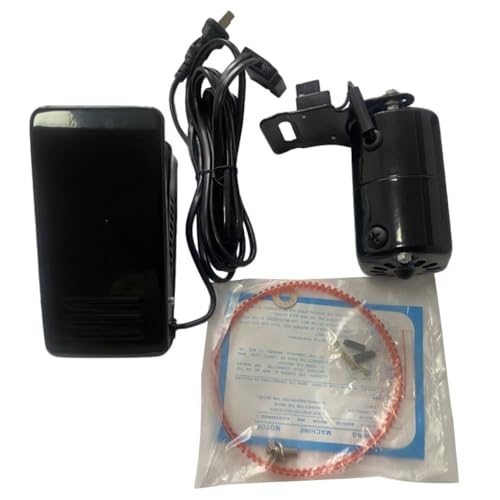
Best for compatibility with specific Singer models and ease of maintenance. This motor runs on AC 110V at 100W and 7000rpm. The kit includes a foot pedal and bracket, and it emphasizes serviceability in the home environment, with carbon brushes designed for easy replacement.
Who this is for: owners of Singer models or similar flatbed machines looking for straightforward replacement parts. Why selected: clear compatibility with a wide Singer range and emphasis on user serviceability.
Limitations: 100W is modest; may not suit heavy-duty fabrics or extended high-speed sewing sessions. Confirm your fabric type and project scope before buying.
SMUDUKKIT Home Sewing Machine Motor Kit

Best budget-friendly complete package for home sewers. The 110V, 100W motor operates up to 7000rpm and includes a foot controller, belt, bolts, carbon brush, and is compatible with a wide range of Singer models and Pfaff 230. The kit approach reduces the need for sourcing multiple parts separately.
Who this is for: buyers looking for an economical upgrade with all essential components included. Why selected: value-oriented bundle that covers standard maintenance and replacement needs.
Limitations: while affordable, the 100W rating mirrors other entry-level options and may limit performance on heavy fabrics or long sewing sessions; plan for lighter workloads or intermittent use.
Buying Guide: Key Purchase Considerations
What power level should I choose? For home sewing, 100W units are often sufficient for typical fabrics. For upholstery or denser materials, consider 750W servo motors for better torque and speed control without overheating.
Why choose a servo motor over a clutch motor? Servo motors save energy by consuming power only when sewing, and they generally run quieter and cooler, boosting comfort and productivity in longer sessions.
Which machines are compatible? Look at mounting patterns, voltage (AC 110V is common in the US), and whether the motor comes with a controller, foot pedal, and mounting hardware. Some kits emphasize universal fit; others target specific brands like Singer or Pfaff.
Maintenance and replacement parts: motors with accessible carbon brushes and copper windings tend to offer longer service life. Confirm that the kit includes basic parts or that easy replacements are available locally.
Installation considerations: ensure your table or cabinet has room for a motor plus controller and pedal. Check for weight, mounting brackets, and belt compatibility to avoid mid-project downtime.
FAQ
- What is the typical power range for sewing machine motors? Most home-oriented motors are 100W, while industrial or heavy-duty units commonly run at 750W or more for increased torque and speed control.
- Are servo motors quieter than traditional clutch motors? Yes. Servo motors generally operate with less noise and reduced heat, which is beneficial for home studios and shared spaces.
- Do these motors include installation hardware? Several kits include foot pedals, brackets, bolts, and belts, but always verify what is included in the exact product listing to avoid missing essential parts.
- Can I use a motor with different brands? Many servo motors advertise universal compatibility, but confirm mounting and voltage requirements for your specific machine and brand.
- Is a higher wattage always better? Not necessarily. Higher wattage provides more torque, but it isn’t required for light fabrics. Choose based on your typical materials and usage patterns.
- What maintenance is needed for sewing machine motors? Regular inspection of carbon brushes and belts, plus cleaning dust from vents, helps extend motor life and performance.