Best Ways to Get Sharp Knife Sharpening at Home
Sharp knife edges are within reach for any home cook. This guide highlights five top sellers that cover whetstones, guided sharpeners, and field-friendly solutions—catering to beginners, seasoned hobbyists, and those who need portability. Each option is chosen for clear guidance, predictable results, and practical limitations. Read on to find which kit best fits your blade types, budget, and sharpening routine.
| Product | Best For | Why It Stands Out |
|---|---|---|
| Sharp Pebble Premium Whetstone Kit | Beginners seeking idiot-proof angle control | Automatic angle guide, no oil needed, complete kit |
| Intelitopia Complete Knife Sharpening Stone Set | Multi-knife households needing versatile grits | Dual grit stones plus leather strop and flattening stone |
| Work Sharp Precision Adjust Elite | Home cooks and enthusiasts needing precise, repeatable edges | Adjustable angles, serrated knife sharpening, dedicated conical ceramic rod |
| SHARPAL 162N Double-sided Diamond Stone | Quick-edge setting and fine honing in one compact setup | Fast, durable diamond surface with two grits and angle guide |
| Work Sharp Guided Field Sharpener | Field, travel, and on-the-go sharpening | Complete portable kit with removable diamond plates and broad head wrench |
Sharp Pebble Premium Whetstone Kit

The Sharp Pebble kit is designed for “no skill, no guesswork” sharpening. The included angle guide locks blade position to help novices achieve consistent edges on the first try. It uses a water-based sharpening approach, eliminating the need for costly honing oils. The dual-grit 1000/6000 stone supports rough edge setting and final polish, making it a practical all-in-one option for everyday kitchen blades. Best for beginners who want a straightforward setup with solid guidance and low-maintenance maintenance.
Best for: New sharpeners and small households who want an all-in-one starter kit. The angle guide reduces common errors and speeds up learning. Limitations: it requires occasional flattening to maintain a flat surface, and results hinge on proper water-based usage and technique.
Intelitopia Complete Knife Sharpening Stone Set

This complete kit packs a broad grit range (400/1000 and 3000/8000) with a leather strop, flattening stone, and three non-slip bases. The dual-sided whetstone is designed to sharpen various blades—everything from kitchen knives to Japanese-style blades—with a simple, guided approach. Best for: households with multiple knives and a desire for a long-lasting, all-in-one sharpening workstation. Limitation: leather strop and strop use require consistent maintenance for best results.
Work Sharp Precision Adjust Elite

The Elite model offers precise, repeatable sharpening with adjustable angles from 15° to 30°. It is designed for kitchen knives, hunting blades, and EDC knives. A dedicated conical ceramic rod sharpens serrated edges, addressing a common gap in many sharpeners. Best for: serious home cooks and knife enthusiasts who want exact angles and serration-capable performance. Caution: more setup and maintenance compared to simpler guided systems.
Work Sharp MK2 Electric Knife Sharpener
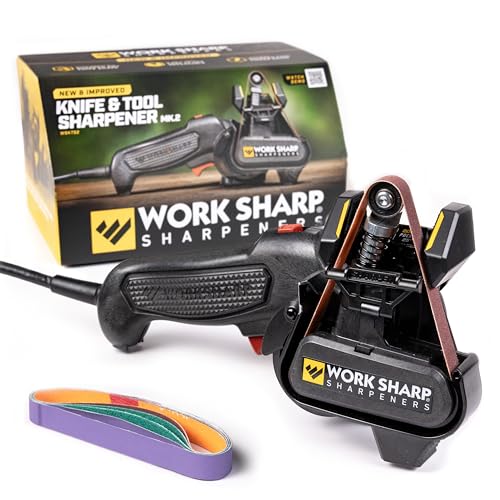
The MK2 upgrades sharpening capabilities for knives, tools, and even garden blades with a two-speed motor and replaceable belts. It supports broad sharpening tasks from kitchen knives to axes and scissors. Best for: households that want a versatile, motorized sharpening system with speed control. Limitation: electric models may require more space and expense than hand tools.
SHARPAL 162N Diamond Whetstone

The SHARPAL 162N uses monocrystalline diamonds, delivering rapid sharpening with two grits (coarse 325 and extra-fine 1200). A flat surface and air-dry capability reduce setup mess. Best for: quick edge setting and honing on hard metals like high-speed steel and carbide blades. Caution: the coarse grit is aggressive—avoid over-sharpening delicate blades.
SHARPAL 191H Knife Scissors Sharpener

The SHARPAL 191H is a versatile 3-stage sharpener that handles straight, serrated, and kitchen blades. It combines tungsten carbide for edge setting with ceramic for honing and a dedicated blade for scissors. Best for: quick, safe sharpening in busy kitchen settings. Limitation: manual operation means consistent results rely on user technique and steadiness.
Buying Guide
What to consider when choosing a knife sharpening setup:
- Skill level: Beginners benefit from guided systems with angle presets, while advanced users may prefer adjustable or electric models for repeatable precision.
- Blade variety: If you own kitchen knives, outdoor blades, and serrated knives, choose a kit with multiple grits and serration capability.
- Portability: For field use or travel, a compact field sharpener or a multi-tool kit is ideal.
- Maintenance: Whetstones require flattening and water usage; diamond plates stay flat longer but may need cleaning to prevent glaze.
- Safety: Look for non-slip bases, secure clamps, and stable footing to reduce slips during sharpening.
How to match products to needs:
- Best for beginners: Kits with an angle guide and dual grit options for a simple learning curve.
- Best for multi-knife households: Dual grit stones plus leather strop and flattening stone for finishing.
- Best for field use: Compact field sharpeners with durable plates and quick setup.
- Best for serrated knives: Models offering dedicated serrated sharpening tools or ceramic rods.
Frequently Asked Questions
- What grit should I start with on a dull knife?
- Are whetstones better than electric sharpeners?
- Do I need oil for sharpening stones?
- Can I sharpen serrated knives with a standard sharpener?
- How often should I flatten a whetstone?
Start with a coarse grit around 400-600 to repair damage, then move to finer grits (1000-3000) for a sharp edge.
Whetstones offer precise edge control and long-term maintenance, while electric sharpeners are faster and user-friendly for quick edges.
Most water stones require water, not oil. Oil-free options reduce mess and cleanup.
Yes, but look for models with serrated knife guides or dedicated slots for serrated blades.
Flattening should be done when the stone shows uneven surfaces, typically every few uses for soft stones and more often for frequent sharpening.