Best Dual Zone Built-in Wine Coolers for Home and Office
Answering the search for a reliable dual zone built-in wine cooler, these models offer separate temps for wine and beverages, adaptable installation, and quiet operation. Ideal buyers include home wine lovers seeking precise storage, small business offices needing discreet cooling, and entertainment spaces wanting a built-in look without sacrificing capacity.
Summary of chosen products:
| Product | Capacity | Zone Range | Install Type | Notable Feature |
|---|---|---|---|---|
| Kalamera 24″ Dual Zone | 37 Bottles | Upper 40–50°F, Lower 50–66°F | Built-in or Freestanding | Wooden frame, temperature memory |
| Velieta 24″ Dual Zone | 20 Bottles, 88 Cans | Wine 41–64°F, Beverage 35–50°F | Built-In or Freestanding | Independent cooling zones, quiet compressor |
| Kalamera 24″ Dual Zone (33/75) | 21 Bottles, 75 Cans | Wine 40–66°F, Beverage 38–50°F | Built-In or Freestanding | Wood frame, dual temperature control |
| Icyglee 15″ Dual Zone | 30 Bottles | Left 40–55°F, Right 55–65°F | Built-In or Freestanding | Under-counter design, lock option |
| BODEGA 15″ Dual Zone | 30 Bottles | Upper 41–53.6°F, Lower 53.6–68°F | Built-In or Freestanding | Quiet compressor, removable shelves |
Kalamera 24 Inch Dual Zone Wine Cooler

Best for homeowners needing stylish built-in flexibility. Dual zones maintain upper 40–50°F for whites and lower 50–66°F for reds. The ECO-friendly FSC wooden frame minimizes vibration and supports long-term bottle protection. The controller displays LED readouts for quick adjustments, and the design accommodates freestanding use if desired. A temperature memory function helps preserve your set climate after power interruptions.
Selected for: precise temperature control, elegant wood framing, and built-in versatility. Caution: the dual zones rely on consistent ventilation; ensure adequate clearance if installed as built-in.
Velieta Wine and Beverage Refrigerator

Best for mixed beverage storage in a compact footprint. Independent dual cooling zones let wine and beverages chill to their own ideal temps (wine 41–64°F, beverages 35–50°F). The unit features a quiet compressor and air circulation to reduce odors and maintain even cooling. It holds up to 20 standard wine bottles and 88 cans, with removable shelves for flexible layout.
Selected for: strong capacity balance and independent zone control. Caution: larger can sizes may require rearranging shelves for optimal fit.
Kalamera 24 Inch Dual Zone Beverage Fridge
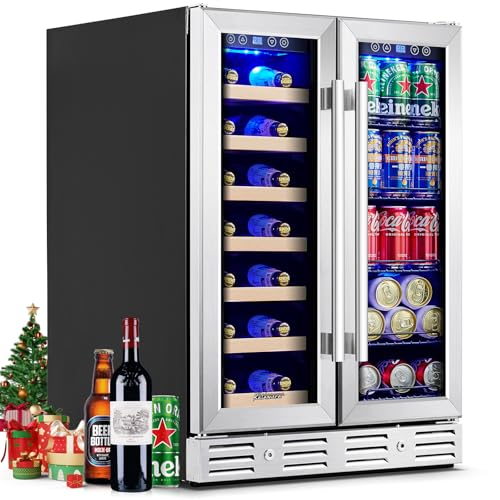
Best for entertaining spaces that want a built-in beverage station. Left wine zone 40–66°F and right beverage zone 38–50°F enable precise storage of both wine and mixed drinks. A dual temperature control and plenty of shelves support up to 21 bottles and 75 cans. The wooden shelves add a touch of warmth, and the unit is suitable as either built-in or freestanding.
Selected for: clear dual-zone separation and practical shelf layout. Caution: ensure door clearance for easy bottle access.
Icyglee 15 Inch Dual Zone Under Counter

Best for kitchen islands and compact spaces needing built-in style. Independent zones provide 40–55°F for wine and 35–71°F for beverages, depending on setting. It accommodates up to 30 standard bottles with six adjustable shelves. The energy-efficient compressor keeps noise to a minimum, supporting quiet operation in living areas.
Selected for: compact footprint and adjustable interior. Caution: under-counter installations may require stable surroundings to prevent vibration.
BODEGA 15 Inch Dual Zone Wine Fridge

Best for compact spaces seeking precise climate control. The upper zone 41–53.6°F and lower zone 53.6–68°F provide targeted storage for wines and beverages. It holds up to 30 bottles with five removable shelves, enabling flexible bottle sizes, including champagne. A quiet compressor and tempered glass door enhance usability in living areas and bars.
Selected for: efficient 30-bottle capacity in a slim footprint. Caution: door may feel tight if you load large bottle formats frequently.
Buying Guide: How To Choose The Right Dual Zone Built-In Wine Cooler
- What is your space type? If you plan built-in installation, ensure proper ventilation and clearance around the unit as specified by the manufacturer.
- Capacity vs. space: Compare bottle capacity against available width and depth. Small 15″ models fit tight counters, while 24″ units maximize bottles and cans.
- Zone flexibility: Decide if you need independent temperature ranges for wine and beverages. Confirm the minimum and maximum settings align with your collection.
- Temperature stability: Look for compressors with even cooling and low noise. Temperature memory helps protect wine during power outages.
- Shelving: Removable or adjustable shelves improve adaptability for bottle shapes and sizes. Beech or wooden shelves reduce bottle friction and vibration.
- Display and accessibility: LED lighting helps visibility; glass doors enable quick visual checks without opening the cooler frequently.
- Installation options: If you may relocate, consider freestanding compatibility in addition to built-in capability.
- Energy efficiency and maintenance: A quiet, low-vibration model preserves flavors and reduces wear, while auto defrost features minimize manual upkeep.
Frequently Asked Questions
- What does “dual zone” mean in a wine cooler?
Answer: It indicates two independent temperature areas, allowing different settings for wine and beverages or red and white wines. - Can these units be installed built-in and freestanding?
Answer: Many models support either installation, but verify the manufacturer’s guidance and ventilation requirements for built-in use. - Which capacity is best for a small collection?
Answer: A 20–30 bottle model with adjustable shelves typically fits small collections while maintaining proper airflow. - Is quiet operation important for a home environment?
Answer: Yes; low noise preserves ambiance in kitchens, living rooms, and offices. - Do dual-zone fridges require special maintenance?
Answer: Regular cleaning, door seal checks, and ensuring correct coolant levels help maintain efficiency. - What should I consider before buying?
Answer: Space, desired temperatures, capacity, and whether you prefer built-in aesthetic or flexible freestanding use.