Best Knife Sharpening Machines and Tools for Every Kitchen
Answering the common question, these are the best knife sharpening machines and tools for quick, safe, and precise edge maintenance. Ideal for home cooks, professional kitchens, outdoor enthusiasts, and improvers who want reliable, easy-to-use sharpeners. The top picks offer a range from compact pocket sharpeners to multi-slot devices that handle straight and serrated blades, as well as scissors. Below, you’ll find five standout options with clear language about who they’re best for and why they were chosen.
| Product | Best For | Key Strength |
|---|---|---|
| SHARPAL 191H Knife Scissors Sharpener | Home cooks needing versatile edge repair | 3-stage system with dedicated scissor sharpening |
| 4-In-1 Manual Knife Sharpener (Bltyzio) | Bite-sized, all-in-one kitchen use | Three sharpening slots plus dedicated scissor slot |
| Longzon 5-in-1 Knife Sharpener | Families seeking safety and coverage | 4-stage system with cut-resistant glove |
| 5 Precision Adjust Knife Sharpener (Sharp Pebble) | Precision sharpening for various straight blades | Adjustable angle slots for multiple degrees |
| Orange Ninja 4-Stage Sharpener (Sharp Pebble) | Everyone needing serrated and straight blades | 4 slots including serrated sharpening |
SHARPAL 191H Knife Scissors Sharpener

The SHARPAL 191H offers a 3-stage sharpening system designed to handle straight, serrated, and kitchen blades, plus a dedicated scissor sharpening option. It uses tungsten carbide for edge setting and ceramic for honing, with an additional tungsten carbide blade for scissors. Best for home cooks who want an all-in-one tool that handles multiple blade types in one pass.
Who it’s best for: home cooks and small kitchens needing a versatile, compact sharpener. Why selected: it covers edge setting, honing, and a dedicated scissor slot, reducing the need for separate tools. Caution: the suction base is strong, but use on very textured surfaces may reduce stability.
4-In-1 Manual Knife Sharpener for Kitchen Knives & Scissors

This Bltyzio model provides a four-slot approach, including three sharpening stages and a dedicated scissor slot. It is designed for everyday kitchen use with a non-slip base and ergonomic handle, making it safe for both right- and left-handed users. Best for: households looking for a simple, reliable, all-in-one sharpening solution. Why selected: straightforward operation and distinct scissor slot add value over basic two-slot devices. Caution: some users may prefer a longer, more adjustable edge angle for professional kitchen knives.
Longzon 5-in-1 Knife Sharpener

The Longzon Sharpener combines a four-stage process with a cut-resistant glove and a non-slip base. It sharpens blades, scissors, and other edge tools, and emphasizes safety and efficiency in home kitchens. Best for: families and busy cooks who want a comprehensive, safety-focused sharpening system. Why selected: includes gloves for added protection and a stable base, reducing the risk of slips. Caution: a few users may find the release of edge angle less customizable than higher-end professional units.
5 Precision Adjust Knife Sharpener (Sharp Pebble)
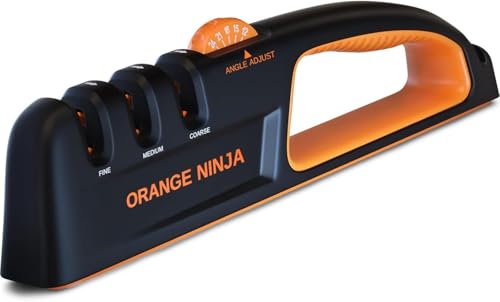
This Sharp Pebble model offers adjustable sharpening angles across several common blade angles (12°, 15°, 18°, 21°, 24°). It is designed for straight-edge blades only and is compact enough for easy storage. Best for: precision-focused users who want control over sharpening angles. Why selected: angle versatility helps maintain specific knife profiles. Caution: not suitable for serrated blades or scissors.
Orange Ninja 4-Stage Knife Sharpener & Serrated Sharpener

The Orange Ninja model provides four slots, including a dedicated serrated slot, making it a versatile choice for kitchens with mixed blade types. It emphasizes ergonomic use and a guided, three-step sharpening process (coarse, medium, fine). Best for: kitchens with serrated and straight blades requiring a single, easy-to-use device. Why selected: serrated slot expands capability beyond basic two-slot sharpeners. Caution: performance may vary on very hard exotic steels; results are best with standard kitchen knives.
Buying Guide: Knife Sharpener Do’s and Don’ts
- Choose the right type: manual sharpeners are compact and affordable; multi-slot devices offer broader blade compatibility; pocket or travel sharpeners suit on-the-go needs.
- Blade compatibility: ensure the sharpener accepts your knife types (straight, serrated, scissors, or pocket blades). Check slot materials (ceramic vs carbide) for edge maintenance.
- Safety and stability: look for non-slip bases, ergonomic handles, and features like cut-resistant gloves when sharpening blades with high fatigue risk.
- Edge angle control: some sharpeners provide fixed angles; others offer adjustable degrees. Choose based on your knife collection’s typical bevels.
- Maintenance: keep slots clean and avoid forcing blades. Regularly wipe away metal particles to extend tool life.
- Usage tips: sharpen in one direction with steady pressure; avoid dragging blades back and forth in the same slot to prevent edge rounding.
Frequently Asked Questions
- What is the safest type of knife sharpener for beginners? A manual sharpener with a stable base and clear instructions is often easiest and safest for beginners.
- Do I need a separate scissors sharpener or can I use a kitchen knife sharpener? If you frequently sharpen scissors, a sharpener with a dedicated scissor slot can save time and prevent blade damage.
- Can serrated knives be sharpened with standard knife sharpeners? Not all sharpeners handle serrated blades; choose a model with a serrated slot if you own serrated knives.
- Is adjustable-angle sharpening necessary? Adjustable-angle models are useful if you own knives with specific bevels, such as chef or utility knives, but fixed-angle sharpeners work well for most households.
- How often should knives be sharpened? This depends on use; most home users sharpen when cutting becomes noticeably less effective, typically every few months for regular kitchen knives.
- Are blade protectors and gloves necessary? Gloves add protection during sharpening, especially for beginners, and some sharpeners include protective features to minimize contact with blades.