Best Heavy-Duty Thick-Material Sewing Machines for Hard-Wearing Projects
When sewing thick or multiple fabric layers, you need a machine built for power, durability, and consistent stitching. This guide highlights five best-suited machines for tackling heavy fabrics like denim, canvas, and leather, plus thick home décor materials. Each option targets a different type of crafter—from hobbyists to serious makers—so you can choose based on motor power, stitch variety, and ease of use.
| Product | Best For | Key Strength |
|---|---|---|
| Brother ST371HD | Casual hobbyists and makers needing rugged duty | 37 built-in stitches; auto needle threader |
| SINGER Heavy Duty 4411 | Frequent seam-and-repair work with denim or thick fabrics | High speed; 69 stitch options |
| SINGER Heavy Duty 4452 | Versatile projects with thick and multi-layer fabrics | 32 stitches; 1100 stitches per minute |
| SINGER Heavy Duty 6800C | Advanced sewers needing extensive stitch options | 586 stitch applications; LCD screen |
| SINGER Heavy Duty 4432 | Home décor and tough projects | 1,100 Stitches per minute; robust metal frame |
The following sections present five hand-picked models. Each product section explains who it’s best for, why it’s a good pick for thick materials, and one practical limitation to consider before buying.
Brother ST371HD: Heavy-Duty Power With Ease
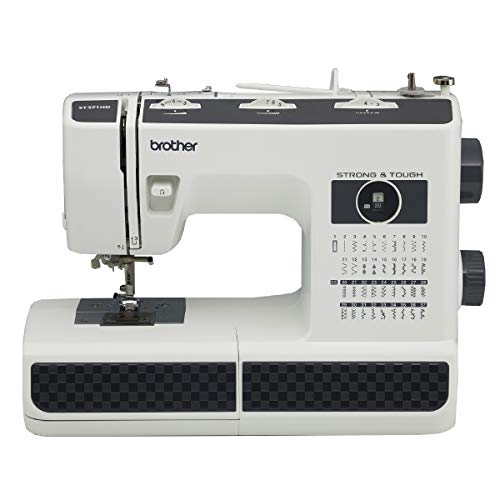
Best for hobbyists who want robust performance without sacrificing simplicity. The ST371HD offers 37 built-in stitches, including an auto-size buttonhole, and a jam-resistant drop-in top bobbin. The automatic needle threader helps users quickly start projects on dense fabrics. It includes six feet and essential accessories for immediate use.
Why chosen for thick fabrics: The machine’s heavy-duty design and selective stitch options support stitching through multiple fabric layers with a consistent feed. A practical limitation is that it focuses on basic to mid-range projects, not heavy upholstery-grade performance.
SINGER Heavy Duty 4411: High-Speed Durability

Best for frequent repairs and sewing projects on denim and leather-like fabrics. The 4411 delivers 1,100 stitches per minute and 69 stitch applications. Its heavy-duty motor is designed to handle thicker layers, making it a reliable workhorse for ongoing projects.
Why chosen for thick fabrics: High-speed stitching plus a strong motor yield fast results on dense materials. Limitation: The machine uses a more traditional interface, which may feel less intuitive to absolute beginners.
SINGER Heavy Duty 4452: Versatile Thick-Fabric Performer

Best for crafters who need 32 built-in stitches and 110 stitch applications to handle thick fabrics. It runs at up to 1,100 stitches per minute, with a robust motor and an included all-in-one accessory kit for various fabrics and uses.
Why chosen for thick fabrics: The heavier motor and stable frame enable reliable stitching through multiple layers. Limitation: Some users may want more than 32 stitch options for complex decorative work.
SINGER Heavy Duty 6800C: Advanced, Computerized Control

Best for advanced hobbyists and small workshops needing extensive stitch variety with a user-friendly LCD interface. The 6800C provides 586 stitch applications and 9 one-step buttonhole styles, all in a full metal frame designed for durability and consistent performance on thick fabrics.
Why chosen for thick fabrics: A high-powered motor and heavy frame support dense layers, while the range of stitches enhances versatility. Limitation: The machine’s feature set can be overwhelming for beginners who only need simple stitching.
SINGER Heavy Duty 4432: Speed and Strength

Best for home décor and thick fabric projects requiring speed. The 4432 features a heavy-duty metal frame, high-speed stitching up to 1,100 stitches per minute, and a drop-in bobbin with a clear cover, aiding visibility when sewing dense materials.
Why chosen for thick fabrics: The sturdy frame and powerful motor handle multi-layer fabrics efficiently. Limitation: It has fewer built-in stitches than some other models, which may limit decorative options for ornate projects.
Buying Guide: Thick-M Fabric Sewing Machine Essentials
- Motor Power and Speed: For thick fabrics, look for a machine with a robust motor and speeds around 1,000–1,100 stitches per minute. Higher speed helps with long seams but requires a steady hand and proper foot control.
- Frame and Build: A metal frame provides stability and durability during heavy stitching. A solid base reduces vibration and helps maintain stitch consistency across thick layers.
- Stitch Variety: Choose machines offering a mix of utility, stretch, and decorative stitches. Ensure at least one-step buttonhole is available for seamless closures on thicker materials.
- Needle System and Accessories: A reliable automatic needle threader and a heads-up bobbin system (visible or drop-in) simplify working with heavy fabrics. Accessory kits with walking feet and durable needles are beneficial.
- Ease of Use: For beginners, balance power with intuitive controls. Consider models with clear LCD displays or straightforward stitch selectors to minimize setup time.
- Maintenance: Regular oiling and cleaning extend the machine’s life. Check for jam-resistant bobbins and easy needle changes when working with thicker fabrics.
- Project Fit: Match your typical fabrics (denim, canvas, leather, faux leather) to the machine’s capabilities. If you sew heavy materials often, prioritize speed, power, and a stable frame over a long list of decorative stitches.
Frequently Asked Questions
- Can I sew denim with a standard sewing machine? Yes, but a heavy-duty model with a strong motor, metal frame, and suitable needles performs better for multiple layers and frequent denim sewing.
- Do heavy-duty machines require special needles? Yes. Use needles sized for thick fabrics (e.g., strong universal or denim needles) and ensure the needle system matches the machine.
- Is a high stitch-per-minute speed necessary for thick fabrics? Not always, but higher speeds help complete projects faster. Control and stability are more important for thick layers.
- What is the benefit of a metal frame? It minimizes vibrations, improves stitch consistency, and prolongs the machine’s life under heavy use.
- Should beginners buy a computerized model? Computerized options offer more stitches and features but can be overwhelming. If you’re starting with heavy fabrics, a simpler but powerful model may be better to learn on.
- What maintenance is needed for heavy fabrics? Regular oiling, cleaning lint from components, and occasional professional service help keep performance consistent on dense fabrics.