Best Automatic Pizza Dough Presses for Efficient Crust Making
Answering search intent: these automatic pizza dough presses streamline dough flattening for home bakers, small bakeries, and busy pizzerias. Top picks combine durable builds, precise thickness control, and practical features like parchment paper and easy cleanup. This guide highlights five reliable options and who they’re best for, plus a quick buying table to compare at a glance.
The following table summarizes the five featured products, focusing on who benefits most, key capabilities, and notable limitations to consider before purchase.
| Product | Best For | Key Feature | Limitation |
|---|---|---|---|
| Newhai Commercial 8.6” Dough Press | Small to mid-size bakeries and home cafés | 8.6″ pressing plate, quiet copper motor | Limited to 8.6″ plate size |
| LXYIUTRW Commercial Roller Machine | Medium-volume kitchens seeking high throughput | 450W copper motor, 1–5.5 mm thickness | Foot switch requirement for operation |
| VEVOR 3-16 Inch Roller Sheeter | Restaurants needing large-diameter dough bases | 3–16 inch range, up to 240–260 pieces/hour | Semi-automatic pressing process |
| HESMAX 8.6 Inch Electric Press | Commercial kitchens and serious home bakers | Fully automatic, 8.6″ plate, stainless steel | Educational features limited to described benefits |
| Mangoct 8.6” Electric Press | Small teams or two-person operations | 8.6″ plate, includes parchment papers | Basic control features compared to larger units |
Newhai 8.6” Electric Dough Press

Product overview: This electric dough press uses an 8.6″ pressing plate to produce uniform crusts for pizzas, flatbreads, and pies. The press is designed for effortless operation with a dedicated handle for adjusting thickness. A copper motor aims for efficient performance with quiet operation and good heat dissipation. The housing and plate are stainless steel and food-safe, supporting easy cleaning and longevity.
Best for: Small bakeries and home cafés that value consistent thickness and quiet, compact equipment. The device suits users who want a reliable press without rolling pins and prefer straightforward control for daily prep.
Why selected: It pairs a standard-size press plate with a simple thickness control system, emphasizing consistency across multiple dough rounds. The durability and safety features make it suitable for frequent use in busy settings.
Limitations to note: The 8.6″ plate may be limiting for larger crusts or very thick doughs. Maintenance is straightforward but requires regular cleaning to preserve the stainless surfaces.
LXYIUTRW Commercial Dough Roller

Product overview: A 450W commercial-grade roller with a 1–5.5 mm thickness range can deliver up to 240–260 dough portions per hour. The unit uses 201 stainless steel framing and a food-grade resin roller. Heat dissipation features help extend service life, and a foot switch enables convenient operation.
Best for: Medium-volume operations requiring high throughput and durable construction, where quick turnover and dependable output are priorities.
Why selected: The strong motor, wide thickness range, and heat management provide a robust balance of productivity and longevity for busy kitchens.
Limitations to note: Foot switch reliance may require an extra setup or can be less convenient in hands-busy tasks; users should plan placement to accommodate foot operation.
HESMAX 8.6 Inch Electric Press

Product overview: This stainless steel model features a fully automatic forming process with an 8.6″ pressing surface. The design emphasizes food-grade materials, easy cleaning, and consistent crusts, suitable for homes, bakeries, and restaurants.
Best for: Kitchens seeking a one-touch press that reduces manual work while maintaining crust uniformity. Ideal for shops needing dependable daily production.
Why selected: Its all-stainless construction and fully automatic operation emphasize durability and consistent results, which are important for ongoing menu items.
Limitations to note: Higher upfront cost relative to manual options and smaller size limit larger crusts; ensure plate size matches expected pizza diameters.
Mangoct 8.6” Electric Dough Press

Product overview: An 8.6″ plate model designed for home to small bakery use, with a stainless steel housing and a 22 cm pressing area. Includes 400 parchment papers to streamline portioning and prep.
Best for: Two-person teams or small households that want consistent dough thickness without extensive equipment. The parchment papers add value for frequent baking sessions.
Why selected: The combination of a decent plate size, quiet operation, and included parchment papers makes it a practical starter option for home bakers moving toward more consistent crusts.
Limitations to note: For larger pizzas or frequent extra-large rounds, this unit may feel limited compared with larger commercial models.
VEVOR 6 Inch Dough Press
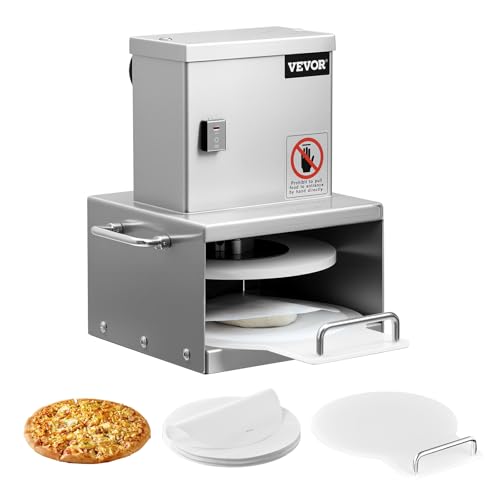
Product overview: A compact 6-inch electric press designed for tortillas, flatbreads, and smaller dough forms. The unit includes parchment paper and emphasizes easy handling with a wide base for stability.
Best for: Small cafés or kitchens that consistently press small-diameter dough items and want a simple, reliable press.
Why selected: It offers a dependable, space-saving option with practical features like parchment paper and a straightforward design for daily use.
Limitations to note: Limited to smaller dough products; not ideal for standard 12-inch pizzas without upgrading to larger-capacity machines.
Buying Guide: Key Purchase Considerations
Choosing the right automatic dough press involves matching capacity, plate size, and control style to your workload and space. Consider the following:
- Plate diameter and dough size: If you regularly bake standard 12-inch pizzas, look for presses with at least an 8.6-inch plate or larger. Smaller plates suit personal pizzas or flatbreads.
- Throughput: For busy shops, seek models that specify dough portions per hour or a high-efficiency motor and minimal warm-up time.
- Thickness control: A precise range (for example, 1–5.5 mm) helps achieve consistent crusts across recipes and chefs.
- Material and build: Stainless steel bodies with food-safe plates resist corrosion and are easier to clean after shift changes.
- Automation vs. semi-automatic: Fully automatic presses reduce manual handling; semi-automatic models can be cheaper and still effective for smaller operations.
- Accessories and consumables: Parchment paper packs, spare parts, and simple maintenance routines add long-term value.
- Foot or hand operation: Determine whether a foot switch, a simple start button, or manual assistance fits your kitchen layout and safety protocols.
- Space and ventilation: Ensure the unit fits your counter depth and height and that there’s adequate clearance for cooling and cleaning.
FAQ
- Q: What dough types work best with these presses?
- A: Most presses handle standard yeast doughs and flatbreads well. Very stiff or highly hydrated doughs may require adjustments to thickness settings or a pre-formed dough ball.
- Q: Do these machines require special maintenance?
- A: Regular cleaning, especially of the pressing plate and stainless housing, helps maintain performance. Follow the manufacturer’s cleaning guidelines.
- Q: Can a smaller press replace a full-size pizza press?
- A: For frequent large-format pizzas, a larger plate size and higher throughput model will be more efficient.
- Q: Are parchment papers necessary?
- A: Parchment papers prevent sticking and simplify cleanup, especially for high-volume use or delicate doughs.
- Q: Is a foot switch safer than a manual start?
- A: A foot switch can improve workflow and keep hands free, but ensure the setup allows safe operation in your kitchen.