Best Capillary Tube for Refrigerator: Top Picks for Efficient Cooling
Looking for the right capillary tube for a refrigerator can be challenging. This guide focuses on reliable, widely available options that suit common cooling systems and repair needs. The top picks below are best for DIY repairs, professional recaps, and general refrigeration work. They’re chosen for compatibility with standard fridge systems, ease of cutting, and solid heat transfer performance. The buyer types most served include do-it-yourself repair enthusiasts, technicians replacing worn capillary tubes, and hobbyist builders assembling basic cooling projects.
Summary table of chosen products:
| Product | Inner/Outer Diameter | Length | Best For | Notes |
|---|---|---|---|---|
| Sealed Unit Parts SU-BC1 Capillary Tubing | Not specified | Not specified | General refrigerator repair | Genuine replacement part |
| uxcell Refrigeration Tubing 1/16″ OD x 1/32″ ID | 1/16″ OD, 1/32″ ID | 9.8 ft | Limited space and flexible routing | Soft coil copper tube |
| Supplying Demand BC46 12 Ft Capillary Tubing | .046″ ID x .093″ OD | 12 ft | Longer runs with precision bore | Precision bore ± .001 in |
| JJHXSM Capillary Pipe Tubing | 3 mm OD / 2 mm ID | 6.5 ft | Compact systems | High heat transfer capacity |
| FOCMKEAS 16.4 Ft Copper Tubing | 1.6 mm OD / 0.6 mm ID | 16.4 ft | Extended runs | Pure copper, seamless soft coil |
Sealed Unit Parts SU-BC1 Capillary Tubing

The Sealed Unit Parts SU-BC1 capillary tube is presented as a genuine replacement part for sealed refrigeration units. It is suitable for standard repair workflows where an OEM part is preferred. This option is best for technicians seeking direct compatibility with common replacement part catalogs. Caution: specific dimensions and bore size are not listed in the brief features, so verify fit with the original tubing specifications before ordering.
uxcell Refrigeration Tubing 1/16″ OD x 1/32″ ID
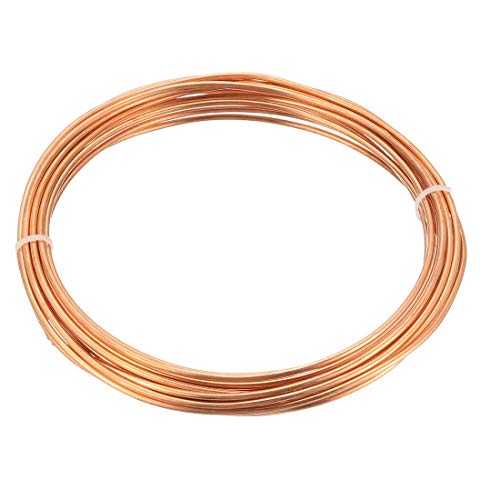
uxcell offers a 9.8 ft soft coil copper capillary tube with 1/16″ outer diameter and 1/32″ inner diameter. The long coil length supports longer runs or multiple repairs in a single project. It emphasizes high refrigeration efficiency and strong heat transfer due to the hollow copper design. This option is best for technicians needing flexible routing in tighter appliance layouts. Limitation: the product description notes potential end caps that may need trimming for full fit.
Supplying Demand BC46 Capillary Tubing

Supplying Demand BC46 provides a 12-foot coil of capillary tubing with a precise bore of .046 inches inner diameter and .093 inches outer diameter. It targets applications requiring longer runs, such as larger refrigerators or multiple sections within a single system. Best for experienced technicians performing longer cross-system connections. The stated bore tolerance of ± .001 inches supports dependable, repeatable flow. Caution: ensure the coil length fits the appliance cabinet without bending near service ports.
JJHXSM Capillary Pipe Tubing

JJHXSM presents a 6.5 ft capillary tube with 3 mm outer diameter and 2 mm inner diameter. This option highlights good heat dissipation and cooling capacity, suitable for compact systems or appliances with limited space. The copper is described as T2, offering resistance to high temperature, corrosion, and oxidation. Best for tight installations; consider the shorter length if the system requires longer runs. Limitation: the metric-to-imperial sizing is given in multiple place values; confirm the exact diameter in the unit you purchase.
FOCMKEAS 16.4 Ft Copper Tubing

FOCMKEAS offers a 16.4 ft soft coil capillary tube with OD 1.6 mm and ID 0.6 mm, with a 0.5 mm wall thickness. Constructed from 99.9% C12200 pure copper, it emphasizes corrosion and heat resistance. The long coil form is ideal for extended runs or locations where a continuous length is advantageous. Best for larger fridge installations or projects needing more flexible routing. Consider potential handling: a longer coil may require careful uncoiling to avoid kinks.
Buying Guide: How To Choose The Right Capillary Tube
What size do I need? Start by matching the inner diameter to the system’s desired flow rate and the refrigerant type. Common sizes include .046″ ID and smaller 1/32″ IDs for tight spaces. For longer run requirements, a longer coil such as 12 to 16 feet can reduce fittings and joins.
Should I prefer OEM or aftermarket? OEM parts guarantee compatibility with a specific model. Aftermarket tubes can be suitable when dimensions and bore are confirmed. Always verify bore accuracy and outer diameter against the original part.
Soft coil vs. rigid tubing: Soft coils are flexible and easier to route in cramped spaces. Rigid tubes can be more durable in certain installations but may require more precise bending and fittings. Choose according to cabinet layout and service access.
Material and quality: Copper capillary tubes provide strong heat transfer and durability. Look for tubes that specify copper type (for example, T2 copper) and purity. Higher quality copper improves corrosion resistance and service life in humid refrigeration environments.
Installation considerations: Ensure clean ends, proper deburring, and no kinks. End caps or protective sleeves can prevent debris entry during handling. Plan coil length to minimize unnecessary splices and potential leak points.
Frequently Asked Questions
- What is a capillary tube in a refrigerator? A capillary tube controls refrigerant flow by creating a pressure drop, enabling cooling cycles in the evaporator.
- How do I choose the right diameter? Match the inner diameter to the system’s refrigerant type and required flow; a smaller ID increases pressure drop, while a larger ID reduces it.
- Can I splice capillary tubes? Splicing can introduce leaks and flow inconsistencies. Prefer continuous runs when possible, or use properly sized connectors designed for capillary tubing.
- Are OEM components necessary? OEM parts guarantee exact fit for a specific model, but many aftermarket tubes meet standard dimensions and work well when dimensions are verified.
- What precautions exist for long coil tubing? Handle coils carefully to avoid kinks and ensure the ends remain clean before installation. Maintain straight runs where possible to minimize stress on connections.
- Is copper the best material? Copper offers excellent thermal properties and corrosion resistance in typical refrigeration environments. Verify purity and alloy type for long-term performance.