Best Compost Canister for Kitchen: Top 5 Indoor Bins for Odor Control
Answering the buyer’s search intent, this guide highlights top kitchen compost canisters that minimize smells, fit typical countertops, and simplify everyday waste recycling. Best for small apartments, busy households, or anyone who wants a tidy counter without frequent emptying. Below, you’ll find clear picks with why each is a good fit, plus a quick comparison table and a practical buying guide.
| Product | Best For | Capacity | Key Benefit |
|---|---|---|---|
| Epica Countertop Compost Bin | Odor-conscious cooks | 1.3 gal | Natural carbon odor control |
| Utopia Kitchen Countertop Bin | Durable metal design | 1.3 gal | Charcoal filters for smell control |
| Perfnique Kitchen Compost Bin | Easy disposal on the go | 1.3 gal | Inner liner and carbon filters |
| RED FACTOR Premium Compost Bin | Stylish and odor-free | 1.3 gal | Dual-filter technology |
| Barnyard Designs Compost Bin | Budget-friendly with extra filters | 1.2 gal | Extra smell-absorbing filters |
Epica Countertop Compost Bin Kitchen

Brand: Epica. Features include an airtight lid and replaceable activated-charcoal filter to control kitchen odors naturally, plus a one-piece molded design that resists rust and leaks for easy cleaning. Dimensions are compact (7.16″ diameter x 11″ high), making it suitable for smaller countertops.
Best for: households prioritizing odor control with a premium stainless-steel look. Why selected: it combines effective odor management with a durable build and easy maintenance. Limitation: the filter replacement frequency depends on usage and odors may intensify if the bin is overfilled.
Utopia Kitchen Countertop Compost Bin

Brand: Utopia Kitchen. This 1.3-gallon stainless steel bin includes charcoal filters to trap odors and prevent smells from building up on the counter. Durable stainless steel resists scratches and is designed for long-lasting use. The lid and inner bucket arrangement supports convenient waste transfer.
Best for: buyers seeking a sturdy, long-lasting steel option with reliable odor control. Why selected: the combination of stainless steel durability and built-in charcoal filtration offers a balanced, low-maintenance solution. Limitation: may be heavier than plastic counterparts, which can affect portability when emptying.
Perfnique Kitchen Compost Bin

Brand: PERFNIQUE. Includes an inner plastic pail with a handle and carbon filters to block odors. The 1.3-gallon capacity supports several days of scraps, and the inner pail is removable for easy disposal. It also notes filter replacement timelines (about 4–6 months).
Best for: cooks who value easy transfer of scraps to a larger outdoor composting system and straightforward maintenance. Why selected: the inner liner and dual-odor controls provide practical odor management. Limitation: carbon filters require periodic replacement to maintain odor control effectiveness.
RED FACTOR Premium Compost Bin (Copper, 1.3 Gal)
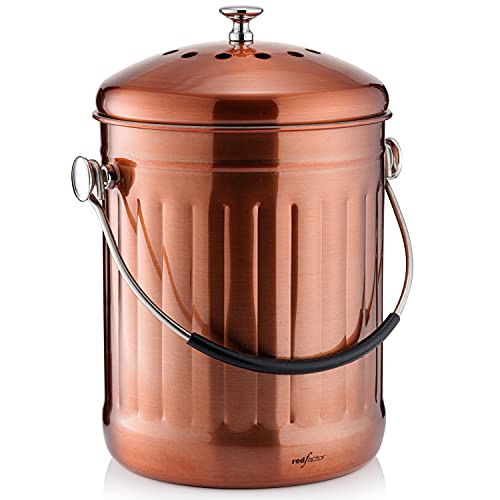
Brand: RED FACTOR. This stainless-steel bin features dual-filter technology with active carbon and a venting lid, designed to neutralize odors even in warm conditions. A domed lid adds a modern aesthetic to the countertop. Includes spare filters in some variations.
Best for: those who want a stylish, odor-controlled solution that blends with kitchen décor. Why selected: dual-filter technology provides robust odor management. Limitation: some variants rely on filter maintenance; odor performance depends on filter condition.
Barnyard Designs Compost Bin for Kitchen Counter
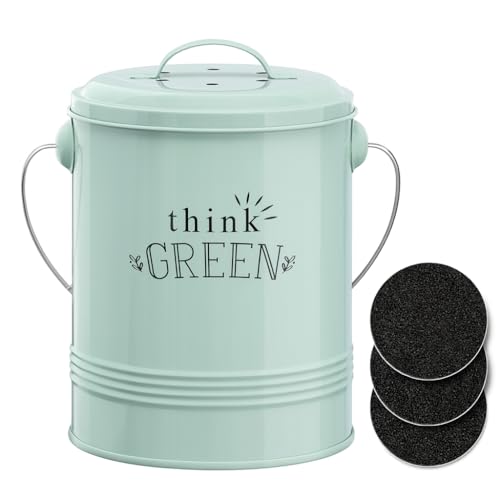
Brand: Barnyard Designs. A 1.2-gallon countertop composter with an inner removable bucket and extra smell-absorbing filters. It emphasizes easy cleaning, with rust-proof outer material and dishwasher-safe inner bucket. A fresh airflow lid aids aeration and odor reduction.
Best for: budget-minded buyers who want extra odor control without a heavy investment. Why selected: the triple-filter approach and easy cleaning features provide practical value. Limitation: slightly smaller capacity than some peers, which may require more frequent emptying.
Buying Guide: Key Purchase Considerations
- Capacity needs: Most countertop bins range from 0.7 to 1.3 gallons. Choose based on how often you want to empty it, and whether you compost weekly or daily.
- Odor control: Look for activated-carbon filters, sealed lids, or dual-filter systems. Consider whether you prefer replaceable filters or passive odor reduction.
- Material and durability: Stainless steel offers durability and a modern look; plastic may be lighter and cheaper but can stain or odor over time. rust resistance matters for long-term use.
- Ease of cleaning: Removable inner buckets or dishwasher-safe parts simplify maintenance. Consider whether a bin’s design minimizes crevices where waste can accumulate.
- Aesthetics and space: Domed lids or sleek finishes help the bin blend with kitchen décor. Measure your counter space to ensure the unit fits comfortably.
- Maintenance intervals: Note filter replacement timelines if included with the model, and plan for cost and availability of replacements.
- Under-sink or on-counter placement: If space is limited, a tighter 0.7–1.0 gallon model may fit best under a sink or in a compact area.
Frequently Asked Questions
- What capacity is best for a small kitchen? – A 1.0 to 1.3 gallon bin is typically ideal for small kitchens, balancing full-week use with counter space.
- Do I need filters for odor control? – Many models rely on activated-carbon filters or breathable lids; filters generally improve odor control, especially in warm weather.
- Can I place a compost bin under the sink? – Yes, smaller models (0.7–1.0 gallon) can fit under sinks or in tight cabinet spaces, depending on your plumbing layout.
- How often should I replace the filters? – Replacement timing varies by use and product; many models suggest every 4–6 months under typical household use.
- Is stainless steel better than plastic for odor control? – Stainless steel resists staining and can feel more premium, but odor control largely depends on lids and filters rather than material alone.
- How do I clean a compost bin to prevent smells? – Remove the inner bucket, wash with soap and water, dry thoroughly, and replace filters as needed to maintain odor control.