Best Sour Dough Starter Warmer Solutions for Home Bakers
Answering the question “which sourdough starter warmer is best for my kitchen?” this guide compares top warmers that reliably maintain fermentation temperatures. Each option targets a different baker profile—from hobbyists craving precise control to professionals needing batch-friendly performance. The top picks here help beginners achieve consistent rises, while experienced bakers can speed fermentation and improve texture. The following table summarizes the five chosen models and their key strengths.
| Product | Best For | Temperature Range | Notable Feature |
|---|---|---|---|
| Pakusane SourKeeper, Larger 2-in-1 Pro | Serious fermentation with real-time monitoring | 70–110°F | Stainless-steel dough probe for core temp |
| MQUPIN Sourdough Starter Warmer | Portable, budget-friendly control | 0–100°F | Intelligent touch control with timer |
| Pakusane SourKeeper, Black | Versatile jar-fit and precise control | 70–110°F | Same core features in a Black model |
| MENGBEI Sourdough Warmer Mat | Easy setup, energy-efficient warming | 70–100°F | Graphene/aluminum heating with memory |
| Yendse Sourdough Warmer With Glass Dome | Visual monitoring and steady heat | 70–100°F | Upgraded glass dome to reduce heat loss |
Pakusane SourKeeper Pro — 2-in-1 Warmer
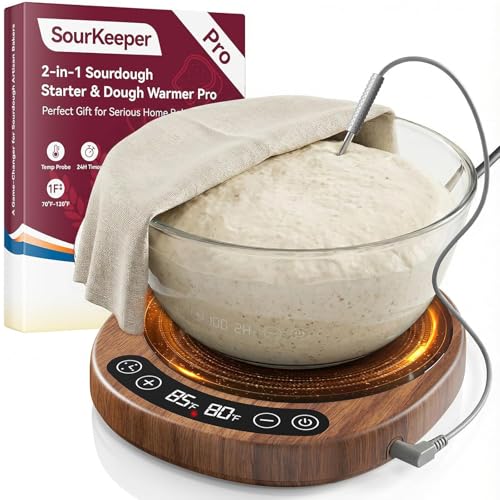
The Pakusane SourKeeper Pro targets dedicated sourdough bakers who want precise core-temperature control and convenient automation. It uses a stainless-steel dough probe to measure inside the dough, not just ambient air, ensuring consistent fermentation results. Temperature is adjustable in 1°F steps from 70°F to 110°F, with a built-in display and a 24-hour timer for adaptation to ambient changes or jar thickness. An auto-warming switch keeps energy use efficient. Best for serious hobbyists or small-batch pastry teams who want repeatable fermentation profiles. Caution: probe compatibility varies with jar shapes; verify your container fits the adjustable probe.
MQUPIN Sourdough Starter Warmer — Temperature Display

The MQUPIN warmer is ideal for bakers who need a lightweight, portable warming solution with straightforward temperature control. It heats quickly and maintains a broad 0–100°F range, with a visible temperature display and an intelligent timer up to 12 hours. It’s best for hobby bakers and kitchens with limited space who want a simple, reliable heat source for dough fermentation. A caution is to pair with a transparent cover for more stable fermentation, as suggested, to reduce heat fluctuations in drafts.
Pakusane SourKeeper Black — Sleek, Versatile

This variant mirrors the Pro’s precision and form but in a Black finish, appealing for kitchens that favor a discreet look while delivering the same internal dough-temperature sensing and 70–110°F range. It suits bakers who want consistent results without sacrificing countertop aesthetics. Best for home kitchens needing a robust, aesthetically neutral warmer that still offers the core core-temperature monitoring and a 24-hour timer. Limitation: same jar compatibility considerations apply as with the Pro model.
MENGBEI Sourdough Warmer Mat — Graphene Heating

The MENGBEI warmer mat emphasizes energy efficiency and rapid heating with graphene and aluminum foil heating film, offering 70–100°F with 1°F precision. It provides a 0–12 hour timer with auto shut-off, and a memory function to recall last settings. It’s best for bakers who want quick, consistent heat and a compact footprint. Use caution: verify jar height and diameter if using with a warming dome or jar cover; some containers may not fit the intended setup.
Yendse Sourdough Warmer With Glass Dome
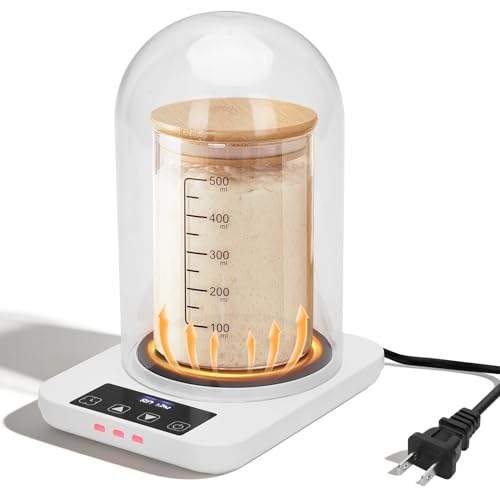
Yendse combines precise 1°F thermostat control from 70–100°F with a clear glass dome that minimizes heat loss and allows quick visual status checks. The dome accommodates fermenters up to about 4.2 inches in diameter and 7 inches tall, making it a good choice for standard jars and many home setups. It’s best for bakers who value visibility and stable fermentation, though ensure your jar fits under the dome’s height and diameter limits. A limitation is the dome size; oversized fermenters may not fit.
Buying Guide: Key Considerations For Choosing A Sour Dough Starter Warmer
- Temperature control granularity: Choose models offering 1°F steps for precise fermentation, especially if you want to fine-tune dough development.
- Jar and vessel compatibility: Confirm jar height, diameter, and shape compatibility with the warming base and any domes or probes.
- Monitoring features: Core-temperature probes or visible displays help maintain consistent fermentation; options with real-time monitoring are advantageous for repeatable results.
- Power and safety features: Look for auto shut-off timers, energy-efficient designs, and overheat protection if you’ll be away from the kitchen.
- Portability vs. capacity: For single-dough fermentation, compact mats work well; for multiple jars or larger feeds, larger bases or dual-plate designs may be better.
- Ease of use and maintenance: Simple controls with clear indicators and easy-clean surfaces save time and reduce errors.
- Cost vs. value: Higher-end models with probes and sensors offer precision, but entry-level units can still deliver reliable results for hobby bakers.
Frequently Asked Questions
- What is the ideal fermentation temperature for sourdough starter?
- Is a temperature probe necessary for sourdough proofing?
- Can I use these warmers for other dough types?
- What maintenance is required for these warmers?
- Do all warmers come with a jar or dome?
- Which warmer is best for visual monitoring?
Most bakers target around 75–82°F for steady fermentation, with some models allowing 70–100°F to optimize timing depending on ambient conditions.
Probes that measure the dough’s interior temperature help reduce guesswork and improve consistency, especially for active starters and longer fermentation times.
Yes. Many warmers support pizza dough, yogurt, or other fermentation processes that benefit from stable heat, though some products are optimized for sourdough specifically.
Regular cleaning of the heating surface and probe area, and ensuring vents or domes are free of dust, help maintain performance and accuracy.
No. Some include cups or domes as accessories, while others are sold as bases that require separate jars or covers compatible with the model.
Models with a glass dome or clear lid offer the best visibility into the fermentation process without lifting the container.