Best Hood System for Kitchen: Top 5 Kitchen Vent Hoods
The best hood system for your kitchen depends on cooking habits, kitchen layout, and noise tolerance. This guide highlights five well-rounded options suited for diverse setups, from open-plan spaces to compact apartments. Each pick targets distinct buyers: high-output for frequent frying, ducted vs. ductless flexibility, and easy maintenance for busy households.
| Product | Best For | Key Feature |
|---|---|---|
| VIKIO HOME Wall Mount 30″ | Powerful ventilation in open layouts | 580 CFM dual intake |
| AMZCHEF 30″ Under-Cabinet | Heavy-duty cooking with quiet operation | 1050 CFM dual-blower |
| SNDOAS Black Wall Mount 30″ | Affordable ducted/ductless versatility | 450 CFM, 3 speed controls |
| IKTCH 30″ Insert | High-capacity insert hood | 900 CFM, gesture control |
| Tieasy 30″ Wall Mount | Budget-friendly, ducted/ductless | 450 CFM, 3 speeds |
VIKIO HOME Wall Mount Range Hood 30 inch

Best for: homes needing strong airflow with a compact footprint. This 30-inch wall-mounted hood delivers 580 CFM with dual intake, increasing air movement by about 20% versus single intake. The 430-grade brushed stainless steel design fits modern kitchens, and optional carbon filters support ductless setups. Noise is kept reasonable, with low-speed operation around 40 dBA and higher speeds staying under 65 dBA.
Why selected: high airflow helps manage heavy cooking while maintaining a sleek look. The dual intake design improves suction efficiency for multi-burner setups. A note: ducted installation is standard, but carbon filter kits are available for ductless use. Best for larger kitchens or intense cooking sessions where odor control matters.
Caution: Higher airflow can increase noise at top speeds; consider location and ceiling height to optimize performance.
Range Hood 30 inch Under Cabinet (Zomagas)

Best for: compact, space-saving kitchens needing strong ducted or ductless options. This 30-inch under-cabinet hood offers 280 CFM with 2-speed fans and a 3-layer filtration approach (grease capture and optional carbon filter for ductless use). It features a slim profile ideal for apartment kitchens or retrofitted interiors.
Why selected: easy installation and balance between price and performance. The dual-mode option (ducted or ductless) increases flexibility in layouts without major renovations. Caution: 280 CFM is lower than high-output models, so it’s best for moderate cooking or smaller kitchens.
AMZCHEF 30″ Under-Cabinet Range Hood

Best for: heavy-duty cooking with quiet, powerful performance. The AMZCHEF hood features a 1050 CFM dual-blower system, delivering strong suction to handle fatty cooking and open-flame scenarios. It uses 430 stainless steel and includes bright LED lighting for clear visibility. A built-in timer and gesture/remote control add convenient operation.
Why selected: best-in-class suction for a 30-inch hood makes it well-suited to busy kitchens or households with frequent high-heat cooking. It also provides energy-conscious operation and extended motor life. Caution: higher power may bring more noise on the highest setting; use lower speeds for regular cooking to maintain a quieter kitchen.
Tieasy Wall Mount Range Hood 30 inch
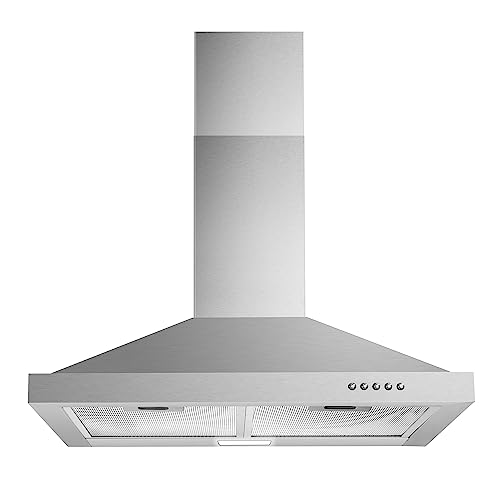
Best for: budget-conscious buyers who still want ducted/ductless flexibility. This 30-inch hood provides 450 CFM across 3 speeds with LED lighting and a classic pyramid design. It accepts an optional carbon filter for ductless installation and includes a compatible extension for taller ceilings.
Why selected: strong value for the performance tier, with a straightforward control scheme. It’s a solid choice for kitchens where airflow needs are moderate and installation flexibility matters. Limitation: the noisier operation at higher speeds may be noticeable in open living areas.
SNDOAS Black Range Hood 30 Inch
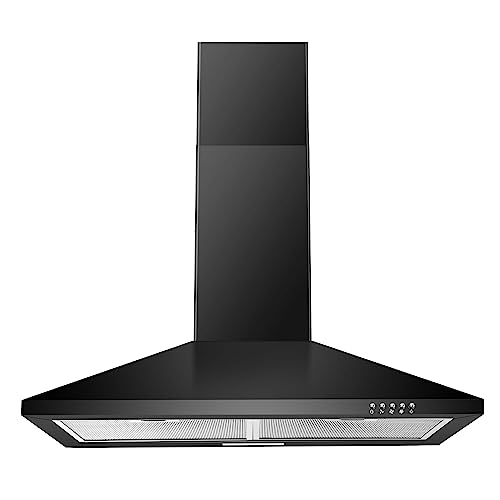
Best for: stylish, affordable venting with flexible venting options. This hood offers 450 CFM with 3-speed controls and a matte black finish that blends with many kitchens. It includes a top vent for ducted installation and an optional carbon filter kit to convert to ductless. LED lighting improves cooking visibility.
Why selected: the combination of style, price, and ducting flexibility makes it a versatile choice for many layouts. Caution: ensure ceiling clearance and chimney extension fit your space, as some installations may require additional ducting components.
Buying Guide: Key Purchase Considerations
- Ventilation capacity (CFM) vs. kitchen size: Larger kitchens or frequent frying benefit from 600+ CFM, while smaller setups can perform well with 300–450 CFM.
- Ducted vs. ductless: Ducted systems remove air outside; ductless use carbon filters to recirculate air. Choose based on existing ductwork and installation feasibility.
- Noise level: Look for models rated around 40–55 dBA on low to mid speeds for quieter operation in open floor plans.
- Material and finish: Stainless steel is durable and easy to clean; consider finishes that match cabinet hardware and overall kitchen style.
- Filters and maintenance: Aluminum mesh or baffle filters ease cleaning; ensure filter replacement intervals align with cooking frequency.
- Controls and convenience: Touch, gesture, or remote controls can simplify operation; timers help manage venting during cooking sessions.
- Warranty and service: Check included coverage and ease of obtaining replacement parts in your area.
FAQ
- What is a ducted versus ductless range hood?
A: Ducted hoods vent air outside through ductwork, while ductless hoods recirculate air after filtration using carbon filters.) - Which CFM is best for a large kitchen?
A: 600 CFM or higher is typically recommended for larger, high-heat kitchens or open-plan spaces. - Are higher-end hoods louder?
A: Not necessarily; many high-CFM models include noise-reduction engineering, but top speeds can be louder than low-speed modes. - How often should filters be replaced?
A: Charcoal filters often require replacement every several months with regular cooking; aluminum filters can be washed as needed. - Is a 30-inch hood enough for a 12–14 foot stove span?
A: It depends on the layout; consider multiple hoods or a wider model if the cooking area spans more than a typical 30-inch width. - What installation factors matter most?
A: Duct routing, ceiling height, mounting height above the stove, and securing the hood to studs are critical for performance and safety.