Best Robots That Make Food and Help With Meal Prep
Looking for a robot-assisted way to prepare meals or manage food service tasks? This guide highlights five relevant options, including a dedicated rice cooker that automates cooking and several delivery or service robots that interact with food contexts. The top picks cater to home cooks seeking simplicity, kids exploring STEM with food-related themes, and restaurant staff aiming to streamline meals and service. Each option includes who it’s best for, why it was chosen, and practical trade-offs to consider.
| Product | Best For | Why It Stands Out |
|---|---|---|
| Rice Robot Personal Rice Cooker | Home cooks who want effortless rice | Autostop cooking and click-and-cook tech for consistent results |
| Food Delivery Robots (Multi-Tier) | Small to medium venues needing food transport | High capacity and multi-layer trays for efficient service |
| Delivery Robot with Obstacle Detection | Restaurants and hospitality | Autonomous navigation with touchscreen and voice options |
| Food Delivery Robot for Restaurants | Moderate-volume venues | Compact design with easy mapping for fast setup |
| Intelligent Interactive Delivery Bot | Home and nursery use | Adaptive features and kid-friendly design |
Rice Robot Personal Rice Cooker With Steamer Tray

The Rice Robot is designed for effortless cooking of staple grains and small meals. It uses controlled heat technology and a 1-quart capacity, making it ideal for individuals or small households. The device includes a stainless-steel steamer tray and a recipe book with 60 options, supporting a simple, one-tap cooking process. Best for: anyone who wants reliable, hands-off rice preparation without monitoring. Caution: limited capacity may require multiple batches for larger meals.
SmartyBot Smart Robot Toy With App
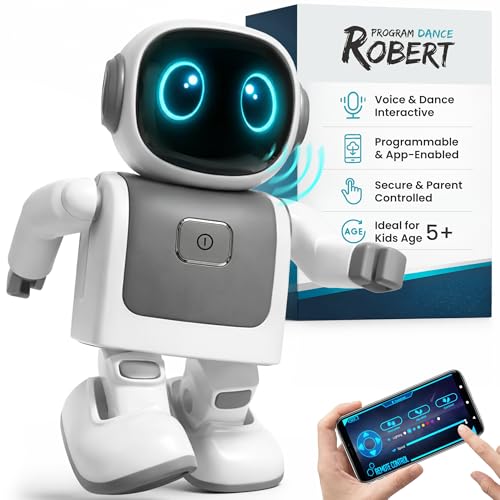
The SmartyBot is a kid-focused robot that blends remote control with app-based programming. While not a kitchen appliance, it teaches sequencing and coding skills around motion and music reactions, which can inspire future culinary robotics interest. Best for: families seeking interactive STEM toys for learning and play. Limitation: not a cooking device, so it does not directly prepare food.
EMOPET AI Desk Robot Companion

EMOPET is a desk-friendly AI robot with voice commands and ChatGPT-powered conversations. It uses a camera, network connectivity, and interactive games to entertain or assist in a food-related workspace. Best for: offices or classrooms where a conversational assistant is valued alongside light interactivity. Caution: not a kitchen appliance or cooking device.
SIGHTEEDA 5-in-1 Smart Robot Building Kit
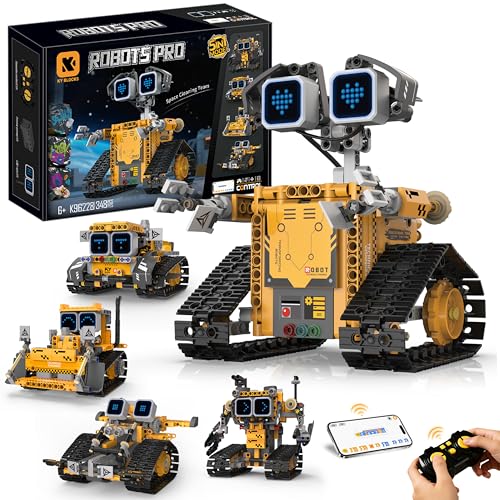
The SIGHTEEDA kit is a hands-on STEM project that students can build and code. It supports multiple robot models, app control, and remote play. Best for: families interested in robotics education tied to food contexts through imaginative play. Caution: no direct cooking features; best used for learning and demonstration rather than food preparation.
Robotic Food Delivery Vehicle (Multi-Model)

This multi-model delivery robot offers a multi-tier tray design and large-capacity storage, supporting increased transport of meals within industrial settings. Best for: facilities requiring high-volume food transport with clear separation of trips. Caution: specific configurations vary; verify compatibility with your space and workflow.
Food Delivery Robot With Navigation And Touchscreen

This delivery robot emphasizes autonomous navigation, obstacle detection, and a touchscreen interface. It’s designed for restaurant and hospitality use, helping staff move meals efficiently while engaging customers. Best for: mid-to-large dining venues seeking reliable autonomous service. Limitation: features and configurations vary; confirm the exact model capabilities before purchase.
Buying Guide: How To Choose A Kitchen or Food-Handling Robot
- Primary use: Decide if you need a cooking device, a guest-facing service robot, or an internal logistics robot for food transport.
- Capacity and size: For home kitchens, a 1-quart cooker is suitable; for delivery robots, verify tray size and payload to match your typical meals.
- Autonomy and controls: Evaluate whether you prefer app control, remote control, or built-in AI features for hands-off operation.
- Safety and cleaning: Look for nonstick surfaces, PFAS-free materials, and simple cleaning procedures, especially in kitchen contexts.
- Scalability: In business settings, consider models that support multiple routes, larger capacities, or modular upgrades.
- Learning and education: If STEM or family learning is a goal, include programmable kits that teach coding and problem solving.
What to consider for your space
Home cooks should prioritize user-friendly devices with simple one-touch controls and clear safety features. For classrooms or kids, focus on programmable toys that teach logic and sequencing while staying within a safe, supervised environment. For restaurants, prioritize reliability, obstacle avoidance, and easy maintenance to support busy workflows.
Practical questions buyers commonly ask
- Can a robot cook multiple dishes at once?
- Is the robot safe for use around children and pets?
- What level of technical setup is required?
- Does the robot integrate with existing restaurant workflows?
- What is the maximum serving capacity of delivery robots?
- Are replacement parts and accessories readily available?
Frequently Asked Questions
Do these robots replace human cooks? No. They are designed to assist with specific tasks like cooking simple rice, transporting meals, or entertaining while reducing repetitive workloads.
Are these robots safe to use in kitchens? Look for models with heat-resistant components, nonstick interiors, and safety certifications from the manufacturer.
Can kids use these robots for learning? Yes. Several models are designed for STEM learning, offering programmable moves and app-based activities.
Which robot is best for large restaurants? Choose models with autonomous navigation, obstacle avoidance, and multi-tier trays to handle high-volume service.
Do these devices require professional installation? Most home devices require minimal setup; commercial models may need on-site mapping and integration planning.
Summary: The Rice Robot stands out for simple home cooking, while delivery and service robots expand food-handling capabilities in small to mid-sized spaces. The buying guide sections help you weigh capacity, autonomy, and learning potential to select the best fit for your needs.