Best Traditional Ovens for Firing Pottery: Top Electric Kilns for Home Studio Use
Answering your search for reliable traditional-style pottery firing options, this guide highlights five electric kilns that mimic the steady heat of a traditional kiln while offering modern control and safety features. These options are ideal for hobby potters, jewelry makers, and small studios seeking consistent results. Each pick emphasizes a different strength—speed, control, safety, or multi-piece capacity—so you can choose what best fits your project load and space.
| Product | Best For | Key Benefit |
|---|---|---|
| PYY Electric Pottery Kiln (1500W) | Home hobbyists needing fast heat and precise control | Speedy melt and PID control |
| PYY Electric Kiln (1500W Melter) | Small batches with accurate monitoring | Clear LCD display and safety features |
| Burnout Furnace for Jewelry Casting (1500W) | Jewelry casting and wax burnout | Viewing window and high-temp capability |
| Electric Kiln for Pottery at Home (2000W) | Stable high-temp casting and enamel work | Four-sided heating for uniform results |
| HCAUYNN Mini Pottery Kiln (1150°C) | Tabletop studio use with multi-piece firing | Three-side heating and compact chamber |
Buyer note: This guide prioritizes kilns that deliver reliable temperature control, safety features, and space efficiency. If you need the classic, wood-fired experience, you might pair these kilns with a traditional firing chamber or find a closely matched modern alternative. The products below are presented in order of general relevance to traditional firing needs, from quick, controlled firings to multi-piece tabletop solutions.
PYY Electric Pottery Kiln — 1500W, 1200℃ (B0GCLS715R)

This kiln uses a 1500W heating system with MO2 wires to deliver even heat distribution. It is suitable for quick melting up to 2200°F/1200°C, making it a strong choice for small sculpture work and basic glaze testing. The device employs a PID digital control system for precise temperature settings and a color LCD display for easy monitoring. It features safety protections such as over-temperature alarms and automatic stop functions, plus a top-opening door designed to enhance safe use at home. Best for hobbyists who value fast warm-up and straightforward controls, with a caution about handling high-temperature sessions without proper ventilation.
PYY Electric Kiln — 1500W Melter Furnace (B0F62T515Z)
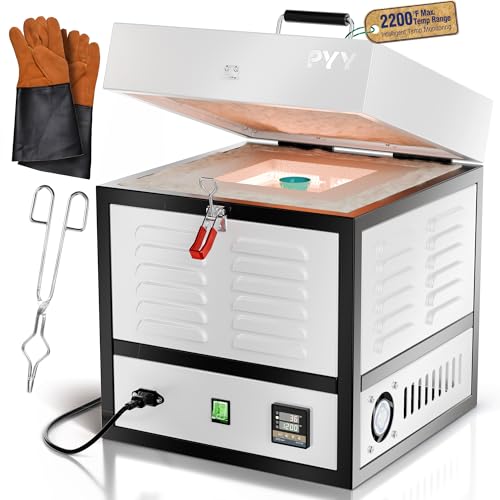
Designed for home use, this model emphasizes a spacious chamber with even heat from the 1500W system. It supports multiple items simultaneously, with a PID controller and an LCD interface to simplify monitoring. The safety package includes memory for outages, over-temperature alerts, and a protective design to minimize burn risks during front-door loading. Best for crafters doing small-batch pottery, wax casting, or glass enamel experiments, with a limitation that very large pieces may require a larger chamber.
Burnout Furnace for Jewelry Casting — 1500W (B0H6MQ7BPR)

Ideal for jewelry casting and wax burnout, this 1500W table-top unit features a viewing window and a precise 1150°C capability. The kiln supports safe operation with top-opening access and includes basic safety features for home labs. Best for jewelers and small studios needing a compact workspace with clear visibility of the firing process. Caution: the description emphasizes jeweler-focused use; ensure you’re firing plaster or wax molds safely in a dedicated workspace to avoid contamination of finished pieces.
Electric Kiln for Pottery at Home — 2000W

This 2000W table-top kiln delivers stable high-temperature performance up to 1150°C (2102°F). Four-sided heating helps reduce hot spots, supporting reliable lost-wax casting, metal clay work, and enameling. The digital temperature monitoring provides real-time data for precise control. It’s best for serious hobbyists and small studios needing dependable high-temperature firing, with a note that larger batches may require a bigger chamber or staggered firing to maintain uniformity.
IWOWHERO Pottery Kiln Refractory Support Pad

This small refractory support pad helps stabilize different pottery works during firing without occupying much interior space. Made from ceramic oxide, it withstands high temperatures and supports multiple projects per firing. Best for potters who want to improve kiln load stability in compact setups. A limitation is its single-slot use—it’s a pad, not a full kiln surface, so it should be paired with an appropriate firing chamber for larger loads.
HCAUYNN Mini Pottery Kiln — 1150°C
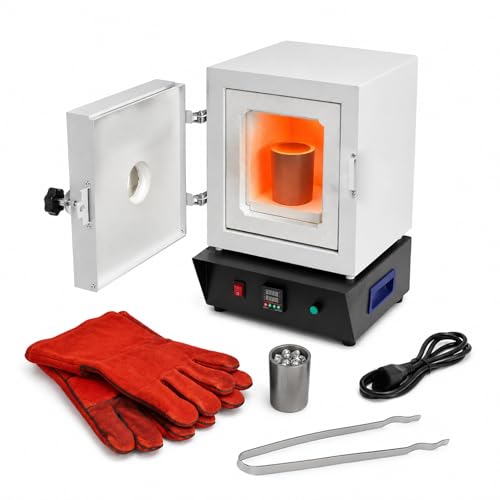
This tabletop kiln reaches up to 1150°C with a PID digital controller, enabling stable and accurate firing for ceramics, enameling, and metalwork. Its compact chamber accepts multiple small pieces, making it a good fit for beginners and small studios seeking professional results without a full-scale kiln. Choose this if you need a compact unit with reliable temperature control and space-efficient operation. Limitation: smaller chamber size means bulkier items may need staged firing.
pealiritansemen Electric Kiln — 2000W, 1150°C

With a 2000W system and a 1150°C maximum, this furnace emphasizes laboratory-grade precision. Four-sided heating drives uniform temperature distribution to minimize casting defects during wax burnouts and metal clay work. The built-in safety features and sturdy construction are designed for frequent high-temperature cycling in home studios. Best for experienced hobbyists who demand tight ±1°C control and repeatable results, with a caution about larger scales of production requiring higher capacity equipment.
PMC Supplies Tabletop RapidFire — 120V Coil Kiln Element

This replacement heating coil is designed to fit tabletop RapidFire Furnaces and Hi-Temp Burnout Ovens. It’s best for users who already own compatible equipment and need a reliable coil element for consistent firing cycles. Better for existing setups that require a targeted upgrade, with caution that it requires compatibility with your current kiln model.
Buying Guide — Key Purchase Considerations
What should you consider when choosing a kiln for firing pottery in a traditional style? Temperature range, heat distribution, and control accuracy top the list. Look for kilns with PID digital controllers for precise settings and a clear display so you can reproduce results. Check chamber size against your typical project dimensions and batch size—larger pieces and multiple items require more interior space. Safety features such as over-temperature alarms, automatic shutoff, and proper insulation reduce risk in home studios. Ventilation and placement are essential for indoor firing; ensure your workspace complies with local safety guidelines. Finally, factor in maintenance needs and replacement parts availability to keep firing schedules uninterrupted.
FAQ
- What is the best kiln for small-batch pottery at home? – Kilns with a stable 1150°C max, good heat distribution, and a clear digital interface are ideal for small batches and jewelry-related work.
- Are these kilns suitable for wax burnout? – Yes, several models are designed for burnout and wax casting, with dedicated viewing windows and safe operation features.
- Do I need a venting system for indoor firing? – Ventilation is strongly recommended to manage fumes; check product guidelines and local regulations for safe operation.
- How important is temperature stability? – Very important. Smaller temperature fluctuations can affect wax patterns, casting quality, and glaze results.
- Can I fire multiple pieces at once? – Some models offer larger chambers or multi-item loading; others are better suited for single-piece firing or staged loads.
- What maintenance should I expect? – Regular inspection of heating elements, door seals, and electrical connections helps maintain performance and safety.