Best Meat and Cheese Slicer for the Home: Top Picks for Clear, Even Slices
If you want precise, consistent slices at home, a dedicated meat and cheese slicer is the answer. This guide highlights five reliable options ideal for different kitchens and budgets. Best for frequent meat and cheese prep, an all-purpose slicer with adjustable thickness and easy cleaning can streamline meal prep and entertaining. The selected products cover powerful motors, multiple blades, and user-friendly safety features to suit home cooks, small families, or frequent hosts.
Buyer summary table (quick comparison):
- Borlebbi Meat Slicer, 200W, 0-15 mm: Best for serious home use; versatile and easy to clean.
- OSTBA Meat Slicer (150W), 7.5″ blade: Best value with removable parts for simple cleaning.
- OSTBA Meat Slicer (200W), 2 blades: Best for variety—serrated and non-serrated blades.
- Borlebbi Meat Slicer (200W), 0-15 mm: Best for precise control and durable construction.
- CUSIMAX Meat Slicer, 1-20 mm: Best for adjustable range and multi-food versatility.
Borlebbi 200W Slicer With Dual Blades

Best for: Home cooks who slice a variety of meats and cheeses regularly. Why selected: A powerful 200-watt motor supports fast, reliable slicing; includes two stainless steel blades for different textures, and a stainless steel tray to manage collected slices. The thickness control ranges from about 0-15 mm, enabling deli-thin cuts or thicker portions as needed. The design emphasizes easy sanitation with removable blade, carriage, and pusher parts for thorough cleaning. Caution: The slicer is bulky; ensure countertop space and stability during use.
OSTBA 150W Deli Slicer With Removable Blade
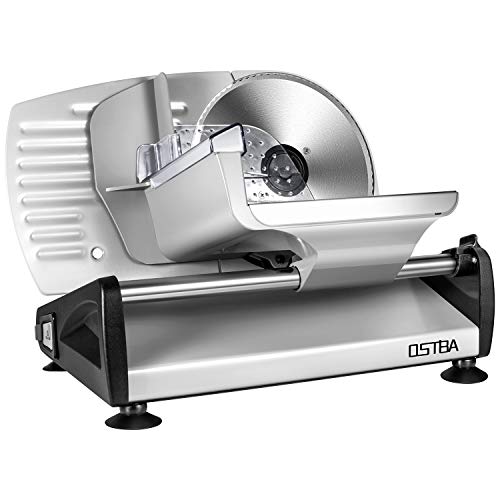
Best for: Budget-conscious buyers who want essential slicer features without extra frills. Why selected: A compact 150W unit with a 7.5″ blade and removable components makes daily cleaning straightforward. The adjustable thickness ranges from ultra-thin to roughly 3/4″ thick, suitable for meat, cheese, bread, turkey, and vegetables. Safety features include a dual-action start: you must press the safety lock and power button simultaneously. Caution: Lower power means slower slicing on very dense or frozen products.
OSTBA 200W Slicer With Dual Blade Options
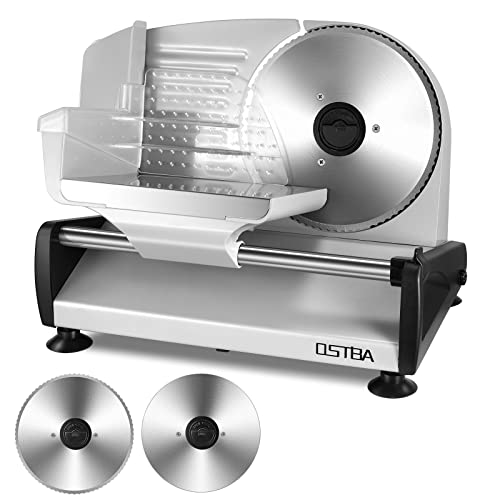
Best for: Homes needing flexibility for different foods, including hard cheeses and delicate bread. Why selected: This 200W slicer uses two removable 7.5″ blades—serrated for dense or frozen meats and non-serrated for bread, fruits, and softer cheeses. The adjustable thickness dial supports precise cuts from thin deli slices to thicker portions. It’s easy to clean since the blade, carriage, and pusher are removable. Caution: Ensure proper blade alignment after cleaning for safe operation and consistent slicing results.
Borlebbi 200W Slicer With Adjustable Thickness

Best for: Those who value strong cutting power and precise thickness control. Why selected: A 200W DC motor delivers stable torque with low noise. The adjustable thickness range of 0-15 mm enables versatile slicing across meats, cheeses, vegetables, and breads. The unit emphasizes easy maintenance with a detachable design—blades and the food tray can be removed for thorough cleaning. Caution: As with all slicers, blade surfaces are sharp; perform careful handling during cleaning and assembly.
CUSIMAX 1-20mm Adjustable Slicer With Two Blades

Best for: Multi-food prep fans who want a broad thickness range and blade options. Why selected: It offers a 1-20 mm adjustable thickness, two removable 8.7″ blades (serrated and non-serrated), and a removable food carriage. This helps with precise cuts for meats, cheese, bread, and vegetables. The design incorporates safety guards and non-slip feet for stability. Caution: The larger blade assembly requires careful placement to avoid misalignment during operation.
Buying Guide: Key Factors For Choosing The Right Home Meat And Cheese Slicer
- Motor Power: Higher wattage generally means faster, more consistent slices. Choose 150W-200W based on expected load (daily slicing vs. occasional use).
- Blade Type And Size: 7.5″ blades are common and versatile. Consider serrated for meats and frozen foods, non-serrated for bread and soft cheeses.
- Thickness Range: Look for adjustable settings from ultra-thin to at least 0-15 mm to cover deli slices and thicker portions.
- Removable Parts: Detachable blades and trays simplify cleaning and sanitizing, which is important for food safety.
- Safety Features: Dual-button start, blade guards, and non-slip feet reduce accidents and movement during operation.
- Storage And Footprint: Larger models offer stability but require counter space. Foldable or compact designs suit small kitchens or apartments.
- Maintenance: Dishwasher-safe, dishwasher compatibility, and ease of blade replacement affect long-term use.
Frequently Asked Questions
- What thickness range is typical for home slicers?
Most home slicers offer adjustable thickness from around 0 to 15 mm, with some models extending up to 20 mm.
- Are two-blade slicers better than single-blade models?
Two-blade slicers provide flexibility for different foods—serrated blades for hard or frozen items and non-serrated for bread and cheese.
- Is cleaning a slicer difficult?
Models with removable blades, carriages, and pusher parts are easier to sanitize; always unplug before cleaning.
- Which slicer is best for beginners?
Look for safety features, stable footing, and straightforward thickness adjustment to ease first-time use.
- Can I slice frozen meat with these slicers?
Some serrated blades handle slightly frozen or chilled meat; check the blade type and manufacturer guidelines for each model.
- What maintenance helps extend slicer life?
Regularly clean, dry all components, and replace blades as recommended to maintain performance and hygiene.