Best Electric Coffee Roaster Machines for Home Roasting
Answering the best options for at‑home coffee roasting, this guide highlights five reliable electric roaster machines suited for different skill levels and batch sizes. Ideal buyers include beginners seeking simple automation, hobby roasters wanting larger capacity, and small households aiming for fresh coffee on demand. The table below compares key specs to help you decide quickly.
| Product | Capacity | Temp Range | Best For |
|---|---|---|---|
| LUEUR Electric Coffee Roaster | Batch unspecified (roasts beans continuously) | Adjustable | Best for precise control and easy cleaning |
| JIAWANSHUN 1.1lb Roaster | 0–240°C | Good balance of capacity and control | |
| WINB Coffee Roaster Machine | 100–240°C | Great for beginners and medium batches | |
| Mingfuxin Upgrade Roaster | 100–240°C | Easy to use with clear lid | |
| NIASIA 500g Automatic Roaster | Void in features | Versatile with smoke management |
LUEUR Electric Coffee Roaster For Home Use
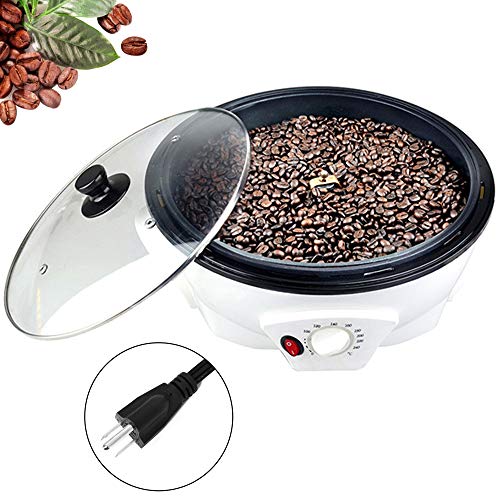
Features include a 110V/800W heating system with a non-stick chassis for easy cleaning and a stirring rod that continuously agitates beans for even roasting. A professional thermostat provides automatic constant temperature heating with adjustable settings to handle a variety of beans and cereals. The honeycomb non-stick bottom and a transparent, vented cover support even heating while letting you monitor progress. Best for users who want hands-on control with straightforward maintenance; note the unit is designed for home use and smaller batches.
JIAWANSHUN Coffee Roaster Upgraded Electric Roaster
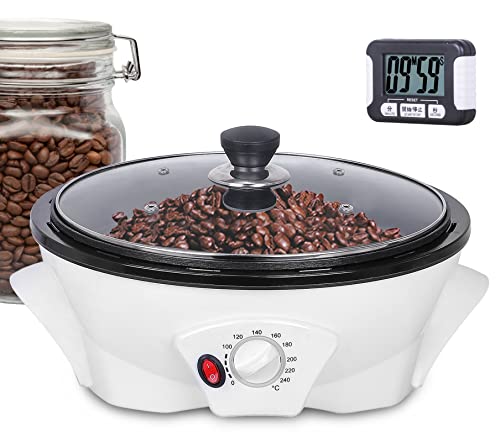
This roaster offers 100–240°C adjustable temperature control and a timer, roasting coffee to light, medium, or dark levels. With an 800g capacity recommended for even results, it uses an automatic stirrer to ensure uniform rotation and heat. A transparent glass lid with four ventilation holes lets you observe progress, while a honeycomb interior and non-stick coating simplify cleaning. Best for home users who want precise roast profiles and visibility during roasting; caution: smaller beans may jam the stirring mechanism if not sorted beforehand.
WINB Coffee Roaster Machine For Home Use

WINB’s 110V roaster features a 0–60 minute timer and adjustable 100–240°C temperature range. It roasts about 750g in roughly 25 minutes, making it a solid choice for beginners aiming to roast larger batches. The transparent lid with air vents lets you monitor browning, and the honeycomb non-stick interior aids cleanup. Best for newcomers who want a straightforward, repeatable process; limitation: higher capacity may require more time per batch for very small households.
Mingfuxin Upgrade Coffee Roaster Machine

This 110V, 1200W model roasts with a 750g capacity in about 25 minutes, using adjustable temperature from 100–240°C and a transparent lid with vent holes. The design integrates a stand-up lid for convenience and a durable honeycomb exterior with a black non-stick lining for easy cleaning. Best for home roasters who want faster heat and larger batches in a compact footprint; caution: power draw is substantial, so ensure outlet capacity is suitable.
NIASIA 500g Automatic Coffee Roaster

NIASIA combines automatic and manual modes with nine built-in roasting profiles (including light to dark and special bean types). It handles up to 500g per batch and provides two smoke-exhaust options: a purifier for lighter roasts and aluminum pipes for richer, smokier results. Best for users who want preset profiles and flexible smoke management; limitation: not designed for frequent commercial use, so longevity depends on batch frequency.
Buying Guide: Key Considerations For Electric Coffee Roasters
- Batch size and capacity: Choose a model aligned with your typical roast volume—home users usually target 300–500g per batch, while some roasters handle up to 750g.
- Temperature control: Look for adjustable range (commonly 100–240°C) to achieve different roast levels for various beans.
- Roasting time and automation: Timers and automatic stirrers help ensure even roasting. More automation is helpful for beginners.
- Ventilation and smoke management: Smoke purifiers or external exhaust options improve indoor air quality when roasting darker beans.
- Cleaning and maintenance: Non-stick interiors and honeycomb designs simplify cleanup after roasting sessions.
- Visibility: A transparent lid aids progress monitoring, but ensure it does not interfere with roasting temperatures.
- Durability and warranty: For frequent use, prioritize sturdier builds and check for service availability.
- Electrical requirements: Verify voltage (110V is common in the US) and power draw to avoid overloading outlets.
Frequently Asked Questions
- What is the ideal roast level for home roasting?
– It depends on bean type and desired flavor; common targets are light to medium for more aroma, or medium to dark for richer body. - Can I roast any coffee bean with these machines?
– Most machines handle common green beans; some models specify suitability for nuts or seeds as well. - How long does a typical batch take?
– Most 300–500g batches complete in about 20–25 minutes, depending on temperature and batch size. - Is smoke management necessary for home roasting?
– Yes, especially for darker roasts; using a purifier or external vent improves indoor air quality.
For buyers seeking a balance of capacity, control, and ease of use, the five highlighted models provide versatile options across home roasters. Each is designed to support consistent roasts while offering distinct features such as automatic stirring, clear viewing windows, and multiple smoke management approaches. Use the buying guide questions to zero in on the best fit for your roasting style, space, and comfort with manual versus automatic control.