Best Meat Dehydrators for Jerky in 2026: Efficient Choices for Home Curing
If you’re seeking a reliable meat dryer for jerky, these dehydrators offer consistent temperature control, ample drying space, and quiet operation for home use. They’re suited for aspiring jerky makers, pet-treat crafters, and snack enthusiasts who want to preserve meat safely and cheaply. Below are five top options with clear pros, best-use scenarios, and practical cautions to help you choose.
| Product | Drying Space | Best For | Key Benefit |
|---|---|---|---|
| Cosori Bigger-7 Tray Dehydrator | 6.5 ft² | Large batches, overnight drying | Powerful 600W for faster results |
| Cosori 5-Tray Jerky Dehydrator | 3.1 ft² | Beginner to intermediate jerky makers | 4 presets for easy use |
| Elite Gourmet EFD319 | 5 Trays | Balanced capacity with easy monitoring | Visible trays and BPA-free design |
| Cercker 8-Tray Dehydrator | Large capacity | Thick-cut meats and bulk snacks | High airflow for even drying |
| Konfintos Compact Dehydrator | 5 Trays | Small spaces, small batches | Compact, temperature-controlled |
Cosori Food Dehydrator, Bigger Than 7 Trays

This model features 6 stainless steel trays and 6.5 ft² of drying space, making it a strong choice for large batches of jerky or multiple racks of meat at once. It uses a 600W motor with a rear-mounted fan and upgraded airflow for faster, more even drying. The advanced brushless motor keeps noise below 48 dB, enabling quieter operation overnight. Best for households that routinely dry sizable batches or need quieter performance for late-night projects. A potential limitation is the fixed tray count; add-on options are available, but you’ll want to plan layout ahead of time for complex jerky recipes.
Who this is for: Home cooks who regularly prepare large volumes of jerky, herbs, or fruit and want a robust, low-noise option with fast drying times.
Why it fits meat and jerky workflows
- High drying capacity reduces batch times for large quantities of meat.
- Quiet operation minimizes disruption during overnight cycles.
- Sturdy stainless steel trays resist staining and corrosion with protein-rich foods.
Caution: The model relies on a single fan layout; if you frequently load unevenly, rotate trays occasionally to maintain even drying.
Cosori Food Dehydrator for Jerky
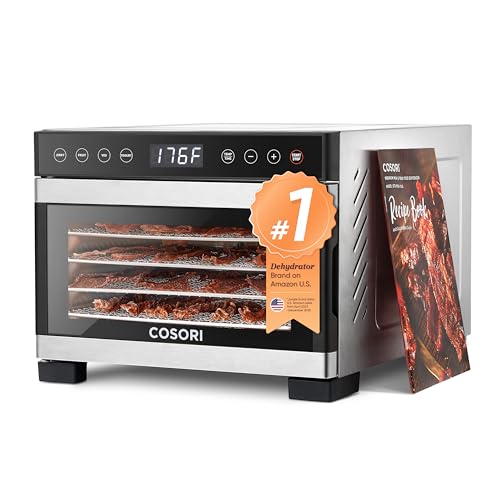
With adjustable 95–176°F temperature control across four presets and a total of five trays, this unit balances versatility with simplicity. It’s designed for beef jerky safety through the recommended 165°F endpoint and includes a recipe book and additional accessories for expanding capacity. Best for first-time jerky makers who want guided presets and clear progress monitoring. It can handle meat, fruit, and vegetables, but its space is smaller than larger 6–8 tray models, so plan batch sizes accordingly.
Who this is for: Beginners or intermediate users aiming for predictable jerky results and easy-to-use presets.
Limitations: The included accessories help, but you’ll reach tray capacity quickly with thick cuts; consider whether you’ll upgrade trays for bigger batches.
Elite Gourmet EFD319
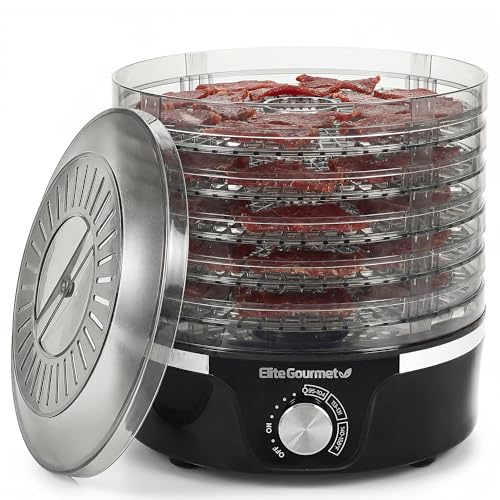
This model provides five BPA-free trays and a precise 95–158°F temperature range, supporting a wide range of drying tasks from jerky to herbs. The horizontal airflow ensures consistent dehydration without needing tray rotation, which is a time-saver for busy kitchens. Best for users who want clear heat distribution and visible progress through the permeable trays. A minor note: while trays are clear, monitoring heat loss during longer cycles is still important to prevent over-drying certain items.
Who this is for: Everyday home cooks who value straightforward operation, steady airflow, and easy cleanup.
Cercker 8-Tray Food-Dehydrator
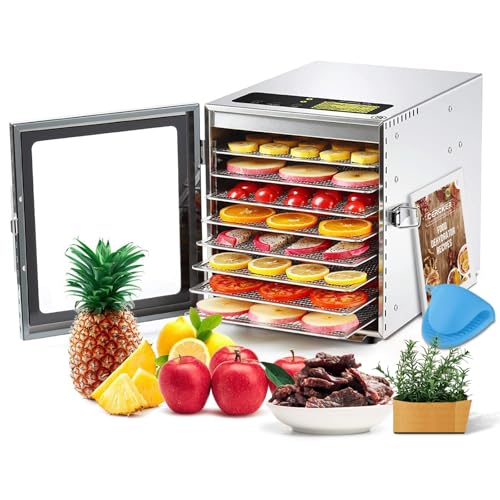
Equipped with eight stainless steel trays and a 500W heater, this unit enhances drying capacity for thick-cut meats and bulk snacks. An integrated exhaust fan and air-circulation system drive a wind speed of about 2 m/s for uniform heat distribution, which helps avoid hot spots. Best for users who need a larger board to dry multiple jerky sticks or larger meat portions at once. Limitation: the instruction notes ventilating after use to manage any odor from stainless steel surfaces; plan a brief airing period after cycles.
Who this is for: Those who regularly dry large quantities and want robust airflow to preserve texture and color in jerky.
Konfintos Compact Dehydrator
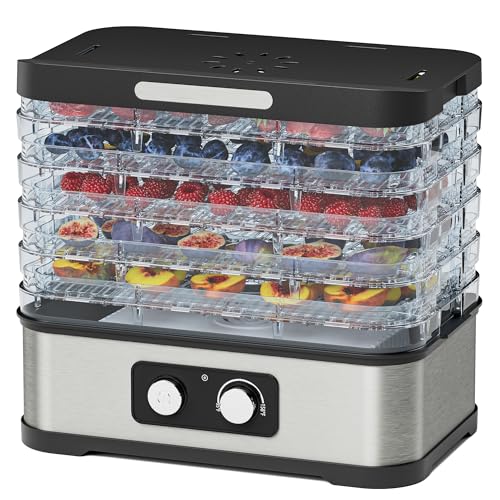
Designed for space-conscious kitchens, this compact unit offers five stackable, height-adjustable BPA-free trays and a 72-hour maximum operation time with a 250W heater. It allows precise control over drying with a wide temp range suitable for beef jerky, mushrooms, and herbs. Best for small batches, dorms, or RV use where footprint matters. A caveat is that the lower power limits maximum batch throughput compared with larger models, so it’s most efficient for smaller volumes.
Who this is for: Buyers with limited counter space who still want reliable jerky and snack dehydration in small batches.
Cercker 12-Tray Commercial-Grade Dehydrator

Built for higher-volume needs, this 12-tray unit uses a rear dual-fan airflow system with a 2 m/s wind speed and 1600 rpm to ensure evenly distributed heat across all trays. Stainless steel construction and a large capacity make it suitable for serious jerky production or large batches of fruit and vegetables. Best for small business experiments or dedicated home kitchens. Caution: heavier and larger footprint; ensure ample counter space or storage when not in use.
Buying Guide: How To Choose The Right Meat Dehydrator For Jerky
What capacity do you need?
- Large batches: look for models with 6–8 trays and wide total drying space (like 6.5 ft² or more).
- Small batches: compact units with 5 trays or fewer fit smaller kitchens and dorms.
How important is temperature control?
- Jerky safety typically requires temperatures around 165°F; models offering 165°F or above with increments are preferable.
- Presets can simplify operation, but adjustable ranges give flexibility for herbs, vegetables, and fruits.
How easy is monitoring and cleaning?
- Transparent or clearly viewable trays help monitor progress without opening the lid.
- BPA-free trays and stainless steel interiors are easier to clean and maintain.
What about noise and energy use?
- Low-noise designs are beneficial for overnight drying, especially if the unit will be used in living spaces.
- Higher wattage speeds drying but can increase electricity usage; balance with batch needs.
Are extra trays or accessories needed?
- Some models offer expandable tray options and accessory sheets for fruit leather and specialized items.
- Check compatibility if you plan to grow your system later with additional trays.
Frequently Asked Questions
- What temperature should jerky be dried at?
- Can I dry meat and fruit in the same batch?
- Do I need to rotate trays?
- What are the best trays to choose for jerky?
- Is a larger dehydrator always better for jerky?
- How long should jerky last after drying?
Many guidelines suggest reaching 165°F during the drying process to ensure safety. Always follow your chosen model’s presets and manual for final times.
Yes, but separate trays by food type and monitor closely to prevent cross-flavor transfer and ensure even drying.
Some models require rotation for even drying, while others with improved airflow are designed to minimize this need.
Stainless steel trays are durable and easy to clean; BPA-free plastic trays save weight and cost but check for sturdiness.
Not always. Consider your space, batch size, and desired drying time. A mid-sized model with good airflow can perform as well as a larger unit for most home jerky projects.
Properly dried jerky can be stored safely for several weeks to months when kept in a cool, dry place or refrigerated, depending on humidity and storage conditions.