Best Metal Percolator Coffee Pot: Top 5 Picks for Rich Flavor
Answer: If you want bold, full-bodied coffee brewed on a stovetop or electric unit, these metal percolator pots are top options. Each product below is best suited for different buyers, from campers and outdoor enthusiasts to busy households and small offices. Read on to compare build quality, capacity, and ease of use to choose the right percolator for your routine.
The following quick-reference table highlights the main features and ideal buyers for the five selected percolator pots.
| Product | Brand | Best For | Capacity |
|---|---|---|---|
| Presto 02811 Stainless Steel Electric Coffee Percolator | Presto | Small households or solo servings | 2–12 cups |
| COLETTI Bozeman Percolator Coffee Pot — NO Aluminum or Plastic [9 cup] | COLETTI | Outdoor use and travelers who want pure stainless steel | 9 cups |
| Primula Today Aluminum Stove Top Percolator Maker | Primula | Everyday home use and gatherings | 9 cups |
| COLETTI Bozeman Percolator Coffee Pot — NO Aluminum or Plastic [6 cup] | COLETTI | Compact stovetop brewing at home or on trips | 6 cups |
| Farberware Electric Percolator, 8 Cup | Farberware | Reliable, everyday electric brewing | 8 cups |
Presto 02811 Stainless Steel Electric Coffee Percolator

Best for small households or individuals who want a fast, dependable electric percolator. This model brews up to 12 cups quickly, with a signal light to indicate when coffee is ready. The stay-cool handle and easy-pour spout simplify serving. A notable limitation is the compact 2–6 cup option described in marketing materials, which may require careful attention to capacity claims if your typical batch approaches 12 cups.
COLETTI Bozeman Percolator Coffee Pot — NO Aluminum or Plastic [9 cup]

Best for outdoor enthusiasts and campers who require durable, all-stainless construction with a glass view top. This model emphasizes no aluminum or plastic, appealing to those prioritizing pure metal materials. Its rugged design suits outdoor use, but the absence of plastic may affect weight and handling for casual indoor brewers. The glass top provides a visual brew cue, which is a practical perk for many users.
Primula Today Aluminum Stove Top Percolator Maker

Best for everyday home use and larger gatherings. The 9-cup capacity makes it suitable for family breakfasts or camping group coffee. Note that the manual includes reminders about grind size, coffee amount, and potential brewing pressures, which signals a need for user attention to achieve optimal extraction. The aluminum body makes it light, but users who prefer stainless steel may view this as a trade-off.
COLETTI Bozeman Percolator Coffee Pot — NO Aluminum or Plastic [6 cup]

Best for compact stovetop brewing at home or on the go. The six-cup size offers a balance between portability and capacity with a durable stainless steel build. The no-plastic, no-aluminum claim aligns with purist preferences, but the smaller capacity may require more frequent refills for larger groups. The glass view top helps monitor percolation visually for precise timing.
Farberware Electric Percolator
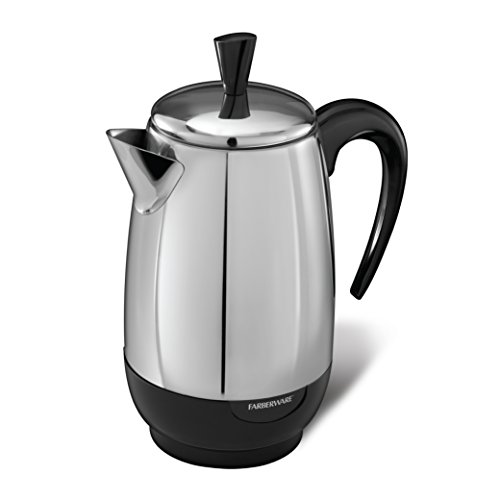
Best for steady, electric, all-day coffee service. The stainless steel exterior plus a durable coffee basket supports robust flavor extraction. It brews at a pace of about one cup per minute and includes a no-drip spout for easier cleanup. A limitation to note is that its capacity is fixed at 8 cups, which may not fit larger gatherings without multiple rounds.
Buying Guide
What should you consider when selecting a metal percolator?
- Power source: Electric vs stovetop. Electric models offer controlled heating and keep-warm features; stovetop models suit outdoor use and classic brewing.
- Capacity: Match to your routine. Smaller households work well with 2–6 cups, while families may prefer 8–12 cups.
- Material: Stainless steel provides durability and resistance to wear; aluminum is lighter and often less expensive, but some users prefer stainless steel for longevity and flavor integrity.
- Construction and care: Look for a removable basket, easy-clean design, and dishwasher compatibility when available.
- Brewing cues: Glass top or view window helps monitor percolation, improving timing and flavor control.
Which features impact flavor the most?
- Percolation time and temperature control affect aroma and extraction. Over-percolation can lead to bitterness; under-percolation may yield weak coffee.
- Filter/basket design determines how evenly grounds are immersed and circulated during brewing.
Maintenance considerations influence long-term satisfaction. Choose models with durable handles, secure lids, and straightforward cleaning to minimize hassle after daily use.
FAQ
- What is the difference between a percolator and a regular drip coffee maker? Percolators circulate boiling water through coffee grounds multiple times, producing a stronger cup, while drip makers pass hot water once through grounds for a cleaner flavor.
- Is stainless steel better than aluminum for percolators? Stainless steel generally offers greater durability and corrosion resistance, while aluminum can be lighter and more affordable. Flavor impact is typically small, but some users prefer stainless steel for longevity.
- Can percolators be used on gas and electric stovetops? Yes, stovetop percolators are designed for use on gas or electric ranges, as well as campfire setups for some models.
- Do electric percolators keep coffee hot after brewing? Many models include a keep-warm feature that maintains a safe serving temperature without overcooking the coffee.
- Are glass-top percolators safe to use on induction cooktops? Most non-induction models (including many with a glass top) are not compatible with induction. Check product specifications for induction suitability.
- What grind size is best for percolators? A medium grind is typically preferred, but the product notes for Primula mention grind size and amount can influence pressure and extraction. Adjust accordingly for best results.