Best 12V Microwave for Trucks: Top 5 Portable Car Ovens for on-the-Go Cooking
Truck drivers and on-the-road workers increasingly rely on portable ovens to heat meals without stopping at a restaurant. This guide highlights five top options that run on 12V/24V and 110V, designed to warm food evenly and preserve moisture. Each model supports car, truck, RV, and office use, offering convenient, plug-and-go heating for busy schedules. The selections focus on performance, safety features, and container compatibility to help you choose the right portable oven for your lifestyle.
| Product | Power Options | Interior Capacity | Key Benefit |
|---|---|---|---|
| Aotto Portable Oven | 12V / 24V / 110V | 1.8 quarts | 3-in-1 versatility with auto temp control |
| DDHTSAL Electric Lunch Box | 12V / 24V / 110V | 1.8 QT | Gentle heat preserves flavor and nutrients |
| Dosevita Portable Oven | 12V / 24V / 110V | Varies by container | 100W rapid heat with automatic temp control |
| TUNDRA MW700 | 120V (inverter required) | 20 L (0.7 ft³) | Dedicated truck-ready countertop microwave |
| TRAVEL TIME 12V Stove | 12V | 5-pans set | Portable heating for remote locations |
Aotto Portable Oven — 3-in-1 Car Food Warmer

The Aotto 3-in-1 portable oven provides 12V, 24V, and 110V connectivity, allowing use in cars, trucks, offices, or homes. It heats evenly with automatic temperature control, reducing the risk of overcooking and odors. The system accepts multiple containers, including glass, metal, ceramic, and sealed options, up to 9.76 inches long, 7.01 inches wide, and 3.94 inches tall. Included are a lunch bag, shoulder strap, heating plate, and two power cords for flexible use.
Interior heating relies on conduction to maintain moisture and nutrition while avoiding dry meals. The device is designed for ready-to-eat leftovers, prepped meals, or fresh items that require gentle warming. For truckers who want a quiet, low-maintenance option, this model emphasizes hands-off operation once plugged in. Users should ensure proper venting and avoid tight-sealing containers that may trap steam.
Pros: broad power compatibility, moisture retention, container versatility. Cons: interior capacity is modest, and larger meals may require multiple batches. Overall, a solid option for daily lunch heating with minimal supervision.
DDHTSAL Electric Lunch Box
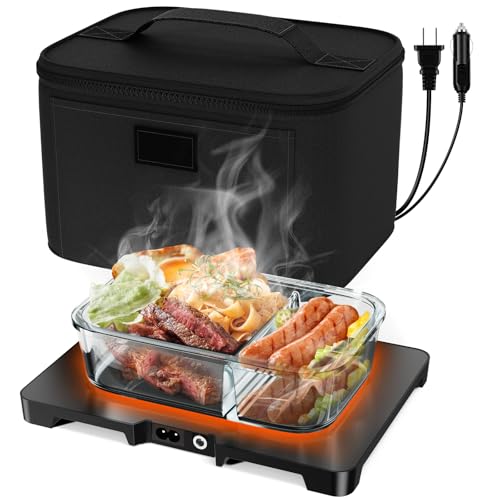
The DDHTSAL model delivers 12V/24V/110V compatibility with dual cords for on-the-road or home/office use. Its low-slow conduction heat aims to preserve flavor and moisture, making it suitable for meal preps and leftovers. The interior is large enough to accommodate flat-bottom containers up to 9.76″ x 7.01″ x 3.94″, including glass, stainless steel, and ceramic options. This flexibility helps reduce reliance on disposable plastics.
Automatic temperature control adds a safety layer by preventing overheating. The unit is designed for busy professionals who need reliable warming without babysitting the device. While not a full microwave, it effectively transforms cold lunches into hot meals with consistent results. Consider this if you frequently switch between vehicle and desk environments.
Pros: versatile container compatibility, steady heat with moisture retention. Cons: some users may prefer a faster warm-up. It represents a balanced choice for practical, on-the-go meal warming.
Dosevita Portable Oven — Fast 100W Heating

The Dosevita 100W portable oven uses rapid PTC heating to bring meals from cold to hot in about 15-25 minutes. It supports 12V/24V for vehicle use and 110V for home or office settings, with automatic temperature control to prevent overheating. The heater maintains moisture to preserve texture and nutrients, which is especially helpful for prepped dinners or fresh meals planned on the road.
Key features include an overheat protection device and a conduction-based heating method for even warmth. It is well-suited for drivers who want dependable heat without microwave-style dryness. However, larger families may need more capacity or multiple sessions to handle bigger meals.
Pros: rapid heat, automatic safety cycle, broad power compatibility. Cons: moderate interior space may limit large containers. Overall, a strong option for fast heating with safety assurances.
TUNDRA MW700 Truck Microwave Oven

The TUNDRA MW700 is a dedicated truck-friendly countertop microwave with a 20 L (0.7 ft³) capacity and 700W output. It includes an LCD display and a child lock for safety. The unit runs on 120V and requires a power inverter when installed in a sleeper cab, making it ideal for long-haul drivers who want quick reheating and meal preparation without leaving the cab.
Its rugged construction emphasizes durability in mobile environments. Installation considerations include space, inverter capacity, and ventilation. The MW700 provides a familiar microwave experience, but requires appropriate vehicle electrical planning to ensure reliable operation on the road.
Pros: truck-ready design, safety features, straightforward operation. Cons: requires inverter; interior capacity is modest for larger meals. A practical choice for drivers who want a conventional microwave in a truck setting.
TRAVEL TIME 12V Portable Stove

Travel Time offers a unique 12V portable stove with five pans and lids, designed for vehicles without a conventional stove. It heats up to 250°F (about 120°C) with 150 watts of power, providing hot meals in remote locations or during breaks. The locking lid helps seal in heat for consistent results, making it suitable for travelers who also want to cook simple meals while on the go.
While not a microwave, this option broadens the field of in-vehicle heating by enabling real cooking on the road. It’s ideal for campers, delivery drivers, and remote work sites where traditional cooking equipment is unavailable.
Buying Guide: Key Considerations For Choosing A 12V Truck Microwave Or Warmer
- Power compatibility: Look for models supporting 12V, 24V, and 110V to cover car, truck, and home use. Ensure your vehicle’s electrical system and inverter can handle the chosen unit’s watts and startup surge.
- Heating method and speed: Conduction-based warmers preserve moisture but may heat slower than microwave-style options. If speed is critical, prioritize higher wattage (100–700W range) and a design that limits overheating.
- Container compatibility: Check container types (glass, stainless steel, ceramic, foil) and interior capacity. Larger meals require more interior space; smaller units suit single-portion meals or snacks.
- Safety features: Automatic temperature control, overheat protection, and child locks are important for unattended operation, especially in vehicles.
- Durability and portability: For truck use, a compact, rugged build plus a carrying bag or handle can improve usability on the road or at campsites.
- Usage scenarios: If you need real cooking versus reheating, consider a portable stove option. For quick lunches, a compact warmer may suffice.
- Maintenance and cleaning: Prefer models with simple disassembly and dishwasher-safe components or easily wipe-clean interiors to keep hygiene on the move.
- Power management: Plan for power availability at destinations. For RV or sleeper cab setups, an inverter and stable power source are critical to avoid dim lights or battery drain.
- Packaging and extras: Look for included cords, bags, and lids that help transport and protect the unit during travel.
These considerations help compare heat speed, capacity, safety, and convenience. For daily meal heating on the road, prioritize models with automatic temperature control, broad voltage support, and compatibility with your preferred containers. If you often cook full meals from scratch, a portable stove option may be worth evaluating alongside a 12V/24V/110V warmer.