Best 18-Inch Diameter Gas Tankless Water Heaters for Instant Hot Water
Choosing an 18-inch-diameter gas tankless water heater focuses on compact, efficient on-demand hot water for homes with multiple usage points. This guide highlights five prominent models featuring propane or natural gas, LED or digital displays, and multi-protection systems. Each product below includes key specs, safety features, and performance notes to help you compare options quickly.
| Product | Brand | Approx. GPM | Notes |
|---|---|---|---|
| Propane Tankless Water Heater, 4.21GPM 16L Indoor | forimo | 4.21 | LED display; multi-protection; 75°C max rise |
| Propane Tankless Water Heater, 4.74 GPM 18L Indoor | forimo | 4.74 | Higher BTU; anti-freeze protection; LED display |
| SNDOAS Tankless Hot Water Heater Natural Gas, 4.23 GPM | SNDOAS | 4.23 | Forced exhaust; LED display; whole-house capacity |
| NOVIEEX Tankless Water Heater, 4.3 GPM | NOVIEEX | 4.3 | LED display; wide 95–149°F range; 100,000 BTU |
| Nessxa Tankless Water Heater, 3.7 GPM, 14L | Nessxa | 3.7 | Dual digital display; Fahrenheit/Celsius; 28KW |
Propane Tankless Water Heater, 4.21GPM 16L Indoor

This model delivers 4.21 GPM with a steady temperature control system and multiple protections, including flame failure and overheating safeguards. It requires only about 3.6 PSI water pressure and is engineered for LPG propane use. The LED digital display allows straightforward temperature adjustments from 38°C to 75°C, making it suitable for bathrooms and kitchens where space is limited.
Propane Tankless Water Heater, 4.74 GPM 18L Indoor

Offering 4.74 GPM and up to 123,000 BTU/hour, this unit supports simultaneous use for multiple fixtures with enhanced energy efficiency. It includes safety protections such as flame failure, anti-freeze, and overheating, plus a built-in LED digital display for easy temperature management and an adjustable range suitable for household needs.
SNDOAS Tankless Hot Water Heater Natural Gas, 4.23 GPM
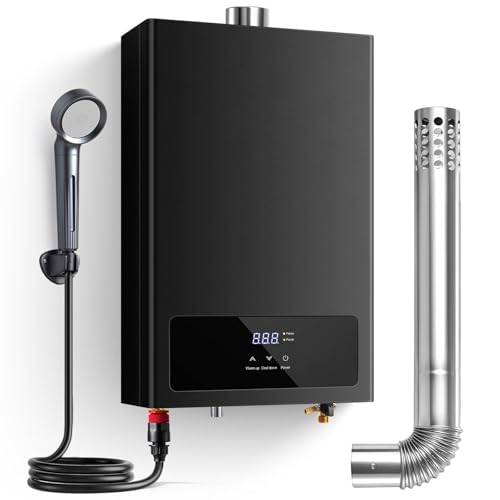
This whole-house-capable unit provides 4.23 GPM with a forced exhaust design that vents combustion gases safely outdoors. It operates on natural gas and uses an oxygen-free copper heat exchanger for rapid heating, with a smart LED display showing real-time temperature and usage while keeping output within the set range.
NoviEEX Tankless Water Heater, 4.3 GPM

With 100,000 BTU input, this natural gas model delivers up to 4.3 GPM and features a digital thermostat with a broad 95°F–149°F range. The unit supports simultaneous use with stable temperatures and offers precise control for showers, kitchens, and sinks.
Tankless Gas Water Heater, Nessxa 14L 3.7 GPM
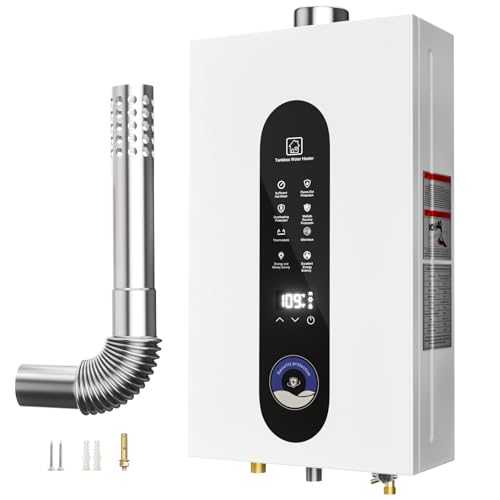
This 3.7 GPM propane tankless model uses a dual-unit display to switch between Fahrenheit and Celsius. It provides precise temperature monitoring and an auto-overheat warning for safety, with a rugged indoor installation design intended for versatile family use.
Buying Guide
Key purchase considerations for an 18-inch-diameter gas tankless water heater include performance, installation, and safety. Below are multiple perspectives to help you choose the right model for your home.
- Water flow and temperature rise: Evaluate the maximum GPM and the temperature rise you need for simultaneous uses (shower, kitchen, bathroom). Higher BTU ratings typically enable higher GPM with less temperature drop.
- Fuel type and efficiency: Most units in this category run on propane or natural gas. Look for high-efficiency combustion technology and energy-saving features to reduce gas consumption and noise.
- Safety protections: Common protections include flame failure devices, anti-freeze protections, overheating protection, and auto shutoffs. A forced exhaust system can help vent combustion gases safely for indoor installation.
- Temperature control: Digital displays and thermostats with wide, precise ranges (for example, 95°F to 149°F) provide reliable comfort and safety for households with children or elderly residents.
- Installation considerations: Check space feasibility, venting requirements, water pressure needs (some units require only a few PSI, while others demand higher), and whether the unit supports multiple fixtures at once.
- Durability and materials: Stainless steel bodies and oxygen-free copper heat exchangers improve corrosion resistance and heat retention, extending service life and reducing heat loss.
- Maintenance and warranty: Consider models with accessible service parts and clear warranty terms to minimize downtime and costs over time.
- Display and user interface: LED or digital displays simplify temperature adjustments and troubleshooting by presenting real-time data and fault codes.
When evaluating options, compare the GPM, BTU output, and the range of adjustable temperatures. For households with high simultaneous-demand usage, prioritize models with higher GPM and robust protection features, while compact units are best suited for limited spaces and moderate hot-water needs.